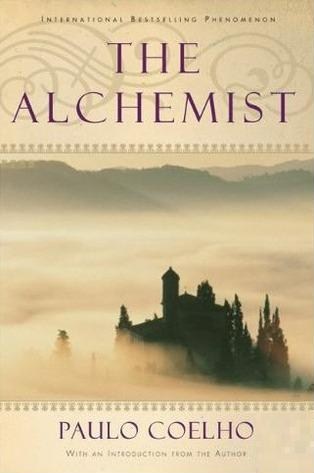
Paulo Coelho’s masterpiece tells the mystical story of Santiago, an Andalusian shepherd boy who yearns to travel in search of a worldly treasure. His quest will lead him to riches far different, and far more satisfying, listening to our hearts, of recognizing opportunity and learning to read the omens strewn along life’s path, and, most importantly, to follow our dreams.
Synopsis: For five years Me’acca Mysuth Sheever has lived among his “sworn enemies,” pretending to be one of them. One night he buys a journal, its pages blank. The woman who sells him the journal extracts his promise to record his deeds for study. “Lo, the steps of your life mark the journey of your soul.” To expose his prior life, however, would be akin to suicide, for Sheever is a man brimming with secrets.
He begins the journal cautiously, describing the area where he works as a cook, and the people he’s forced to endure. Hints of his past emerge as he also records day-to-day events. As the journal evolves, he finds himself more entangled than he ever wanted to be in the lives around him, and more sympathetic to people he wanted to hate.
Memories haunt him, and he struggles to maintain a grip on his sanity as he prays for – and fears – the signal that his years in exile have ended and he can return home.
This then is Sheever’s Journal, Diary of a Poison Master.
About the Author: K. Ritz lives with her husband in a small town in Massachusetts. This is her first book in a series about a world of shadows.
1970s Afghanistan: Twelve-year-old Amir is desperate to win the local kite-fighting tournament and his loyal friend Hassan promises to help him. But neither of the boys can foresee what would happen to Hassan that afternoon, an event that is to shatter their lives. After the Russians invade and the family is forced to flee to America, Amir realises that one day he must return to an Afghanistan under Taliban rule to find the one thing that his new world cannot grant him: redemption.
In his journal, Nobel Prize winner John Steinbeck called East of Eden “the first book,” and indeed it has the primordial power and simplicity of myth. Set in the rich farmland of California’s Salinas Valley, this sprawling and often brutal novel follows the intertwined destinies of two families—the Trasks and the Hamiltons—whose generations helplessly reenact the fall of Adam and Eve and the poisonous rivalry of Cain and Abel.
Adam Trask came to California from the East to farm and raise his family on the new rich land. But the birth of his twins, Cal and Aaron, brings his wife to the brink of madness, and Adam is left alone to raise his boys to manhood. One boy thrives nurtured by the love of all those around him; the other grows up in loneliness enveloped by a mysterious darkness.
First published in 1952, East of Eden is the work in which Steinbeck created his most mesmerizing characters and explored his most enduring themes: the mystery of identity, the inexplicability of love, and the murderous consequences of love's absence. A masterpiece of Steinbeck's later years, East of Eden is a powerful and vastly ambitious novel that is at once a family saga and a modern retelling of the Book of Genesis.
Cannery Row is a book without much of a plot. Rather, it is an attempt to capture the feeling and people of a place, the cannery district of Monterey, California, which is populated by a mix of those down on their luck and those who choose for other reasons not to live "up the hill" in the more respectable area of town. The flow of the main plot is frequently interrupted by short vignettes that introduce us to various denizens of the Row, most of whom are not directly connected with the central story. These vignettes are often characterized by direct or indirect reference to extreme violence: suicides, corpses, and the cruelty of the natural world.
The "story" of Cannery Row follows the adventures of Mack and the boys, a group of unemployed yet resourceful men who inhabit a converted fish-meal shack on the edge of a vacant lot down on the Row.
Clear-eyed and spirited, Taylor Greer grew up poor in rural Kentucky with the goals of avoiding pregnancy and getting away. But when she heads west with high hopes and a barely functional car, she meets the human condition head-on. By the time Taylor arrives in Tucson, Arizona, she has acquired a completely unexpected child, a three-year-old American Indian girl named Turtle, and must somehow come to terms with both motherhood and the necessity for putting down roots. Hers is a story about love and friendship, abandonment and belonging, and the discovery of surprising resources in apparently empty places.
No food, no water, no government, no obligation, no order.
Discover a chillingly powerful and prescient dystopian vision from one of Europe's greatest writers.
A driver waiting at the traffic lights goes blind. An ophthalmologist tries to diagnose his distinctive white blindness, but is affected before he can read the textbooks. It becomes a contagion, spreading throughout the city. Trying to stem the epidemic, the authorities herd the afflicted into a mental asylum where the wards are terrorised by blind thugs. And when fire destroys the asylum, the inmates burst forth and the last links with a supposedly civilised society are snapped.
This is not anarchy, this is blindness.
‘Saramago repeatedly undertakes to unite the pressing demands of the present with an unfolding vision of the future. This is his most apocalyptic, and most optimistic, version of that project yet’ Independent
In the hopeful 1950s, Frank and April Wheeler appear to be a model American couple: bright, beautiful, talented, with two young children and a starter home in the suburbs. Perhaps they married too young and started a family too early. Maybe Frank's job is dull. And April never saw herself as a housewife. Yet they have always lived on the assumption that greatness is only just around the corner. But now that certainty is now about to crumble. With heartbreaking compassion and remorseless clarity, Richard Yates shows how Frank and April mortgage their spiritual birthright, betraying not only each other, but their best selves.
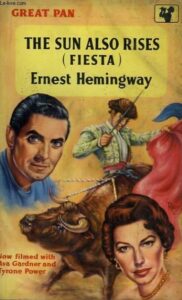
The quintessential novel of the Lost Generation, The Sun Also Rises (Fiesta) is one of Ernest Hemingway's masterpieces and a classic example of his spare but powerful writing style. A poignant look at the disillusionment and angst of the post-World War I generation, the novel introduces two of Hemingway's most unforgettable characters: Jake Barnes and Lady Brett Ashley. The story follows the flamboyant Brett and the hapless Jake as they journey from the wild nightlife of 1920s Paris to the brutal bullfighting rings of Spain with a motley group of expatriates. It is an age of moral bankruptcy, spiritual dissolution, unrealized love, and vanishing illusions. First published in 1926, The Sun Also Rises helped to establish Hemingway as one of the greatest writers of the twentieth century.
Welcome Back!
Track your reading progress and sync your library.