Here for the first time is a comprehensive look at the life, career and work of one of the most popular and prolific writers of our time – with more than 70,000 words of material from Dean Koontz himself.
It includes:
An exclusive, in-depth interview, never before published… Rare articles by Koontz about the art of writing… His first published short story… A complete annotated guide to all his novels… Selections from “Weird World,” humorous pieces unpublished until now… Answers to questions fans most often ask… The films based on his work… And more.
Steampunk, the retro-futuristic cultural movement, has become a substantial and permanent genre in the worlds of fantasy and science fiction. A large part of its appeal is that, at its core, Steampunk is about doing it yourself: building on the past while also innovating and creating something original. VanderMeer’s latest book offers practical and inspirational guidance for readers to find their individual path into this realm. Including sections on art, fashion, architecture, crafts, music, performance, and storytelling, The Steampunk User’s Manual provides a conceptual how-to guide that motivates and awes both the armchair enthusiast and the committed creator. Examples range from the utterly doable to the completely over-the-top, encouraging participation and imagination at all levels.
Steampunk—a grafting of Victorian aesthetic and punk rock attitude onto various forms of science-fiction culture—is a phenomenon that has come to influence film, literature, art, music, fashion, and more. The Steampunk Bible is the first compendium about the movement, tracing its roots in the works of Jules Verne and H. G. Wells through its most recent expression in movies such as Sherlock Holmes. Its adherents celebrate the inventor as an artist and hero, re-envisioning and crafting retro technologies including antiquated airships and robots. A burgeoning DIY community has brought a distinctive Victorian-fantasy style to their crafts and art. Steampunk evokes a sense of adventure and discovery, and embraces extinct technologies as a way of talking about the future. This ultimate manual will appeal to aficionados and novices alike as author Jeff VanderMeer takes the reader on a wild ride through the clockwork corridors of Steampunk history.
Praise for The Steampunk Bible:
"The Steampunk Bible is an informed, informative and beautifully illustrated survey of the subject." -The Financial Times
"The Steampunk Bible is far and away the most intriguing catalog of all things steam yet written." -The Austin Chronicle
“It’s hard to imagine how VanderMeer and Chambers could have put together a stronger collection. Its publication marks a significant, self-conscious moment in the history of the movement.”
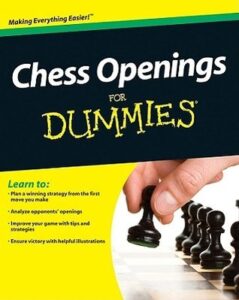
Improve your chess game the fast and easy way You never get a second chance to make a first impression?especially in the game of chess! Chess Openings For Dummies gives you tips and techniques for analyzing openings and strategies for winning chess games from the very first move you make!
This friendly, helpful guide provides you with easy-to-follow and step-by-step instructions on the top opening chess strategies and gives you the tools you need to develop your own line of attack from the very start.
Includes illustrations to help ensure victory Equips you with the tools and strategies to plan a winning strategy Also serves as a valuable resource for curriculums that use chess as a learning tool Whether you?re a veteran or novice chess player, Chess Openings For Dummies is the ultimate guide to getting a grip on the openings and variants that will ensure you have all the right moves to open and win any chess game.
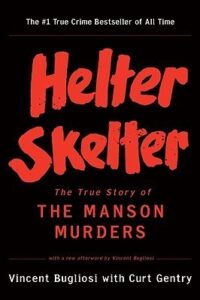
Prosecuting attorney in the Manson trial, Vincent Bugliosi held a unique insider's position in one of the most baffling and horrifying cases of the twentieth century: the cold-blooded Tate-LaBianca murders carried out by Charles Manson and four of his followers. What motivated Manson in his seemingly mindless selection of victims, and what was his hold over the young women who obeyed his orders? Here is the gripping story of this famous and haunting crime. 50 pages of b/w photographs.
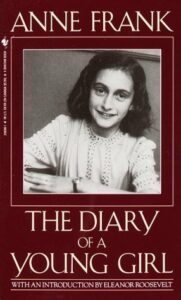
Discovered in the attic where she spent the final years of her life, Anne Frank’s Diary has become a timeless classic; a powerful reminder of the horrors of war and a moving testament to the resilience of the human spirit.
In 1942, as the Nazis occupied Holland, thirteen-year-old Anne Frank and her Jewish family fled their home in Amsterdam and went into hiding. For the next two years, until they were betrayed to the Gestapo, the Franks and another family lived in the cramped “Secret Annexe” of an old office building. Cut off from the outside world, they endured hunger, boredom, the strain of close quarters, and the constant fear of discovery and death.
Through it all, Anne documented her experiences in a diary filled with vivid observations. At times thoughtful, poignant, and even unexpectedly funny, her writing offers a remarkable window into the strength and vulnerability of the human spirit. It’s both a compelling self-portrait of a bright, spirited young woman and a heartbreaking glimpse of a life that should have been far longer.
A searing memoir of reckoning and healing from an acclaimed journalist and former This American Life producer investigating the little-understood science behind Complex PTSD and how it has shaped her life.
By age thirty, Stephanie Foo was successful on paper: She had her dream job as a radio producer at This American Life and had won an Emmy. But behind her office door she was having panic attacks and sobbing at her desk. After years of questioning what was wrong with her, she was diagnosed with Complex PTSD--a condition that occurs when trauma happens continuously, over the course of years.
Both of Stephanie's parents had abandoned her as a teenager after years of physical and verbal abuse and neglect. She thought she'd overcome her trauma, but her diagnosis illuminated the ways in which her past continued to threaten her health, her relationships, and her career. Finding few resources to help her heal, Stephanie set out to map her experience onto the scarce scientific research on C-PTSD.
In this deeply personal and thoroughly researched account, Stephanie interviews scientists and psychologists and tries a variety of innovative therapies with the determination and curiosity of an award-winning journalist. She returns to her hometown of San Jose, California, to investigate the effects of immigrant trauma on a community, she uncovers family secrets in the country of her birth, Malaysia, and learns how trauma can be inherited through generations. Ultimately, she discovers that you don't move on from trauma--but you can learn to move with it, with grace and joy.
Powerful, enlightening, and clarifying, What My Bones Know is a brave narrative that reckons with the hold of the past over the present, the mind over the body--and one woman's ability to reclaim agency from her trauma.
In my book, you will meet a little girl named Viola who ran from her past until she made a life-changing decision to stop running forever.
This is my story, from a crumbling apartment in Central Falls, Rhode Island, to the stage in New York City, and beyond. This is the path I took to finding my purpose but also my voice in a world that didn’t always see me.
As I wrote Finding Me, my eyes were open to the truth of how our stories are often not given close examination. We are forced to reinvent them to fit into a crazy, competitive, judgmental world. So I wrote this for anyone running through life untethered, desperate and clawing their way through murky memories, trying to get to some form of self-love. For anyone who needs reminding that a life worth living can only be born from radical honesty and the courage to shed facades and be . . . you.
Finding Me is a deep reflection, a promise, and a love letter of sorts to self. My hope is that my story will inspire you to light up your own life with creative expression and rediscover who you were before the world put a label on you.
From acclaimed author Ursula K. Le Guin, and with an introduction by Karen Joy Fowler, a collection of thoughts—always adroit, often acerbic—on aging, belief, the state of literature, and the state of the nation.
Ursula K. Le Guin has taken readers to imaginary worlds for decades. Now she’s in the last great frontier of life, old age, and exploring new literary territory: the blog, a forum where her voice—sharp, witty, as compassionate as it is critical—shines. No Time to Spare collects the best of Ursula’s blog, presenting perfectly crystallized dispatches on what matters to her now, her concerns with this world, and her wonder at it.
On the absurdity of denying your age, she says, If I’m ninety and believe I’m forty-five, I’m headed for a very bad time trying to get out of the bathtub. On cultural perceptions of fantasy: The direction of escape is toward freedom. So what is ‘escapism’ an accusation of? On her new cat: He still won’t sit on a lap…I don’t know if he ever will. He just doesn’t accept the lap hypothesis. On breakfast: Eating an egg from the shell takes not only practice, but resolution, even courage, possibly willingness to commit crime. And on all that is unknown, all that we discover as we muddle through life: How rich we are in knowledge, and in all that lies around us yet to learn. Billionaires, all of us.
Welcome Back!
Track your reading progress and sync your library.