Shevek, a brilliant physicist, decides to take action. He will seek answers, question the unquestionable, and attempt to tear down the walls of hatred that have isolated his planet of anarchists from the rest of the civilized universe. To do this dangerous task will mean giving up his family and possibly his life—Shevek must make the unprecedented journey to the utopian mother planet, Urras, to challenge the complex structures of life and living, and ignite the fires of change.
A classic science fiction novel by one of the greatest writers of the genre, set in a future world where one man's dreams control the fate of humanity.
In a future world racked by violence and environmental catastrophes, George Orr wakes up one day to discover that his dreams have the ability to alter reality. He seeks help from Dr. William Haber, a psychiatrist who immediately grasps the power George wields. Soon George must preserve reality itself as Dr. Haber becomes adept at manipulating George's dreams for his own purposes.
The Lathe of Heaven is an eerily prescient novel from award-winning author Ursula K. Le Guin that masterfully addresses the dangers of power and humanity's self-destructiveness, questioning the nature of reality itself. It is a classic of the science fiction genre.
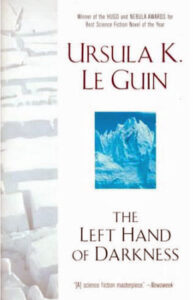
A groundbreaking work of science fiction, The Left Hand of Darkness tells the story of a lone human emissary to Winter, an alien world whose inhabitants spend most of their time without a gender. His goal is to facilitate Winter's inclusion in a growing intergalactic civilization. But to do so he must bridge the gulf between his own views and those of the completely dissimilar culture that he encounters.
Embracing the aspects of psychology, society, and human emotion on an alien world, The Left Hand of Darkness stands as a landmark achievement in the annals of intellectual science fiction.
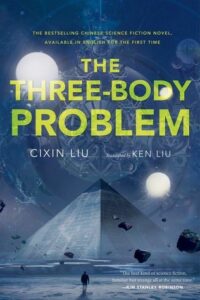
Set against the backdrop of China's Cultural Revolution, a secret military project sends signals into space to establish contact with aliens. An alien civilization on the brink of destruction captures the signal and plans to invade Earth. Meanwhile, on Earth, different camps start forming, planning to either welcome the superior beings and help them take over a world seen as corrupt, or to fight against the invasion.
Andrew "Ender" Wiggin thinks he is playing computer simulated war games; he is, in fact, engaged in something far more desperate. The result of genetic experimentation, Ender may be the military genius Earth desperately needs in a war against an alien enemy seeking to destroy all human life. The only way to find out is to throw Ender into ever harsher training, to chip away and find the diamond inside, or destroy him utterly. Ender Wiggin is six years old when it begins. He will grow up fast.
But Ender is not the only result of the experiment. The war with the Buggers has been raging for a hundred years, and the quest for the perfect general has been underway almost as long. Ender's two older siblings, Peter and Valentine, are every bit as unusual as he is, but in very different ways. While Peter was too uncontrollably violent, Valentine very nearly lacks the capability for violence altogether. Neither was found suitable for the military's purpose. But they are driven by their jealousy of Ender, and by their inbred drive for power. Peter seeks to control the political process, to become a ruler. Valentine's abilities turn more toward the subtle control of the beliefs of commoner and elite alike, through powerfully convincing essays. Hiding their youth and identities behind the anonymity of the computer networks, these two begin working together to shape the destiny of Earth-an Earth that has no future at all if their brother Ender fails.
Clarke's masterful evocation of the far future of humanity, considered his finest novel.
Men had built cities before, but never such a city as Diaspar. For millennia its protective dome shut out the creeping decay and danger of the world outside. Once, it held powers that rule the stars.
But then, as legend has it, the invaders came, driving humanity into this last refuge. It takes one man, a Unique, to break through Diaspar's stifling inertia, to smash the legend and discover the true nature of the Invaders.
Winner of the Hugo, Nebula, and Philip K. Dick Awards, Neuromancer is a science fiction masterpiece—a classic that ranks as one of the twentieth century’s most potent visions of the future.
Case was the sharpest data-thief in the matrix—until he crossed the wrong people and they crippled his nervous system, banishing him from cyberspace. Now a mysterious new employer has recruited him for a last-chance run at an unthinkably powerful artificial intelligence. With a dead man riding shotgun and Molly, a mirror-eyed street-samurai, to watch his back, Case is ready for the adventure that upped the ante on an entire genre of fiction.
Neuromancer was the first fully-realized glimpse of humankind’s digital future—a shocking vision that has challenged our assumptions about technology and ourselves, reinvented the way we speak and think, and forever altered the landscape of our imaginations.
Jason Taverner woke up one morning to find himself completely unknown. The night before he had been the top-rated television star with millions of devoted watchers. The next day he was just an unidentified walking object, whose face nobody recognised, of whom no one had heard, and without the I.D. papers required in that near future.
When he finally found a man who would agree to counterfeiting such cards for him, that man turned out to be a police informer. And then Taverner found out not only what it was like to be a nobody but also to be hunted by the whole apparatus of society.
It was obvious that in some way Taverner had become the pea in in some sort of cosmic shell game—but how? And why?
Philip K. Dick takes the reader on a walking tour of solipsism's scariest margin in his latest novel about the age we are already half into.
Welcome Back!
Track your reading progress and sync your library.