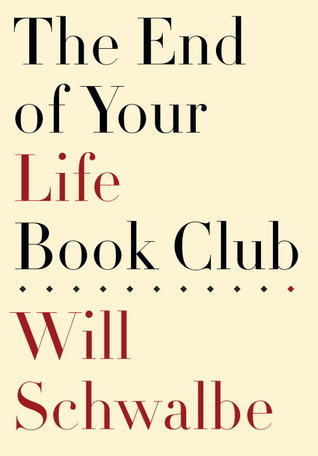
The inspiring story of a son and his dying mother, who form a “book club” that brings them together as her life comes to a close.
Mary Anne Schwalbe is waiting for her chemotherapy treatments when Will casually asks her what she’s reading. The conversation they have grows into tradition: soon they are reading the same books so they can have something to talk about in the hospital waiting room. The ones they choose range from classic to popular, from fantastic to spiritual, and we hear their passion for reading and their love for each other in their intimate and searching discussions.
A profoundly moving testament to the power of love between a child and parent, and the power of reading in our lives.
Tara Westover was 17 the first time she set foot in a classroom. Born to survivalists in the mountains of Idaho, she prepared for the end of the world by stockpiling home-canned peaches and sleeping with her "head-for-the-hills bag". In the summer she stewed herbs for her mother, a midwife and healer, and in the winter she salvaged in her father's junkyard.
Her father forbade hospitals, so Tara never saw a doctor or nurse. Gashes and concussions, even burns from explosions, were all treated at home with herbalism. The family was so isolated from mainstream society that there was no one to ensure the children received an education and no one to intervene when one of Tara's older brothers became violent.
Then, lacking any formal education, Tara began to educate herself. She taught herself enough mathematics and grammar to be admitted to Brigham Young University, where she studied history, learning for the first time about important world events like the Holocaust and the civil rights movement. Her quest for knowledge transformed her, taking her over oceans and across continents, to Harvard and to Cambridge. Only then would she wonder if she'd traveled too far, if there was still a way home.
Educated is an account of the struggle for self-invention. It is a tale of fierce family loyalty and of the grief that comes with severing the closest of ties. With the acute insight that distinguishes all great writers, Westover has crafted a universal coming-of-age story that gets to the heart of what an education is and what it offers: the perspective to see one's life through new eyes and the will to change it.
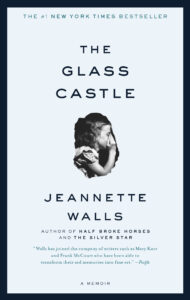
The Glass Castle is a remarkable memoir of resilience and redemption, and a revelatory look into a family at once deeply dysfunctional and uniquely vibrant. When sober, Jeannette's brilliant and charismatic father captured his children's imagination, teaching them physics, geology, and how to embrace life fearlessly. But when he drank, he was dishonest and destructive. Her mother was a free spirit who abhorred the idea of domesticity and didn't want the responsibility of raising a family.
The Walls children learned to take care of themselves. They fed, clothed, and protected one another, and eventually found their way to New York. Their parents followed them, choosing to be homeless even as their children prospered.
The Glass Castle is truly astonishing--a memoir permeated by the intense love of a peculiar but loyal family.
This charming classic, first published in 1970, brings together twenty years of correspondence between Helene Hanff, a freelance writer living in New York City, and a used-book dealer in London. Through the years, though never meeting and separated both geographically and culturally, they share a winsome, sentimental friendship based on their common love for books. Their relationship, captured so acutely in these letters, is one that will grab your heart and not let go.
The New York Times bestseller from the Grammy-nominated indie rockstar Japanese Breakfast, an unflinching, deeply moving memoir about growing up mixed-race, Korean food, losing her Korean mother, and forging her own identity in the wake of her loss.
In this exquisite story of family, food, grief, and endurance, Michelle Zauner proves herself far more than a dazzling singer, songwriter, and guitarist. With humour and heart, she tells of growing up the only Asian-American kid at her school in Eugene, Oregon; of struggling with her mother’s particular, high expectations of her; of a painful adolescence; of treasured months spent in her grandmother’s tiny apartment in Seoul, where she and her mother would bond, late at night, over heaping plates of food. As she grew up, moving to the east coast for college, finding work in the restaurant industry, performing gigs with her fledgling band – and meeting the man who would become her husband – her Koreanness began to feel ever more distant, even as she found the life she wanted to live.
It was her mother’s diagnosis of terminal pancreatic cancer, when Michelle was twenty-five, that forced a reckoning with her identity and brought her to reclaim the gifts of taste, language, and history her mother had given her.
Vivacious, lyrical and honest, Michelle Zauner’s voice is as radiantly alive on the page as it is onstage. Rich with intimate anecdotes that will resonate widely, Crying in H Mart is a book to cherish, share, and reread.
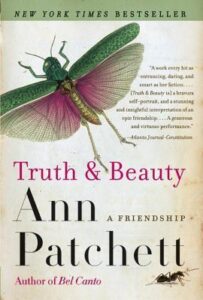
Ann Patchett and the late Lucy Grealy met in college in 1981, and, after enrolling in the Iowa Writers’ Workshop, began a friendship that would be as defining to both of their lives as their work. In Grealy’s critically acclaimed memoir Autobiography of a Face, she wrote about losing part of her jaw to childhood cancer, years of chemotherapy and radiation, and endless reconstructive surgeries. In Truth and Beauty, the story isn’t Lucy’s life or Ann’s life but the parts of their lives they shared. This is a portrait of unwavering commitment that spans twenty years, from the long winters of the Midwest to surgical wards to book parties in New York. Through love, fame, drugs, and despair, this is what it means to be part of two lives that are intertwined--and what happens when one is left behind.
'An act of consummate literary bravery, a writer known for her clarity allowing us to watch her mind as it becomes clouded with grief.'
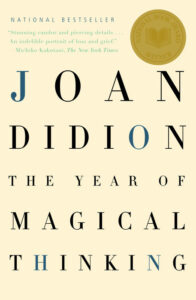
From one of America's iconic writers, a stunning book of electric honesty and passion. Joan Didion explores an intensely personal yet universal experience: a portrait of a marriage–and a life, in good times and bad–that will speak to anyone who has ever loved a husband or wife or child.
Several days before Christmas 2003, John Gregory Dunne and Joan Didion saw their only daughter, Quintana, fall ill with what seemed at first flu, then pneumonia, then complete septic shock. She was put into an induced coma and placed on life support. Days later–the night before New Year's Eve–the Dunnes were just sitting down to dinner after visiting the hospital when John Gregory Dunne suffered a massive and fatal coronary. In a second, this close, symbiotic partnership of forty years was over. Four weeks later, their daughter pulled through. Two months after that, arriving at LAX, she collapsed and underwent six hours of brain surgery at UCLA Medical Center to relieve a massive hematoma.
This powerful book is Didion's attempt to make sense of the "weeks and then months that cut loose any fixed idea I ever had about death, about illness . . . about marriage and children and memory . . . about the shallowness of sanity, about life itself."
On the morning of December 26, 2004, on the southern coast of Sri Lanka, Sonali Deraniyagala lost her parents, her husband, and her two young sons in the tsunami she miraculously survived. In this brave and searingly frank memoir, she describes those first horrifying moments and her long journey since. She has written an engrossing, unsentimental, beautifully poised account: as she struggles through the first months following the tragedy, furiously clenched against a reality that she cannot face and cannot deny; and then, over the ensuing years, as she emerges reluctantly, slowly allowing her memory to take her back through the rich and joyous life she’s mourning, from her family’s home in London, to the birth of her children, to the year she met her English husband at Cambridge, to her childhood in Colombo; all the while learning the difficult balance between the almost unbearable reminders of her loss and the need to keep her family, somehow, still alive within her.
When Alice Ozma was in 4th grade, she and her father decided to see if he could read aloud to her for 100 consecutive nights. On the hundredth night, they shared pancakes to celebrate, but it soon became evident that neither wanted to let go of their storytelling ritual. So they decided to continue what they called "The Streak." Alice's father read aloud to her every night without fail until the day she left for college.
Alice approaches her book as a series of vignettes about her relationship with her father and the life lessons learned from the books he read to her.
Books included in the Streak included: Great Expectations by Charles Dickens, the Oz books by L. Frank Baum, Harry Potter by J. K. Rowling, Alice's Adventures in Wonderland by Lewis Carroll, and Shakespeare's plays.
Welcome Back!
Track your reading progress and sync your library.