John Galsworthy, a Nobel Prize-winning author, chronicles the ebbing social power of the commercial upper-middle-class Forsyte family through three generations, beginning in Victorian London during the 1880s and ending in the early 1920s.
The newest edition is here. Another alternate cover can be found here.
Emma Woodhouse is one of Austen's most captivating and vivid characters. Beautiful, spoilt, vain and irrepressibly witty, Emma organizes the lives of the inhabitants of her sleepy little village and plays matchmaker with devastating effect.
'The more I know of the world, the more am I convinced that I shall never see a man whom I can really love. I require so much!'
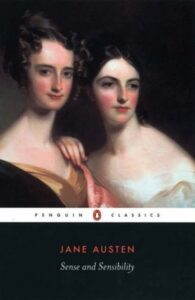
Marianne Dashwood wears her heart on her sleeve, and when she falls in love with the dashing but unsuitable John Willoughby she ignores her sister Elinor's warning that her impulsive behaviour leaves her open to gossip and innuendo. Meanwhile Elinor, always sensitive to social convention, is struggling to conceal her own romantic disappointment, even from those closest to her. Through their parallel experience of love—and its threatened loss—the sisters learn that sense must mix with sensibility if they are to find personal happiness in a society where status and money govern the rules of love.
This edition includes explanatory notes, textual variants between the first and second editions, and Tony Tanner's introduction to the original Penguin Classic edition.
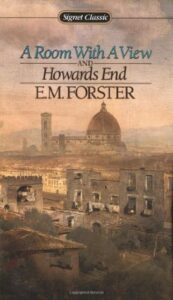
Wit and intelligence are the hallmarks of these two probing portraits of the English character written by E.M. Forster. Both are stories of extreme contrasts--in values, social class and cultural perspectives. Romantic relationships lead to conventional happiness in the delightful social comedy A Room with a View, and to unexpected scandal in the richer, deeply moving novel Howards End.
Howards End, which rivals A Passage to India as Forster's greatest work, makes a country house in Hertfordshire the center and the symbol for what Lionel Trilling called a class war about who would inherit England. Commerce clashes with culture, greed with gentility.
A Room with a View brings home the stuffiness of upper-middle-class Edwardian society in a tremendously funny comedy that pairs a well-bred young lady with a lusty railway clerk and satirizes both the clergy and the English notion of respectability.
Quintessentially British, these two novels have become twentieth-century classics. With an introduction and bibliography by Benjamin DeMott.
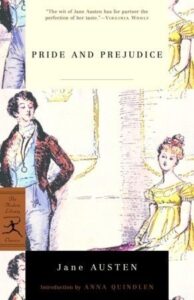
Since its immediate success in 1813, Pride and Prejudice has remained one of the most popular novels in the English language. Jane Austen called this brilliant work "her own darling child" and its vivacious heroine, Elizabeth Bennet, "as delightful a creature as ever appeared in print." The romantic clash between the opinionated Elizabeth and her proud beau, Mr. Darcy, is a splendid performance of civilized sparring. And Jane Austen's radiant wit sparkles as her characters dance a delicate quadrille of flirtation and intrigue, making this book the most superb comedy of manners of Regency England.
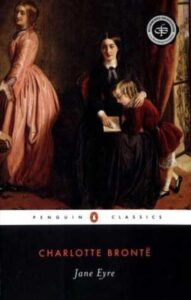
A gothic masterpiece of tempestuous passions and dark secrets, Charlotte Brontë's Jane Eyre is edited with an introduction and notes by Stevie Davis in Penguin Classics.
Charlotte Brontë tells the story of orphaned Jane Eyre, who grows up in the home of her heartless aunt, enduring loneliness and cruelty. This troubled childhood strengthens Jane's natural independence and spirit - which prove necessary when she finds employment as a governess to the young ward of Byronic, brooding Mr Rochester. As her feelings for Rochester develop, Jane gradually uncovers Thornfield Hall's terrible secret, forcing her to make a choice. Should she stay with Rochester and live with the consequences, or follow her convictions - even if it means leaving the man she loves? A novel of intense power and intrigue, Jane Eyre dazzled readers with its passionate depiction of a woman's search for equality and freedom.
"But you do," he went on, not waiting for contradiction. "You love the boy body and soul, plainly, directly, as he loves you, and no other word expresses it ..."
Lucy has her rigid, middle-class life mapped out for her, until she visits Florence with her uptight cousin Charlotte, and finds her neatly ordered existence thrown off balance. Her eyes are opened by the unconventional characters she meets at the Pension Bertolini: flamboyant romantic novelist Eleanor Lavish, the Cockney Signora, curious Mr Emerson and, most of all, his passionate son George.
Lucy finds herself torn between the intensity of life in Italy and the repressed morals of Edwardian England, personified in her terminally dull fiancé Cecil Vyse. Will she ever learn to follow her own heart?
A novel that chronicles the lives of two women who could not be more different: Becky Sharp, an orphan whose only resources are her vast ambitions, her native wit, and her loose morals; and her schoolmate Amelia Sedley, a typically naive Victorian heroine, the pampered daughter of a wealthy family.
For this novel, Scott moved far away from the setting of his own turbulent time. He went back to the late 12th century, and to England rather than the Scottish settings of all his previous novels. He connected his writing Ivanhoe with his concerns about contemporary events. Scott drew together the apparently opposing themes of historical reality and chivalric romance, social realism and high adventure, past and present.
Welcome Back!
Track your reading progress and sync your library.