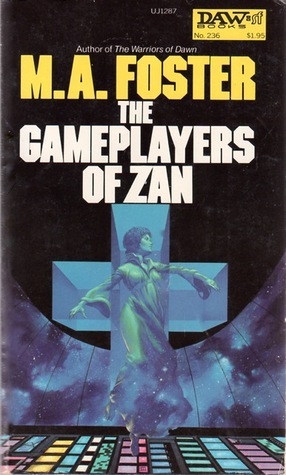
The Ler had been genetically created to be a new race of supermen, and the experiment had not been entirely successful. They were superior to normal humans in certain ways, but all too human in others. Grudgingly, suspiciously, the overpopulated billions of Earth allotted the families of the Ler a special reservation – a last wilderness area where they could live their odd lives, contribute their brilliant talents to humanity’s desperate needs – and yet be under constant surveillance.
Reidon Ward’s first semester at the Galens Institute hasn't been without reward. In just over half a year he’s gone from the weakest cadet at school to one of the strongest in his class, and there’s no one left who would argue that his Device, Shido, isn’t the most terrifying CAD they’ve ever laid eyes on. Still, Rei knows that his climb has barely begun, like he knows that the true fight is only just starting.
After all… The Sectionals tournament has arrived.
Rei, along with Aria, Viv, Catcher, and a couple unexpected squadmates, are about to face the first real battle of their careers. Squaring off with some of the best Users in the Astra System, they’re going to have to put everything they have—as individuals and as a team—into their coming fights if they want to ultimately end up standing at the top. As ever, though, their journey is hardly bound to be a smooth one.
Especially not when Rei and Aria begin to suspect that Shido may be even more formidable than it appears, much less as the powerful entities who've already taken notice of the ‘Iron Prince of Galens' begin to make their moves, some casting their hands in his favor, others very much against…
He doesn't know it yet, of course. Reidon was born weak, sickly and small. Afflicted with a painful disease and abandoned by his parents because of it, he has had to fight tooth and nail for every minor advantage life has allowed him.
His perseverance has not gone unnoticed, however, and when the most powerful artificial intelligence in human history takes an interest in him, things began to change quickly. Granted a CAD—a Combat Assistance Device—with awful specs but an infinite potential for growth, Reidon finds himself at the bottom of his class at the Galens Institute, one of the top military academies in the Collective. Along with his best friend, Viviana Arada, Reidon will have to start his long climb through the school rankings, and on to the combat tournament circuits that have become humanity's greatest source of excitement and entertainment.
So begins the rise of a god. So begins the ascent of the Stormweaver.
It calls itself Murderbot, but only when no one can hear.
It worries about the fragile human crew who've grown to trust it, but only where no one can see.
It tells itself that they're only a professional obligation, but when they're captured and an old friend from the past requires urgent assistance, Murderbot must choose between inertia and drastic action.
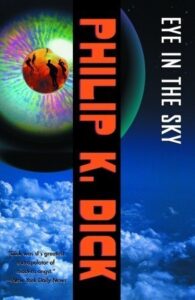
While sightseeing at the Belmont Bevatron, Jack Hamilton, along with seven others, is caught in a lab accident. When he regains consciousness, he is in a fantasy world of Old Testament morality gone awry—a place of instant plagues, immediate damnations, and death to all perceived infidels. Hamilton figures out how he and his compatriots can escape this world and return to their own, but first they must pass through three other vividly fantastical worlds, each more perilous and hilarious than the one before.
Winner of both the Hugo and John W. Campbell awards for best novel, widely regarded as the premiere science fiction writer of his day, and the object of cult-like adoration from his legions of fans, Philip K. Dick has come to be seen in a literary light that defies classification in much the same way as Borges and Calvino. With breathtaking insight, he utilizes vividly unfamiliar worlds to evoke the hauntingly and hilariously familiar in our society and ourselves.
Of all the justly famous writers of science fiction and fantasy, none has inspired greater enthusiasm and loyalty than Andre Norton. Of all Ms. Norton's works, none has been more warmly received than her famed "Forerunner" series, a series whose heroes and heroines have already taken on the trappings of legend.
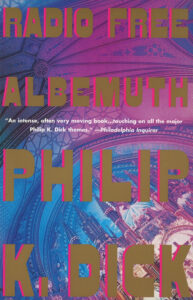
In the late 1960s a paranoid incompetent has schemed his way into the White House and convulsed America in a vicious war against imaginary internal enemies. A struggling science Fiction writer named Philip K. Dick is trying to keep from becoming one of that war's casualties. And Dick's best friend, a record executive named Nicholas Brady, is receiving transmissions from an extraterrestrial entity that may also happen to be God — an entity that apparently wants him to overthrow the President.
In this, his last novel, Philip K. Dick morphed and recombined themes that had informed his fiction from A Scanner Darkly to VALIS and produced a wild, impassioned work that reads like a visionary alternate history of the United States. Agonizingly suspenseful, darkly hilarious, and filled with enough conspiracy theories to thrill the most hardened paranoid, Radio Free Albemuth is proof of Dick's stature as our century's greatest prankster-prophet.
Intervention sets the scene for Julian May's new trlogy of the Galactic Milieu. This has been split into two books: The Surveillance (containing Prologue, The Surveillance, and The Disclosure) and The Metaconcert, containing The Intervention and Epilogue.
For 60 000 years the five races of the Galactic Milieu have watched and waited for the time when human mental development on Earth is ready for the Intervention ...
As the twentieth century draws to its end, phenomenal mental powers are displayed by 'operants' all across our planet... They can 'farspeak' one another telepathically. They can build mental shields and they are capable of coercion by power of mind.
One of there is Rogatien Remillard, a dealer in secondhand books, whose memories - written a century on - form the core of this chronicle. They tell of a world where the mind has become a weapon; and of two brothers, each possessed of extraordinary powers - one a peace-bringer, the other an advocate of evil...
The Cosmic Trilogy relates the interplanetary travels of Ransom, C.S. Lewis's ill-informed and terrified victim who leaves Earth much against his will and who, in the first book of the trilogy, Out of the Silent Planet, published by the Bodley Head in 1938, encounters the imaginary and delightful world of Macalandra. In the second book, Perelandra (1943), Ransom is transported to a world of sweet smells and delicious tastes, a new Garden of Eden in which is enacted, with a difference, the story of Temptation. That Hideous Strength (1945) completes the trilogy and finds Dr Ransom returned from his travels in space and living in an English university town - where the Senior Common Room is given a mysterious depth, a more than earthly dimension which such things, in the author's view, always have in life.
C.S. Lewis believed that popular science was the new mythology of his age, and in The Cosmic Trilogy he ransacks the uncharted territory of space and makes that mythology the medium of his spiritual imagination.
Welcome Back!
Track your reading progress and sync your library.