
C.S. Lewis’ The Great Divorce is a classic Christian allegorical tale about a bus ride from hell to heaven. An extraordinary meditation upon good and evil, grace and judgment, Lewis’s revolutionary idea in the The Great Divorce is that the gates of Hell are locked from the inside. Using his extraordinary descriptive powers, Lewis’ The Great Divorce will change the way we think about good and evil.

A masterpiece of satire, this classic has entertained and enlightened readers the world over with its sly and ironic portrayal of human life from the vantage point of Screwtape, a senior tempter in the service of "Our Father Below." At once wildly comic, deadly serious, and strikingly original, C. S. Lewis gives us the correspondence of the worldly-wise old devil to his nephew Wormwood, a novice demon in charge of securing the damnation of an ordinary young man. The Screwtape Letters is the most engaging and humorous account of temptation—and triumph over it—ever written.
Now, for the first time, The Screwtape Letters is presented with its full text alongside helpful annotations provided by Lewis enthusiast and dramatist Paul McCusker. The notes include literary, theological, and biographical information to enhance Lewis's core themes and demystify complex ideas. McCusker also guides readers to concepts and references from the beloved author's other treasured volumes to deepen and enrich this timeless classic. The annotated edition is the ultimate guide for understanding the heavenly truths buried in these epistles from below.
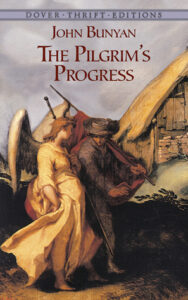
This famous story of man's progress through life in search of salvation remains one of the most entertaining allegories of faith ever written. Set against realistic backdrops of town and country, the powerful drama of the pilgrim's trials and temptations follows him in his harrowing journey to the Celestial City. Along a road filled with monsters and spiritual terrors, Christian confronts such emblematic characters as Worldly Wiseman, Giant Despair, Talkative, Ignorance, and the demons of the Valley of the Shadow of Death. But he is also joined by Hopeful and Faithful. An enormously influential 17th-century classic, universally known for its simplicity, vigor, and beauty of language, The Pilgrim's Progress remains one of the most widely read books in the English language.
This book is meant to be a companion to "Heretics," and to put the positive side in addition to the negative. Many critics complained of the book because it merely criticised current philosophies without offering any alternative philosophy. This book is an attempt to answer the challenge. It is the purpose of the writer to attempt an explanation, not of whether the Christian Faith can be believed, but of how he personally has come to believe it. The book is therefore arranged upon the positive principle of a riddle and its answer. It deals first with all the writer's own solitary and sincere speculations and then with the startling style in which they were all suddenly satisfied by the Christian Theology. The writer regards it as amounting to a convincing creed. But if it is not that it is at least a repeated and surprising coincidence.
Mere Christianity is C.S. Lewis's forceful and accessible doctrine of Christian belief. First heard as informal radio broadcasts and then published as three separate books — The Case for Christianity, Christian Behavior, and Beyond Personality — Mere Christianity brings together what Lewis saw as the fundamental truths of the religion.
Rejecting the boundaries that divide Christianity's many denominations, C.S. Lewis finds a common ground on which all those who have Christian faith can stand together, proving that "at the centre of each there is something, or a Someone, who against all divergences of belief, all differences of temperament, all memories of mutual persecution, speaks the same voice."
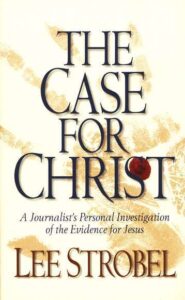
There's little question that he actually lived. But miracles? Rising from the dead? Some of the stories you hear about him sound like just that - stories. A reasonable person would never believe them, let alone the claim that he's the only way to God! But a reasonable person would also make sure that he or she understood the facts before jumping to conclusions. That's why Lee Strobel - an award-winning legal journalist with a knack for asking tough questions - decided to investigate Jesus for himself. An atheist, Strobel felt certain his findings would bring Christianity's claims about Jesus tumbling down like a house of cards. He was in for the surprise of his life. Join him as he retraces his journey from skepticism to faith. You'll consult expert testimony as you sift through the truths that history, science, psychiatry, literature, and religion reveal. Like Strobel, you'll be amazed at the evidence - how much there is, how strong it is, and what it says. The facts are in. What will your verdict be in The Case for Christ?
The End of Faith. The God Delusion. God Is Not Great. Letter to a Christian Nation. Bestseller lists are filled with doubters. But what happens when you actually doubt your doubts?
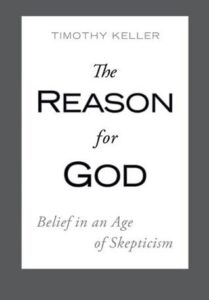
Although a vocal minority continues to attack the Christian faith, for most Americans, faith is a large part of their lives: 86 percent of Americans refer to themselves as religious, and 75 percent of all Americans consider themselves Christians. So how should they respond to these passionate, learned, and persuasive books that promote science and secularism over religion and faith? For years, Tim Keller has compiled a list of the most frequently voiced “doubts” skeptics bring to his Manhattan church. And in The Reason for God, he single-handedly dismantles each of them. Written with atheists, agnostics, and skeptics in mind, Keller also provides an intelligent platform on which true believers can stand their ground when bombarded by the backlash. The Reason for God challenges such ideology at its core and points to the true path and purpose of Christianity.
Why is there suffering in the world? How could a loving God send people to Hell? Why isn’t Christianity more inclusive? Shouldn’t the Christian God be a god of love? How can one religion be “right” and the rest “wrong”? Why have so many wars been fought in the name of God? These are just a few of the questions even ardent believers wrestle with today. In this book, Tim Keller uses literature, philosophy, real-life conversations and reasoning, and even pop culture to explain how faith in a Christian God is a soundly rational belief, held by thoughtful people of intellectual integrity with a deep compassion for those who truly want to know the truth.
One of the most important theologians of the twentieth century illuminates the relationship between ourselves and the teachings of Jesus in this classic text on ethics, humanism, and civic duty.
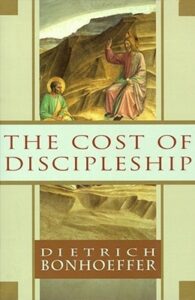
What can the call to discipleship, the adherence to the word of Jesus, mean today to the businessman, the soldier, the laborer, or the aristocrat? What did Jesus mean to say to us? What is his will for us today? Drawing on the Sermon on the Mount, Dietrich Bonhoeffer answers these timeless questions by providing a seminal reading of the dichotomy between "cheap grace" and "costly grace." "Cheap grace," Bonhoeffer wrote, "is the grace we bestow on ourselves...grace without discipleship....Costly grace is the gospel which must be sought again and again, the girl which must be asked for, the door at which a man must know....It is costly because it costs a man his life, and it is grace because it gives a man the only true life."
The Cost of Discipleship is a compelling statement of the demands of sacrifice and ethical consistency from a man whose life and thought were exemplary articulations of a new type of leadership inspired by the Gospel, and imbued with the spirit of Christian humanism and a creative sense of civic duty.
Christians know that God loves them, but often think that he is perpetually disappointed and frustrated, maybe even close to giving up on them. As a result, they focus a lot on what Jesus has done to appease God's wrath for sin. But how does Jesus Christ actually feel about his people amid all their sins and failures? This book draws us to Matthew 11, where Jesus describes himself as "gentle and lowly in heart," longing for his people to find rest in him. The gospel is primarily about God's heart drawn to his people, a heart of tender love for the sinful and suffering. These chapters take readers into the depths of Christ's very heart for sinners, diving deep into Bible passages that speak of who Christ is and encouraging readers with the affections of Christ for his people. His longing heart for sinners will comfort and sustain readers in their up-and-down lives.
Welcome Back!
Track your reading progress and sync your library.