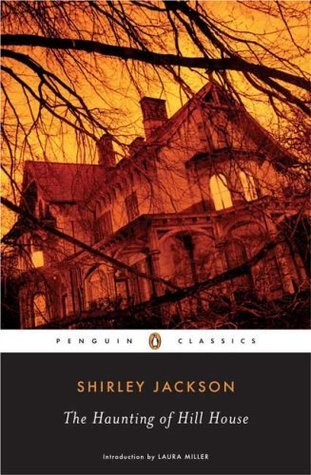
“Hill House, not sane, stood by itself against its hills, holding darkness within. . . .”
Four seekers have arrived at the rambling old pile known as Hill House: Dr. Montague, an occult scholar looking for solid evidence of psychic phenomena; Theodora, his lovely and lighthearted assistant; Luke, the adventurous future inheritor of the estate; and Eleanor, a friendless, fragile young woman with a dark past. As they begin to cope with chilling, even horrifying occurrences beyond their control or understanding, they cannot possibly know what lies ahead. For Hill House is gathering its powers—and soon it will choose one of them to make its own.
The Turn of the Screw is an 1898 horror novella by Henry James that first appeared in serial format in Collier's Weekly magazine (January 27 - April 16, 1898). In October 1898 it appeared in The Two Magics, a book published by Macmillan in New York City and Heinemann in London.
A very young woman's first job: governess for two weirdly beautiful, strangely distant, oddly silent children, Miles and Flora, at a forlorn estate... An estate haunted by a beckoning evil. Half-seen figures who glare from dark towers and dusty windows- silent, foul phantoms who, day by day, night by night, come closer, ever closer. With growing horror, the helpless governess realizes the fiendish creatures want the children, seeking to corrupt their bodies, possess their minds, own their souls. But worse-much worse- the governess discovers that Miles and Flora have no terror of the lurking evil. For they want the walking dead as badly as the dead want them.
Excerpt: I remember the whole beginning as a succession of flights and drops, a little seesaw of the right throbs and the wrong. After rising, in town, to meet his appeal, I had at all events a couple of very bad days - found myself doubtful again, felt indeed sure I had made a mistake. In this state of mind I spent the long hours of bumping, swinging coach that carried me to the stopping place at which I was to be met by a vehicle from the house.
Librarian note: Alternate covers can be found here and here.
'In one moment, every drop of blood in my body was brought to a stop... There, as if it had that moment sprung out of the earth, stood the figure of a solitary Woman, dressed from head to foot in white'
The Woman in White famously opens with Walter Hartright's eerie encounter on a moonlit London road. Engaged as a drawing master to the beautiful Laura Fairlie, Walter becomes embroiled in the sinister intrigues of Sir Percival Glyde and his 'charming' friend Count Fosco, who has a taste for white mice, vanilla bonbons, and poison. Pursuing questions of identity and insanity along the paths and corridors of English country houses and the madhouse, The Woman in White is the first and most influential of the Victorian genre that combined Gothic horror with psychological realism.
Matthew Sweet's introduction explores the phenomenon of Victorian 'sensation' fiction, and discusses Wilkie Collins's biographical and societal influences. Included in this edition are appendices on theatrical adaptations of the novel and its serialisation history.
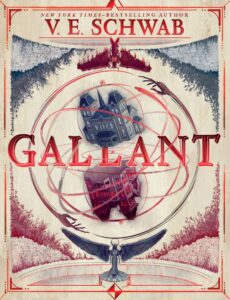
Everything casts a shadow. Even the world we live in. And as with every shadow, there is a place where it must touch. A seam, where the shadow meets its source.
Olivia Prior has grown up in Merilance School for girls, and all she has of her past is her mother’s journal—which seems to unravel into madness. Then, a letter invites Olivia to come home—to Gallant. Yet when Olivia arrives, no one is expecting her. But Olivia is not about to leave the first place that feels like home, it doesn’t matter if her cousin Matthew is hostile or if she sees half-formed ghouls haunting the hallways.
Olivia knows that Gallant is hiding secrets, and she is determined to uncover them. When she crosses a ruined wall at just the right moment, Olivia finds herself in a place that is Gallant—but not. The manor is crumbling, the ghouls are solid, and a mysterious figure rules over all. Now Olivia sees what has unraveled generations of her family, and where her father may have come from.
Olivia has always wanted to belong somewhere, but will she take her place as a Prior, protecting our world against the Master of the House? Or will she take her place beside him?
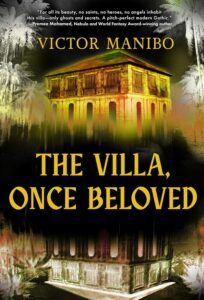
Villa Sepulveda is a storied relic of the Philippines’ past: a Spanish colonial manor, its moldering stonework filled with centuries-old heirlooms, nestled in a remote coconut plantation. When their patriarch dies mysteriously, his far-flung family returns to their ancestral home. Filipino-American student Adrian Sepulveda invites his college girlfriend, Sophie, a transracial adoptee who knows little about her own Filipino heritage, to the funeral of a man who was entwined with the history of the country itself.
Sophie soon learns that there is more to the Sepulvedas than a grand tradition of political and entrepreneurial success. Adrian’s relatives clash viciously amid grief, confusion, and questions about the family curse that their matriarch refuses to answer. When a landslide traps them all in the villa, secrets begin to emerge, revealing sins both intimately personal and unthinkably public.
Sifting through fact, folklore, and fiction, Sophie finds herself at the center of a reckoning. Did a mythical demon really kill Adrian’s grandfather? How complicit are the Sepulvedas in the country’s oppressive history? As a series of ill omens befall the villa, Sophie must decide whom to trust—and whom to flee—before the family’s true legacy comes to take its revenge . . .
You can find an alternative cover edition for this ISBN here and here.
When Jonathan Harker visits Transylvania to help Count Dracula with the purchase of a London house, he makes a series of horrific discoveries about his client. Soon afterwards, various bizarre incidents unfold in England: an apparently unmanned ship is wrecked off the coast of Whitby; a young woman discovers strange puncture marks on her neck; and the inmate of a lunatic asylum raves about the 'Master' and his imminent arrival.
In Dracula, Bram Stoker created one of the great masterpieces of the horror genre, brilliantly evoking a nightmare world of vampires and vampire hunters and also illuminating the dark corners of Victorian sexuality and desire.
This Norton Critical Edition includes a rich selection of background and source materials in three areas: Contexts includes probable inspirations for Dracula in the earlier works of James Malcolm Rymer and Emily Gerard. Also included are a discussion of Stoker's working notes for the novel and "Dracula's Guest," the original opening chapter to Dracula. Reviews and Reactions reprints five early reviews of the novel. "Dramatic and Film Variations" focuses on theater and film adaptations of Dracula, two indications of the novel's unwavering appeal. David J. Skal, Gregory A. Waller, and Nina Auerbach offer their varied perspectives. Checklists of both dramatic and film adaptations are included.
Criticism collects seven theoretical interpretations of Dracula by Phyllis A. Roth, Carol A. Senf, Franco Moretti, Christopher Craft, Bram Dijkstra, Stephen D. Arata, and Talia Schaffer.
A Chronology and a Selected Bibliography are included.
"The Cask of Amontillado" (sometimes spelled "The Casque ..") is a short story written by Edgar Allan Poe and first published in the November 1846 issue of "Godey's Lady's Book."
It is set in a nameless Italian city in an unspecified year (possibly during the eighteenth century) and concerns the revenge taken by the narrator on a friend who he claims has insulted him. Like several of Poe's stories, and in keeping with the 19th-century fascination with the subject, the narrative revolves around the possibility of a person being buried alive or enclosed in a small space with not possibility of escape (aka immurement).
Librarian's note: this entry relates to the story "The Cask of Amontillado." Collections of short stories by the author can be found elsewhere on Goodreads.
Best known for the 1892 title story of this collection, a harrowing tale of a woman's descent into madness, Charlotte Perkins Gilman wrote more than 200 other short stories. Seven of her finest are reprinted here.
Written from a feminist perspective, often focusing on the inferior status accorded to women by society, the tales include "turned," an ironic story with a startling twist, in which a husband seduces and impregnates a naïve servant; "Cottagette," concerning the romance of a young artist and a man who's apparently too good to be true; "Mr. Peebles' Heart," a liberating tale of a fiftyish shopkeeper whose sister-in-law, a doctor, persuades him to take a solo trip to Europe, with revivifying results; "The Yellow Wallpaper"; and three other outstanding stories.
These charming tales are not only highly readable and full of humor and invention, but also offer ample food for thought about the social, economic, and personal relationship of men and women — and how they might be improved.
Collects: —The Yellow Wallpaper —Three Thanksgivings —The Cottagette —Turned —Making a Change —If I Were a Man —Mr. Peebles' Heart
In a darkened room a young man sits telling the macabre and eerie story of his life - the story of a vampire, gifted with eternal life, cursed with an exquisite craving for human blood.
Here are the confessions of a vampire. Hypnotic, shocking, and chillingly erotic, this is a novel of mesmerizing beauty and astonishing force --- a story of danger and flight, of love and loss, of suspense and resolution, and of the extraordinary power of the senses. It is a novel only Anne Rice could write.
Welcome Back!
Track your reading progress and sync your library.