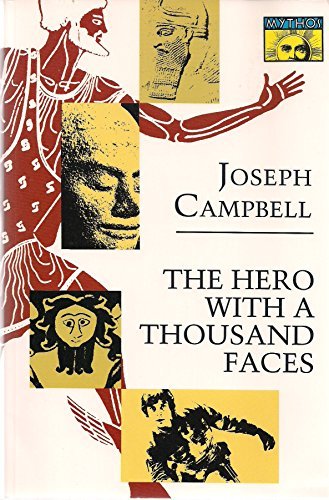
The first popular work to combine the spiritual and psychological insights of modern psychoanalysis with the archetypes of world mythology, the book creates a roadmap for navigating the frustrating path of contemporary life. Examining heroic myths in the light of modern psychology, it considers not only the patterns and stages of mythology but also its relevance to our lives today—and to the life of any person seeking a fully realized existence.
Myth, according to Campbell, is the projection of a culture’s dreams onto a large screen; Campbell’s book, like Star Wars, the film it helped inspire, is an exploration of the big-picture moments from the stage that is our world. It is a must-have resource for both experienced students of mythology and the explorer just beginning to approach myth as a source of knowledge.
The Power Of Myth launched an extraordinary resurgence of interest in Joseph Campbell and his work. A preeminent scholar, writer, and teacher, he has had a profound influence on millions of people. To him, mythology was the "song of the universe, the music of the spheres." With Bill Moyers, one of America's most prominent journalists, as his thoughtful and engaging interviewer, The Power Of Myth touches on subjects from modern marriage to virgin births, from Jesus to John Lennon, offering a brilliant combination of intelligence and wit.
At the heart of this classic, seminal book is Julian Jaynes's still-controversial thesis that human consciousness did not begin far back in animal evolution but instead is a learned process that came about only three thousand years ago and is still developing. The implications of this revolutionary scientific paradigm extend into virtually every aspect of our psychology, our history and culture, our religion -- and indeed our future.
Friedrich Nietzsche's Beyond Good and Evil is translated from the German by R.J. Hollingdale with an introduction by Michael Tanner in Penguin Classics.
Beyond Good and Evil confirmed Nietzsche's position as the towering European philosopher of his age. The work dramatically rejects the tradition of Western thought with its notions of truth and God, good and evil. Nietzsche demonstrates that the Christian world is steeped in a false piety and infected with a 'slave morality'. With wit and energy, he turns from this critique to a philosophy that celebrates the present and demands that the individual imposes their own 'will to power' upon the world.
This edition includes a commentary on the text by the translator and Michael Tanner's introduction, which explains some of the more abstract passages in Beyond Good and Evil.
Frederich Nietzsche (1844-1900) became the chair of classical philology at Basel University at the age of 24 until his bad health forced him to retire in 1879. He divorced himself from society until his final collapse in 1899 when he became insane. A powerfully original thinker, Nietzsche's influence on subsequent writers, such as George Bernard Shaw, D.H. Lawrence, Thomas Mann and Jean-Paul Sartre, was considerable.
If you enjoyed Beyond Good and Evil you might like Nietzsche's Thus Spoke Zarathustra, also available in Penguin Classics.
"One of the greatest books of a very great thinker." —Michael Tanner
The King James Version is an Early Modern English translation of the Christian Bible for the Church of England, which was commissioned in 1604 and published in 1611. The 80 books of the King James Version include 39 books of the Old Testament, 14 books of Apocrypha, and the 27 books of the New Testament.
From a renowned historian comes a groundbreaking narrative of humanity’s creation and evolution—a #1 international bestseller—that explores the ways in which biology and history have defined us and enhanced our understanding of what it means to be “human.” One hundred thousand years ago, at least six different species of humans inhabited Earth. Yet today there is only one—homo sapiens. What happened to the others? And what may happen to us? Most books about the history of humanity pursue either a historical or a biological approach, but Dr. Yuval Noah Harari breaks the mold with this highly original book that begins about 70,000 years ago with the appearance of modern cognition. From examining the role evolving humans have played in the global ecosystem to charting the rise of empires, Sapiens integrates history and science to reconsider accepted narratives, connect past developments with contemporary concerns, and examine specific events within the context of larger ideas. Dr. Harari also compels us to look ahead, because over the last few decades humans have begun to bend laws of natural selection that have governed life for the past four billion years. We are acquiring the ability to design not only the world around us, but also ourselves. Where is this leading us, and what do we want to become? Featuring 27 photographs, 6 maps, and 25 illustrations/diagrams, this provocative and insightful work is sure to spark debate and is essential reading for aficionados of Jared Diamond, James Gleick, Matt Ridley, Robert Wright, and Sharon Moalem.
In Sapiens, he explored our past. In Homo Deus, he looked to our future. Now, one of the most innovative thinkers on the planet turns to the present to make sense of today's most pressing issues.
How do computers and robots change the meaning of being human? How do we deal with the epidemic of fake news? Are nations and religions still relevant? What should we teach our children?
Yuval Noah Harari's 21 Lessons for the 21st Century is a probing and visionary investigation into today's most urgent issues as we move into the uncharted territory of the future. As technology advances faster than our understanding of it, hacking becomes a tactic of war, and the world feels more polarized than ever, Harari addresses the challenge of navigating life in the face of constant and disorienting change and raises the important questions we need to ask ourselves in order to survive.
In twenty-one accessible chapters that are both provocative and profound, Harari builds on the ideas explored in his previous books, untangling political, technological, social, and existential issues and offering advice on how to prepare for a very different future from the world we now live in: How can we retain freedom of choice when Big Data is watching us? What will the future workforce look like, and how should we ready ourselves for it? How should we deal with the threat of terrorism? Why is liberal democracy in crisis?
Harari's unique ability to make sense of where we have come from and where we are going has captured the imaginations of millions of readers. Here he invites us to consider values, meaning, and personal engagement in a world full of noise and uncertainty. When we are deluged with irrelevant information, clarity is power. Presenting complex contemporary challenges clearly and accessibly, 21 Lessons for the 21st Century is essential reading.
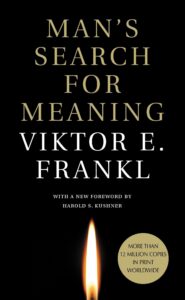
Psychiatrist Viktor Frankl's memoir has riveted generations of readers with its descriptions of life in Nazi death camps and its lessons for spiritual survival. Based on his own experience and the stories of his patients, Frankl argues that we cannot avoid suffering but we can choose how to cope with it, find meaning in it, and move forward with renewed purpose. At the heart of his theory, known as logotherapy, is a conviction that the primary human drive is not pleasure but the pursuit of what we find meaningful. Man's Search for Meaning has become one of the most influential books in America; it continues to inspire us all to find significance in the very act of living.
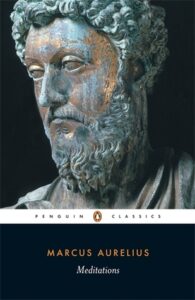
Written in Greek by the only Roman emperor who was also a philosopher, without any intention of publication, the Meditations of Marcus Aurelius offer a remarkable series of challenging spiritual reflections and exercises developed as the emperor struggled to understand himself and make sense of the universe. While the Meditations were composed to provide personal consolation and encouragement, Marcus Aurelius also created one of the greatest of all works of philosophy: a timeless collection that has been consulted and admired by statesmen, thinkers and readers throughout the centuries.
Welcome Back!
Track your reading progress and sync your library.