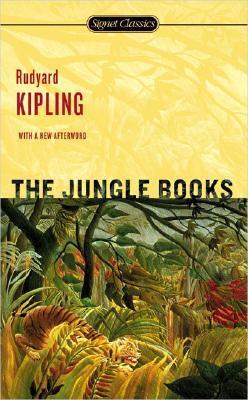
The Jungle Books can be regarded as classic stories told by an adult to children. But they also constitute a complex literary work of art in which the whole of Kipling’s philosophy of life is expressed in miniature. They are best known for the ‘Mowgli’ stories; the tale of a baby abandoned and brought up by wolves, educated in the ways and secrets of the jungle by Kaa the python, Baloo the bear, and Bagheera the black panther. The stories, a mixture of fantasy, myth, and magic, are underpinned by Kipling’s abiding preoccupation with the theme of self-discovery, and the nature of the ‘Law’.
The fables of Aesop have become one of the most enduring traditions of European culture, ever since they were first written down nearly two millennia ago. Aesop was reputedly a tongue-tied slave who miraculously received the power of speech; from his legendary storytelling came the collections of prose and verse fables scattered throughout Greek and Roman literature. First published in English by Caxton in 1484, the fables and their morals continue to charm modern readers: who does not know the story of the tortoise and the hare, or the boy who cried wolf?
Librarian's Note: Alternate cover edition can be found here.
Twelve stories about animals, insects, and other subjects include How the Camel Got His Hump. The Butterfly That Stamped, and How the Alphabet Was Made..
Alternate cover edition of ISBN-13: 978-0140286809, ISBN-10/ASIN: 0140286802
For the first time in English, all the fiction by the writer who has been called “the greatest Spanish-language writer of our century” collected in a single volume
A Penguin Classics Deluxe Edition with flaps and deckle-edged paper
For some fifty years, in intriguing and ingenious fictions that reimagined the very form of the short story—from his 1935 debut with A Universal History of Iniquity through his immensely influential collections Ficciones and The Aleph, the enigmatic prose poems of The Maker, up to his final work in the 1980s, Shakespeare’s Memory—Jorge Luis Borges returned again and again to his celebrated themes: dreams, duels, labyrinths, mirrors, infinite libraries, the manipulations of chance, gauchos, knife fighters, tigers, and the elusive nature of identity itself. Playfully experimenting with ostensibly subliterary genres, he took the detective story and turned it into metaphysics; he took fantasy writing and made it, with its questioning and reinventing of everyday reality, central to the craft of fiction; he took the literary essay and put it to use reviewing wholly imaginary books.
Bringing together for the first time in English all of Borges’s magical stories, and all of them newly rendered into English in brilliant translations by Andrew Hurley, Collected Fictions is the perfect one-volume compendium for all who have long loved Borges, and a superb introduction to the master’s work for all who have yet to discover this singular genius.
This volume reproduces the 1932 Modern Library edition, for which Bennett A. Cerf chose the most famous and representative stories from Sir Richard F. Burton's multivolume translation, and includes Burton's extensive and acclaimed explanatory notes.
The tales told by Shahrazad over a thousand and one nights to delay her execution by the vengeful King Shahriyar have become among the most popular in both Eastern and Western literature, as recounted by Sir Francis Burton. From the epic adventures of "Aladdin and the Enchanted Lamp" to the farcical "Young Woman and her Five Lovers" and the social criticism of "The Tale of the Hunchback", the stories depict a fabulous world of all-powerful sorcerers, jinns imprisoned in bottles and enchanting princesses. But despite their imaginative extravagance, the Tales are anchored to everyday life by their realism, providing a full and intimate record of medieval Islam.'
The Grimm brothers were early 19th-century writers best known for their fairy tales coming from Scandinavian, Icelandic and Germanic origins. By 1807 there was a growing interest in German folk tales. The Grimm brothers were academics who invited friends to their home and asked them to relate stories they had heard. They soon published their first collection of tales and from there several more volumes followed.
This compilation of fairy tales which includes the complete canon of over 200 tales has become a beloved set of classical stories the world over. Included in this collection are Hansel and Gretel, Briar Rose, The Fisherman and His Wife, Rapunzel, The Frog Prince, Little Red Riding Hood, Rumpelstiltskin, Tom Thumb, and many more. These stories are a delight to read and will rekindle up many childhood memories as they are reread. Presented here in this edition is the faithful translation of Margaret Hunt.
"Now, my dears," said old Mrs Rabbit one morning, "you may go into the fields or down the lane, but don't go into Mr. McGregor's garden."
Follow the story of naughty Peter Rabbit as he squeezes—predictably—under the gate into Mr. McGregor's garden and finds himself in all kinds of trouble! But how does Peter Rabbit get himself out of this tricky situation? Beatrix Potter's story about one mischievous but ultimately endearing little creature will tell us, accompanied by beautiful illustrations and timeless verses which have transcended generations.
'The Tale of Peter Rabbit', first published in 1902, is still today one of Beatrix Potter's most popular and well-loved tales. It is the first of the illustrious series that is The World of Beatrix Potter', and a story which has endured retelling after retelling at bedtimes all over the world.
Beatrix Potter (1866–1943) loved the countryside and spent much of her childhood drawing and studying animals. 'The Tale of Peter Rabbit', first published in 1902, was her first book. She later went on to publish more than twenty tales and collections of rhymes.
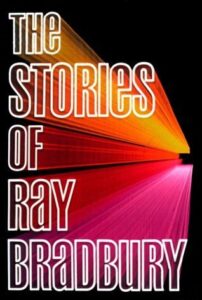
Drunk, and in charge of a bicycle / introduction by Ray Bradbury-- The night -- Homecoming-- Uncle Einar -- The traveler -- The lake -- The coffin -- The crowd -- The scythe -- There was an old woman -- There will come soft rains -- Mars is heaven -- The silent towns -- The earth men -- The off season -- The million-year picnic -- The fox and the forest -- Kaleidoscope -- The rocket man -- Marionettes, inc. -- No particular night or morning -- The city -- The fire balloons -- The last night of the world -- The veldt -- The long rain -- The great fire -- The wilderness -- A sound of thunder -- The murderer -- The April witch -- Invisible boy -- The golden kite, the silver wind -- The fog horn -- The black black and white game -- Embroidery -- The golden apples of the sun -- Powerhouse -- Hail and farewell -- The great wide world over there -- The playground -- Skeleton -- The man upstairs -- Touched with fire -- The emissary -- The jar -- The small assasin -- The next in line -- Jack-in-the-box -- The leave-taking -- Exorcism -- The happiness machine -- Calling Mexico -- The wonderful ice cream suit -- Dark they were, and golden-eyed -- The strawberry window -- A scent of sarsaparilla -- The Picasso summer -- The day it rained forever -- A medicine for melancholy -- The shoreline at sunset -- Fever dream -- The town where no one got off -- All summer in a day -- Frost and fire -- The anthem sprinters -- And so died Riabouchinska -- Boys! Raise giant mushrooms in your cellar! -- The vacation -- The illustrated woman -- Some live like Lazarus -- The best of all possible worlds -- The one who waits -- Tyrannosaurus Rex -- The screaming woman -- The terrible conflagration up at the place -- Night call, collect -- The tombling day -- The haunting of the new -- Tomorrow's child -- I sing the body electric! -- The women -- The inspired chicken motel -- Yes, we'll gather at the river -- Have I got a chocolate bar for you! -- A story of love -- The parrot who met Papa -- The October game -- Punishment without crime -- A piece of wood -- The blue bottle -- Long after midnight -- The utterly perfect murder -- The better part of wisdom -- Interval in sunlight -- The black ferris -- Farewell summer -- McGillahee's brat -- The aqueduct -- Gotcha! -- The end of the beginning.
Full of philosophical puzzles and supernatural surprises, these stories contain some of Borges's most fully realized human characters. With uncanny insight, he takes us inside the minds of an unrepentant Nazi, an imprisoned Mayan priest, fanatical Christian theologians, a woman plotting vengeance on her father’s “killer,” and a man awaiting his assassin in a Buenos Aires guest house. This volume also contains the hauntingly brief vignettes about literary imagination and personal identity collected in The Maker, which Borges wrote as failing eyesight and public fame began to undermine his sense of self.
For more than seventy years, Penguin has been the leading publisher of classic literature in the English-speaking world. With more than 1,700 titles, Penguin Classics represents a global bookshelf of the best works throughout history and across genres and disciplines. Readers trust the series to provide authoritative texts enhanced by introductions and notes by distinguished scholars and contemporary authors, as well as up-to-date translations by award-winning translators.
Welcome Back!
Track your reading progress and sync your library.