One of the most acclaimed novels in recent memory, The Known World is a daring and ambitious work by Pulitzer Prize winner Edward P. Jones.
The Known World tells the story of Henry Townsend, a black farmer and former slave who falls under the tutelage of William Robbins, the most powerful man in Manchester County, Virginia. Making certain he never circumvents the law, Townsend runs his affairs with unusual discipline. But when death takes him unexpectedly, his widow, Caldonia, can’t uphold the estate’s order, and chaos ensues. Jones has woven a footnote of history into an epic that takes an unflinching look at slavery in all its moral complexities.
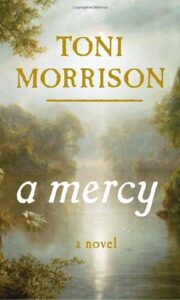
In the 1680s the slave trade in the Americas is still in its infancy. Jacob Vaark is an Anglo-Dutch trader and adventurer, with a small holding in the harsh North. Despite his distaste for dealing in “flesh,” he takes a small slave girl in part payment for a bad debt from a plantation owner in Catholic Maryland. This is Florens, who can read and write and might be useful on his farm. Rejected by her mother, Florens looks for love, first from Lina, an older servant woman at her new master's house, and later from the handsome blacksmith, an African, never enslaved, who comes riding into their lives. A Mercy reveals what lies beneath the surface of slavery. But at its heart, like Beloved, it is the ambivalent, disturbing story of a mother and a daughter - a mother who casts off her daughter in order to save her, and a daughter who may never exorcise that abandonment.
Librarian's note: An alternate cover edition can be found here
From the bestselling author of The Color of Water and Song Yet Sung comes the story of a young boy born a slave who joins John Brown’s antislavery crusade—and who must pass as a girl to survive.
Henry Shackleford is a young slave living in the Kansas Territory in 1857, when the region is a battleground between anti- and pro-slavery forces. When John Brown, the legendary abolitionist, arrives in the area, an argument between Brown and Henry’s master quickly turns violent. Henry is forced to leave town—with Brown, who believes he’s a girl.
Over the ensuing months, Henry—whom Brown nicknames Little Onion—conceals his true identity as he struggles to stay alive. Eventually Little Onion finds himself with Brown at the historic raid on Harpers Ferry in 1859—one of the great catalysts for the Civil War.
An absorbing mixture of history and imagination, and told with McBride’s meticulous eye for detail and character, The Good Lord Bird is both a rousing adventure and a moving exploration of identity and survival.
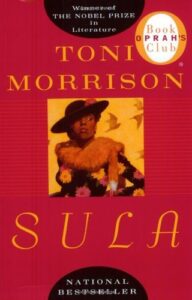
Sula and Nel are born in the Bottom—a small town at the top of a hill. Sula is wild, and daring; she does what she wants, while Nel is well-mannered, a mamma’s girl with a questioning heart. Growing up they forge a bond stronger than anything, stronger even than the dark secret they have to bear. Strong enough, it seems, to last a lifetime—until, decades later, as the girls become women, Sula’s anarchy leads to a betrayal that may be beyond forgiveness.
One of The Atlantic’s Great American Novels of the Past 100 Years
Masterful, richly textured, bittersweet, and vital, Sula is a modern masterpiece about love and kinship, about living in an America birthed from slavery. Nobel Prize laureate Toni Morrison gives life to characters who struggle with what society tells them to be, and the love they long for and crave as Black women. Most of all, they ask: When can we let go? What must we hold back? And just how much can be shared in a friendship?
Winner of the 2011 National Book Award for Fiction
A hurricane is building over the Gulf of Mexico, threatening the coastal town of Bois Sauvage, Mississippi, and Esch's father is growing concerned. A hard drinker, largely absent, he doesn't show concern for much else. Esch and her three brothers are stocking food, but there isn't much to save. Lately, Esch can't keep down what food she gets; she's fourteen and pregnant. Her brother Skeetah is sneaking scraps for his prized pitbull's new litter, dying one by one in the dirt, while brothers Randall and Junior try to stake their claim in a family long on child's play and short on parenting. As the twelve days that comprise the novel's framework yield to the final day and Hurricane Katrina, the unforgettable family at the novel's heart—motherless children sacrificing for each other as they can, protecting and nurturing where love is scarce—pulls itself up to struggle for another day. A wrenching look at the lonesome, brutal, and restrictive realities of rural poverty, "Salvage the Bones" is muscled with poetry, revelatory, and real.
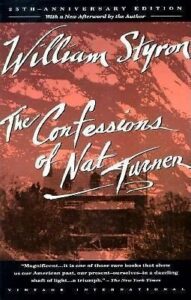
In 1831 Nat Turner awaits death in a Virginia jail cell. He is a slave, a preacher, and the leader of the only effective slave revolt in the history of 'that peculiar institution'. William Styron's ambitious and stunningly accomplished novel is Turner's confession, made to his jailers under the duress of his God. Encompasses the betrayals, cruelties and humiliations that made up slavery - and that still sear the collective psyches of both races.
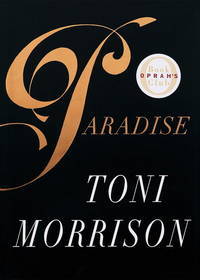
"They shoot the white girl first. With the rest they can take their time." So begins this visionary work from a storyteller. Toni Morrison's first novel since she was awarded the Nobel Prize for Literature, Paradise opens with a horrifying scene of mass violence and chronicles its genesis in an all-black small town in rural Oklahoma.
Founded by the descendants of freed slaves and survivors in exodus from a hostile world, the patriarchal community of Ruby is built on righteousness, rigidly enforced moral law, and fear. But seventeen miles away, another group of exiles has gathered in a promised land of their own. And it is upon these women in flight from death and despair that nine male citizens of Ruby will lay their pain, their terror, and their murderous rage.
In prose that soars with the rhythms, grandeur, and tragic arc of an epic poem, Toni Morrison challenges our most fiercely held beliefs as she weaves folklore and history, memory and myth into an unforgettable meditation of race, religion, gender, and a far-off past that is ever present.
A New York Times bestseller and Oprah's Book Club Pick-the unique and deeply moving saga of four generations of African-American women whose journey from slavery to freedom begins on a Creole plantation in Louisiana.
Beginning with her great-great-great-great grandmother, a slave owned by a Creole family, Lalita Tademy chronicles four generations of strong, determined black women as they battle injustice to unite their family and forge success on their own terms. They are women whose lives begin in slavery, who weather the Civil War, and who grapple with contradictions of emancipation, Jim Crow, and the pre-Civil Rights South. As she peels back layers of racial and cultural attitudes, Tademy paints a remarkable picture of rural Louisiana and the resilient spirit of one unforgettable family.
There is Elisabeth, who bears both a proud legacy and the yoke of bondage... her youngest daughter, Suzette, who is the first to discover the promise-and heartbreak-of freedom... Suzette's strong-willed daughter Philomene, who uses a determination born of tragedy to reunite her family and gain unheard-of economic independence... and Emily, Philomene's spirited daughter, who fights to secure her children's just due and preserve their dignity and future.
Meticulously researched and beautifully written, Cane River presents a slice of American history never before seen in such piercing and personal detail.
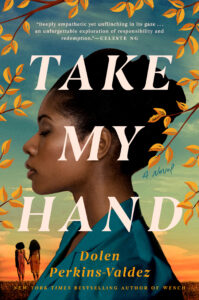
Inspired by true events that rocked the nation, a profoundly moving novel about a Black nurse in post-segregation Alabama who blows the whistle on a terrible wrong done to her patients, from the New York Times bestselling author of Wench.
Montgomery, Alabama 1973. Fresh out of nursing school, Civil Townsend has big plans to make a difference, especially in her African American community. At the Montgomery Family Planning Clinic, she intends to help women make their own choices for their lives and bodies.
But when her first week on the job takes her down a dusty country road to a worn down one-room cabin, she’s shocked to learn that her new patients are children—just 11 and 13 years old. Neither of the Williams sisters has even kissed a boy, but they are poor and Black and for those handling the family’s welfare benefits that’s reason enough to have the girls on birth control. As Civil grapples with her role, she takes India, Erica and their family into her heart. Until one day, she arrives at the door to learn the unthinkable has happened and nothing will ever be the same for any of them.
Decades later, with her daughter grown and a long career in her wake, Dr. Civil Townsend is ready to retire, to find her peace and to leave the past behind. But there are people and stories that refuse to be forgotten.That must not be forgotten.
Because history repeats what we don’t remember.
Welcome Back!
Track your reading progress and sync your library.