The Lottery, one of the most terrifying stories written in this century, created a sensation when it was first published in The New Yorker. “Power and haunting,” and “nights of unrest” were typical reader responses. This collection, the only one to appear during Shirley Jackson’s lifetime, unites “The Lottery” with twenty-four equally unusual stories. Together they demonstrate Jackson’s remarkable range–from the hilarious to the truly horrible–and power as a storyteller.
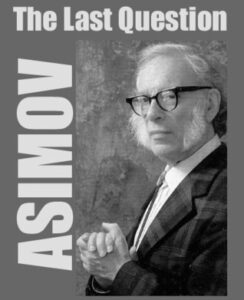
¿Es posible revertir el inevitable final del Universo, o el mundo debe acabar de todas formas? es la pregunta que desde un día del siglo XXI, hasta generaciones y generaciones posteriores en el tiempo, hacen los humanos a los ordenadores.
En un relato aparentemente sencillo sobre un asunto sobrecogedor, el fin de los días, Asimov demuestra, una vez más, una mente preclara y una mano maestra para sobrecoger al lector y dejarlo en vilo, incluso después de la lectura.
The Turn of the Screw is an 1898 horror novella by Henry James that first appeared in serial format in Collier's Weekly magazine (January 27 - April 16, 1898). In October 1898 it appeared in The Two Magics, a book published by Macmillan in New York City and Heinemann in London.
A very young woman's first job: governess for two weirdly beautiful, strangely distant, oddly silent children, Miles and Flora, at a forlorn estate... An estate haunted by a beckoning evil. Half-seen figures who glare from dark towers and dusty windows- silent, foul phantoms who, day by day, night by night, come closer, ever closer. With growing horror, the helpless governess realizes the fiendish creatures want the children, seeking to corrupt their bodies, possess their minds, own their souls. But worse-much worse- the governess discovers that Miles and Flora have no terror of the lurking evil. For they want the walking dead as badly as the dead want them.
Excerpt: I remember the whole beginning as a succession of flights and drops, a little seesaw of the right throbs and the wrong. After rising, in town, to meet his appeal, I had at all events a couple of very bad days - found myself doubtful again, felt indeed sure I had made a mistake. In this state of mind I spent the long hours of bumping, swinging coach that carried me to the stopping place at which I was to be met by a vehicle from the house.
“H. P. Lovecraft has yet to be surpassed as the 20th century’s greatest practitioner of the classic horror tale.”―Stephen King The most important tales of the godfather of the modern horror genre―a master who influenced the works of a generation of writers including Stephen King and Anne Rice―are gathered in one volume by National Book Award-winning author Joyce Carol Oates. Combining the 19th-century gothic sensibility of Edgar Allan Poe with a daring internal vision, Lovecraft’s tales foretold a psychically troubled world to come. Set in a meticulously wrought, historically grounded New England landscape, his harrowing stories explore the collapse of sanity beneath the weight of chaotic events. Lovecraft’s universe is a frightening shadow world were reality and nightmare intertwine, and redemption can come only from below. For aficionados and a new generation of 21st-century readers , Tales of H. P. Lovecraft is a classic not to be missed.
Best known for the 1892 title story of this collection, a harrowing tale of a woman's descent into madness, Charlotte Perkins Gilman wrote more than 200 other short stories. Seven of her finest are reprinted here.
Written from a feminist perspective, often focusing on the inferior status accorded to women by society, the tales include "turned," an ironic story with a startling twist, in which a husband seduces and impregnates a naïve servant; "Cottagette," concerning the romance of a young artist and a man who's apparently too good to be true; "Mr. Peebles' Heart," a liberating tale of a fiftyish shopkeeper whose sister-in-law, a doctor, persuades him to take a solo trip to Europe, with revivifying results; "The Yellow Wallpaper"; and three other outstanding stories.
These charming tales are not only highly readable and full of humor and invention, but also offer ample food for thought about the social, economic, and personal relationship of men and women — and how they might be improved.
Collects: —The Yellow Wallpaper —Three Thanksgivings —The Cottagette —Turned —Making a Change —If I Were a Man —Mr. Peebles' Heart
In Gustave Doré, one of the most prolific and successful book illustrators of the late 19h century, Edgar Allan Poe's renowned poem The Raven found perhaps its most perfect artistic interpreter. Doré's dreamlike, otherworldly style, tinged with melancholy, seems ideally matched to the bleak despair of Poe's celebrated work, among the most popular American poems ever written. This volume reprints all 26 of Doré's detailed, masterly engravings from a rare 19th-century edition of the poem. Relevant lines from the poem are printed on facing pages and the complete text is also included. Admirers of Doré will find ample evidence here of his characteristic ability to capture the mood and meaning of a work of literature in striking imagery; lovers of The Raven will delight in seeing its mournful musing on love and loss given dramatic pictorial form.
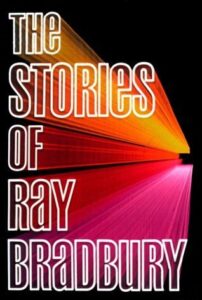
Drunk, and in charge of a bicycle / introduction by Ray Bradbury-- The night -- Homecoming-- Uncle Einar -- The traveler -- The lake -- The coffin -- The crowd -- The scythe -- There was an old woman -- There will come soft rains -- Mars is heaven -- The silent towns -- The earth men -- The off season -- The million-year picnic -- The fox and the forest -- Kaleidoscope -- The rocket man -- Marionettes, inc. -- No particular night or morning -- The city -- The fire balloons -- The last night of the world -- The veldt -- The long rain -- The great fire -- The wilderness -- A sound of thunder -- The murderer -- The April witch -- Invisible boy -- The golden kite, the silver wind -- The fog horn -- The black black and white game -- Embroidery -- The golden apples of the sun -- Powerhouse -- Hail and farewell -- The great wide world over there -- The playground -- Skeleton -- The man upstairs -- Touched with fire -- The emissary -- The jar -- The small assasin -- The next in line -- Jack-in-the-box -- The leave-taking -- Exorcism -- The happiness machine -- Calling Mexico -- The wonderful ice cream suit -- Dark they were, and golden-eyed -- The strawberry window -- A scent of sarsaparilla -- The Picasso summer -- The day it rained forever -- A medicine for melancholy -- The shoreline at sunset -- Fever dream -- The town where no one got off -- All summer in a day -- Frost and fire -- The anthem sprinters -- And so died Riabouchinska -- Boys! Raise giant mushrooms in your cellar! -- The vacation -- The illustrated woman -- Some live like Lazarus -- The best of all possible worlds -- The one who waits -- Tyrannosaurus Rex -- The screaming woman -- The terrible conflagration up at the place -- Night call, collect -- The tombling day -- The haunting of the new -- Tomorrow's child -- I sing the body electric! -- The women -- The inspired chicken motel -- Yes, we'll gather at the river -- Have I got a chocolate bar for you! -- A story of love -- The parrot who met Papa -- The October game -- Punishment without crime -- A piece of wood -- The blue bottle -- Long after midnight -- The utterly perfect murder -- The better part of wisdom -- Interval in sunlight -- The black ferris -- Farewell summer -- McGillahee's brat -- The aqueduct -- Gotcha! -- The end of the beginning.
A doomed lord, an emergent hero, and a dazzling array of bizarre creatures inhabit the magical world of the Gormenghast novels which, along with Tolkien's Lord of the Rings, reign as one of the undisputed fantasy classics of all time. At the center of it all is the seventy-seventh Earl, Titus Groan, who stands to inherit the miles of rambling stone and mortar that form Gormenghast Castle and its kingdom, unless the conniving Steerpike, who is determined to rise above his menial position and control the House of Groan, has his way.
In these extraordinary novels, Peake has created a world where all is like a dream - lush, fantastical, and vivid. Accompanying the text are Peake's own drawings, illustrating the whole assembly of strange and marvelous creatures that inhabit Gormenghast.
Also featuring: Introductory essays by Anthony Burgess and Quentin Crisp Twelve critical essays, curated by Peake scholar Peter G. Winnington Fragment of the unpublished novel, Titus Awakes
Considered to the be one of most influential American authors, Howard Philip Lovecraft is synonymous with some of the best fantasy and horror fiction of the 20th century, second only to Edgar Allan Poe.
Innsmouth is a dilapidated seaside town with secrets as a hybrid race of half-human and half-amphibian creatures worship the gods of Cthulhu and Dagon…
Written in 1931, and published by the Visionary Publishing Company some five years later.
Welcome Back!
Track your reading progress and sync your library.