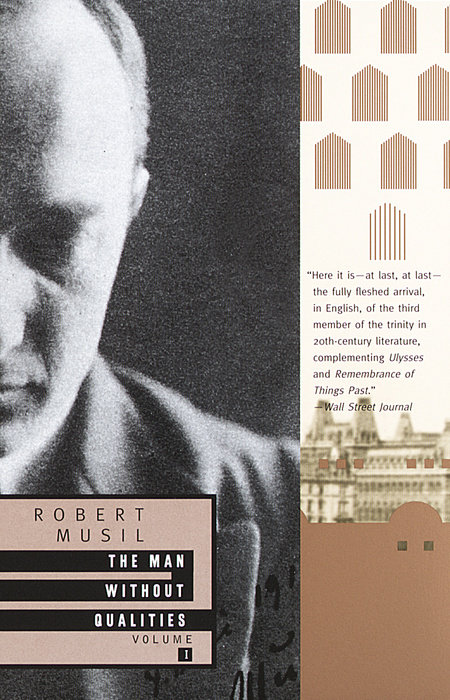
The Man Without Qualities: Volume I
A Sort of Introduction and Pseudo Reality Prevails
Emil Sinclair ist ein Junge, der in einem als "Scheinwelt" beschrieben bürgerlichen Elternhaus aufgewachsen ist. Dies ist die dramatische Geschichte seiner Abstieg - gesteuert durch sein frühreifen Schulkamerad Max Demian - in eine geheime und gefährliche Welt der Kleinkriminalität und Revolte gegen Konvention und seiner Erwachen zu Selbstheit.
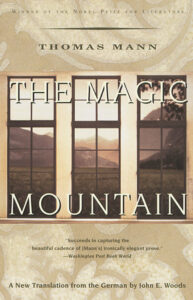
In this dizzyingly rich novel of ideas, Mann uses a sanatorium in the Swiss Alps, a community devoted exclusively to sickness, as a microcosm for Europe, which in the years before 1914 was already exhibiting the first symptoms of its own terminal irrationality.
The Magic Mountain is a monumental work of erudition and irony, sexual tension and intellectual ferment, a book that pulses with life in the midst of death.
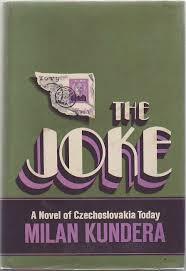
All too often, this brilliant novel of thwarted love and revenge miscarried has been read for its political implications. Now though, a quarter century after The Joke was first published, and several years after the collapse of the Soviet-imposed Czechoslovak regime, it becomes easier to put such implications into perspective in favor of valuing the book (and all Kundera 's work) as what it truly is: great, stirring literature, that sheds new light on the eternal themes of human existence.
The present edition provides English-language readers an important further means toward revaluation of The Joke. For reasons he describes in his Author's Note, Milan Kundera devoted much time to creating (with the assistance of his American publisher-editor) a completely revised translation that reflects his original as closely as any translation possibly can: reflects it in its fidelity not only to the words and syntax but also to the characteristic dictions and tonalities of the novel's narrators. The result is nothing less than the restoration of a classic.
Parallel German text and English translation.
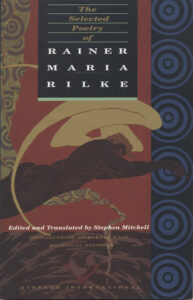
The influence and popularity of Rilke’s poetry in America have never been greater than they are today, more than fifty years after his death. Rilke is unquestionably the most significant and compelling poet of romantic transformation, of spiritual quest, that the twentieth century has known. His poems of ecstatic identification with the world exert a seemingly endless fascination for contemporary readers.
In Stephen Mitchell’s versions, many readers feel that they have discovered an English rendering that captures the lyric intensity, fluency, and reach of Rilke’s poetry more accurately and convincingly than has ever been done before.
Mr. Mitchell is impeccable in his adherence to Rilke’s text, to his formal music, and to the complexity of his thoughts; at the same time, his work has authority and power as poetry in its own right. Few translators of any poet have arrived at the delicate balance of fidelity and originality that Mr. Mitchell has brought off with seeming effortlessness.
Originally published: New York : Random House, 1982.
Set in Vienna on the eve of World War I, this great novel of ideas tells the story of Ulrich, ex-soldier and scientist, seducer and skeptic, who finds himself drafted into the grandiose plans for the 70th jubilee of the Emperor Franz Josef. This new translation—published in two elegant volumes—is the first to present Musil's complete text, including material that remained unpublished during his lifetime.
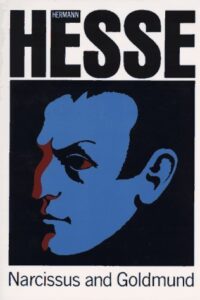
Narcissus and Goldmund tells the story of two medieval men whose characters are diametrically opposite: Narcissus, an ascetic monk firm in his religious commitment, and Goldmund, a romantic youth hungry for knowledge and worldly experience. First published in 1930, Hesse's novel remains a moving and pointed exploration of the conflict between the life of the spirit and the life of the flesh. It is a theme that transcends all time.
The final novel of Hermann Hesse, The Glass Bead Game is a fascinating tale of the complexity of modern life as well as a classic of modern literature.
Set in the twenty-third century, The Glass Bead Game is the story of Joseph Knecht, who has been raised in Castalia, the remote place his society has provided for the intellectual elite to grow and flourish. Since childhood, Knecht has been consumed with mastering the Glass Bead Game, which requires a synthesis of aesthetics and philosophy, which he achieves in adulthood, becoming a Magister Ludi (Master of the Game).
Translated and with a preface by Mark Harman
Left unfinished by Kafka in 1922 and not published until 1926, two years after his death, The Castle is the haunting tale of K.’s relentless, unavailing struggle with an inscrutable authority in order to gain access to the Castle. Scrupulously following the fluidity and breathlessness of the sparsely punctuated original manuscript, Mark Harman’s new translation reveals levels of comedy, energy, and visual power, previously unknown to English language readers.