In this celebrated work, his only novel, Wilde forged a devastating portrait of the effects of evil and debauchery on a young aesthete in late-19th-century England. Combining elements of the Gothic horror novel and decadent French fiction, the book centers on a striking premise: As Dorian Gray sinks into a life of crime and gross sensuality, his body retains perfect youth and vigor while his recently painted portrait grows day by day into a hideous record of evil, which he must keep hidden from the world. For over a century, this mesmerizing tale of horror and suspense has enjoyed wide popularity. It ranks as one of Wilde’s most important creations and among the classic achievements of its kind.
Perfect for fans of The 7½ Deaths of Evelyn Hardcastle, with a modern gothic twist.
High in the Rocky Mountains on a secluded campus, sits Hildegard College, a celebrated institution known for its scientific innovation and its sprawling, botanical gardens. Historian Robin Quain has been awarded a residency to examine Hildegard’s impressive collection of ancient manuscripts, but she has a secret. She’s actually on the hunt for an artifact—one she must find before her former best friend turned professional rival gets his hands on it first.
But Hildegard has secrets of its own. Strange sounds echo across the alpine lake, lights flicker through the pines, and the faculty seem more like Jazz-age glitterati than academics. And then there’s the professor who holds the key to Robin’s research. She vanished suddenly last spring. What exactly did she do at the college, and why does no one want to talk about her?
As Robin searches for answers, an unknown source sends her a series of cryptic messages that makes her question whether she’s the one doing the hunting, or whether someone is hunting her. Drawing on historical, botanical, and occult research, and steeped in the gothic tradition, Atlas of Unknowable Things considers what it means to search for meaning in the scientific, only to come face to face with the sublime.
Jess Armstrong’s USA Today bestselling and award-winning series is historical gothic murder mystery at its best, and Ruby Vaughn returns in The Devil in Oxford.
If someone were to ask American heiress Ruby Vaughn how exactly the occult came to play such a large role in her life, she would immediately point to her octogenarian housemate and employer, Mr. Owen. Together, the pair run a rare book shop in Exeter. Mr. Owen’s penchant for arcane, unusual—and occasionally illegal—books has been known to get Ruby into her fair share of trouble. And after the last year, she is looking forward to spending a quiet holiday in picturesque Oxford while Mr. Owen attends the annual meeting of his antiquarian society. Secretly, Ruby is also looking for a holiday from her confounding feelings for Ruan Kivell, the intriguing folk healer Pellar that she met in Cornwall.
When Mr. Owen secures two tickets to an upcoming exhibition of artifacts amassed by disgraced scholar Julius Harker, Ruby reluctantly agrees to attend. The evening turns out to be more eventful than either of them bargained for. Harker’s dead body is discovered amongst the collection, his business partner is hastily arrested, and Ruan arrives…wanting to speak with Ruby. It seems both the arcane and her Pellar have followed Ruby to Oxford.
The murder case is suspicious at best, but the last thing Ruby wants is another investigation. That is, until an old friend comes begging for Ruby’s help. It soon becomes painfully clear that there is more going on in Oxford than meets the eye. Ruby and Ruan will have to uncover the dark secrets of the competitive world of antiquities while trying to understand the peculiar force that keeps drawing them back together.
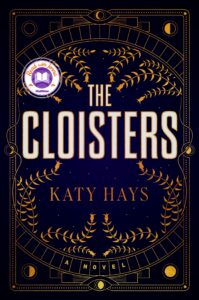
“Engrossing listening” (AudioFile): Ann’s work at the Cloisters, a gothic museum of medieval art, takes a turn when she uncovers a mysterious artifact — turning academic curiosity into a deadly game of obsession… This Read With Jenna book club pick and New York Times bestseller is “captivating in every sense of the word” (New York Times bestselling author Sarah Pearse).
On the wheel of fortune, who will emerge on top... and who will die?
When Ann Stilwell arrives in New York City, she hopes to spend her summer working as a curatorial associate at the Metropolitan Museum of Art. Instead, she finds herself assigned to The Cloisters, a gothic museum and garden renowned for its collection of medieval and Renaissance art.
There she is drawn into a small circle of charismatic but enigmatic researchers, including Patrick Roland, the museum's mercurial curator who specializes in the history of tarot; Rachel Mondray, Patrick's beautiful curatorial associate and sometime muse; and Leo Bitburg, the gardener who nurtures the museum's precious collection of medicinal and poison plants.
Relieved to have left her troubled past in rural Washington behind her, Ann longs for the approbation of her colleagues and peers and is happy to indulge their more outlandish theories, only to find that their fascination with fortune-telling runs deeper than academic obsession. Patrick is determined to prove that ancient divination holds the key to the foretelling of the future. And when Ann stumbles across a breakthrough in the form of a mysterious and previously-believed lost deck of 15th-century Italian tarot cards, she finds herself at the centre of a dangerous game of power, toxic friendship and ambition.
Then there is an unexpected and devastating death, and suddenly everyone becomes a suspect. As the game being played within the Cloisters spirals out of control, Ann must decide if the tarot cards can not only teach her about the past, but also about her future.
A doomed lord, an emergent hero, and a dazzling array of bizarre creatures inhabit the magical world of the Gormenghast novels which, along with Tolkien's Lord of the Rings, reign as one of the undisputed fantasy classics of all time. At the center of it all is the seventy-seventh Earl, Titus Groan, who stands to inherit the miles of rambling stone and mortar that form Gormenghast Castle and its kingdom, unless the conniving Steerpike, who is determined to rise above his menial position and control the House of Groan, has his way.
In these extraordinary novels, Peake has created a world where all is like a dream - lush, fantastical, and vivid. Accompanying the text are Peake's own drawings, illustrating the whole assembly of strange and marvelous creatures that inhabit Gormenghast.
Also featuring: Introductory essays by Anthony Burgess and Quentin Crisp Twelve critical essays, curated by Peake scholar Peter G. Winnington Fragment of the unpublished novel, Titus Awakes
You can find an alternative cover edition for this ISBN here and here.
When Jonathan Harker visits Transylvania to help Count Dracula with the purchase of a London house, he makes a series of horrific discoveries about his client. Soon afterwards, various bizarre incidents unfold in England: an apparently unmanned ship is wrecked off the coast of Whitby; a young woman discovers strange puncture marks on her neck; and the inmate of a lunatic asylum raves about the 'Master' and his imminent arrival.
In Dracula, Bram Stoker created one of the great masterpieces of the horror genre, brilliantly evoking a nightmare world of vampires and vampire hunters and also illuminating the dark corners of Victorian sexuality and desire.
This Norton Critical Edition includes a rich selection of background and source materials in three areas: Contexts includes probable inspirations for Dracula in the earlier works of James Malcolm Rymer and Emily Gerard. Also included are a discussion of Stoker's working notes for the novel and "Dracula's Guest," the original opening chapter to Dracula. Reviews and Reactions reprints five early reviews of the novel. "Dramatic and Film Variations" focuses on theater and film adaptations of Dracula, two indications of the novel's unwavering appeal. David J. Skal, Gregory A. Waller, and Nina Auerbach offer their varied perspectives. Checklists of both dramatic and film adaptations are included.
Criticism collects seven theoretical interpretations of Dracula by Phyllis A. Roth, Carol A. Senf, Franco Moretti, Christopher Craft, Bram Dijkstra, Stephen D. Arata, and Talia Schaffer.
A Chronology and a Selected Bibliography are included.
“H. P. Lovecraft has yet to be surpassed as the 20th century’s greatest practitioner of the classic horror tale.”―Stephen King The most important tales of the godfather of the modern horror genre―a master who influenced the works of a generation of writers including Stephen King and Anne Rice―are gathered in one volume by National Book Award-winning author Joyce Carol Oates. Combining the 19th-century gothic sensibility of Edgar Allan Poe with a daring internal vision, Lovecraft’s tales foretold a psychically troubled world to come. Set in a meticulously wrought, historically grounded New England landscape, his harrowing stories explore the collapse of sanity beneath the weight of chaotic events. Lovecraft’s universe is a frightening shadow world were reality and nightmare intertwine, and redemption can come only from below. For aficionados and a new generation of 21st-century readers , Tales of H. P. Lovecraft is a classic not to be missed.
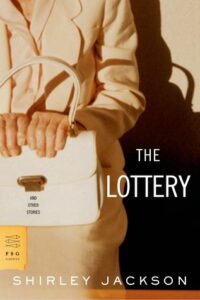
The Lottery, one of the most terrifying stories written in this century, created a sensation when it was first published in The New Yorker. "Power and haunting," and "nights of unrest" were typical reader responses. This collection, the only one to appear during Shirley Jackson's lifetime, unites "The Lottery" with twenty-four equally unusual stories. Together they demonstrate Jackson's remarkable range--from the hilarious to the truly horrible--and power as a storyteller.
In a darkened room a young man sits telling the macabre and eerie story of his life - the story of a vampire, gifted with eternal life, cursed with an exquisite craving for human blood.
Here are the confessions of a vampire. Hypnotic, shocking, and chillingly erotic, this is a novel of mesmerizing beauty and astonishing force --- a story of danger and flight, of love and loss, of suspense and resolution, and of the extraordinary power of the senses. It is a novel only Anne Rice could write.
Welcome Back!
Track your reading progress and sync your library.