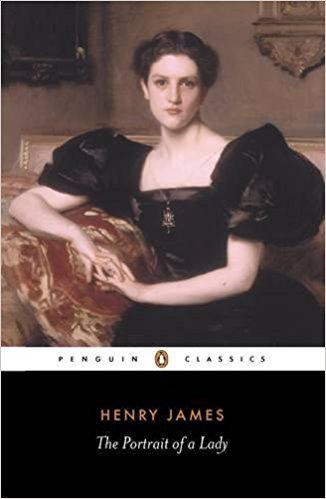
When Isabel Archer, a beautiful, spirited American, is brought to Europe by her wealthy Aunt Touchett, it is expected that she will soon marry. But Isabel, resolved to determine her own fate, does not hesitate to turn down two eligible suitors. She then finds herself irresistibly drawn to Gilbert Osmond, who, beneath his veneer of charm and cultivation, is cruelty itself. A story of intense poignancy, Isabel’s tale of love and betrayal still resonates with modern audiences.
"People are almost always better than their neighbours think they are"
George Eliot’s most ambitious novel is a masterly evocation of diverse lives and changing fortunes in a provincial community. Peopling its landscape are Dorothea Brooke, a young idealist whose search for intellectual fulfillment leads her into a disastrous marriage to the pedantic scholar Casaubon; the charming but tactless Dr Lydgate, whose pioneering medical methods, combined with an imprudent marriage to the spendthrift beauty Rosamond, threaten to undermine his career; and the religious hypocrite Bulstrode, hiding scandalous crimes from his past. As their stories interweave, George Eliot creates a richly nuanced and moving drama, hailed by Virginia Woolf as "one of the few English novels written for grown-up people".
David Copperfield is the story of a young man's adventures on his journey from an unhappy and impoverished childhood to the discovery of his vocation as a successful novelist. Among the gloriously vivid cast of characters he encounters are his tyrannical stepfather, Mr Murdstone; his brilliant, but ultimately unworthy school-friend James Steerforth; his formidable aunt, Betsey Trotwood; the eternally humble, yet treacherous Uriah Heep; frivolous, enchanting Dora Spenlow; and the magnificently impecunious Wilkins Micawber, one of literature's great comic creations. In David Copperfield - the novel he described as his 'favourite child' - Dickens drew revealingly on his own experiences to create one of the most exuberant and enduringly popular works, filled with tragedy and comedy in equal measure. This edition uses the text of the first volume publication of 1850, and includes updated suggestions for further reading, original illustrations by 'Phiz', a revised chronology and expanded notes. In his new introduction, Jeremy Tambling discusses the novel's autobiographical elements, and its central themes of memory and identity.
Librarian note: The same ISBN is now being used here with a new cover.
In a fit of drunken anger, Michael Henchard sells his wife and baby daughter for five guineas at a country fair. Over the course of the following years, he manages to establish himself as a respected and prosperous pillar of the community of Casterbridge, but behind his success there always lurk the shameful secret of his past and a personality prone to self-destructive pride and temper. Subtitled ‘A Story of a Man of Character’, Hardy’s powerful and sympathetic study of the heroic but deeply flawed Henchard is also an intensely dramatic work, tragically played out against the vivid backdrop of a close-knit Dorsetshire town.
A gripping portrayal of London's dark criminal underbelly, published in Penguin Classics with an introduction by Philip Horne.
The story of Oliver Twist - orphaned, and set upon by evil and adversity from his first breath - shocked readers when it was published. After running away from the workhouse and pompous beadle Mr Bumble, Oliver finds himself lured into a den of thieves peopled by vivid and memorable characters - the Artful Dodger, vicious burglar Bill Sikes, his dog Bull's Eye, and prostitute Nancy, all watched over by cunning master-thief Fagin. Combining elements of Gothic Romance, the Newgate Novel and popular melodrama, Dickens created an entirely new kind of fiction, scathing in its indictment of a cruel society, and pervaded by an unforgettable sense of threat and mystery.
This Penguin Classics edition of Oliver Twist is the first critical edition to faithfully reproduce the text as its earliest readers would have encountered it from its serialisation in Bentley's Miscellany, and includes an introduction by Philip Horne, a glossary of Victorian thieves' slang, a chronology of Dickens's life, a map of contemporary London and all of George Cruikshank's original illustrations.
For more than seventy years, Penguin has been the leading publisher of classic literature in the English-speaking world. With more than 1,700 titles, Penguin Classics represents a global bookshelf of the best works throughout history and across genres and disciplines. Readers trust the series to provide authoritative texts enhanced by introductions and notes by distinguished scholars and contemporary authors, as well as up-to-date translations by award-winning translators.
Silas Marner: The Weaver of Raveloe is the third novel by George Eliot, published in 1861. An outwardly simple tale of a linen weaver, it is notable for its strong realism and its sophisticated treatment of a variety of issues ranging from religion to industrialisation to community.
One of the most important and controversial writers of the 20th century, Knut Hamsun made literary history with the publication in 1890 of this powerful, autobiographical novel recounting the abject poverty, hunger and despair of a young writer struggling to achieve self-discovery and its ultimate artistic expression. The book brilliantly probes the psychodynamics of alienation, obsession, and self-destruction, painting an unforgettable portrait of a man driven by forces beyond his control to the edge of the abyss. Hamsun influenced many of the major 20th-century writers who followed him, including Kafka, Joyce and Henry Miller. Required reading in world literature courses, the highly influential, landmark novel will also find a wide audience among lovers of books that probe the "unexplored crannies in the human soul" (George Egerton).
Chichikov, a mysterious stranger, arrives in a provincial town and visits a succession of landowners to make each a strange offer. He proposes to buy the names of dead serfs still registered on the census, saving their owners from paying taxes on them, and to use these 'souls' as collateral to re-invent himself as a gentleman. In this ebullient masterpiece, Gogol created a grotesque gallery of human types, from the bear-like Sobakevich to the insubstantial fool Manilov, and, above all, the devilish con man Chichikov. Dead Souls, Russia's first major novel, is one of the most unusual works of nineteenth-century fiction and a devastating satire on social hypocrisy.
In his introduction to this new translation, Robert A. Maguire discusses Gogol's life and literary career, his depiction of Russian society, and the language and narrative techniques employed in Dead Souls. This edition also includes a chronology, further reading, appendices, a glossary, map and notes.
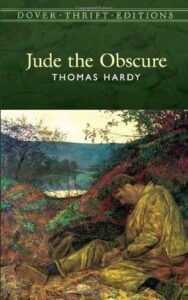
Jude Fawley's hopes of a university education are lost when he is trapped into marrying the earthy Arabella, who later abandons him. Moving to the town of Christminster where he finds work as a stonemason, Jude meets and falls in love with his cousin Sue Bridehead, a sensitive, freethinking 'New Woman'.
Welcome Back!
Track your reading progress and sync your library.