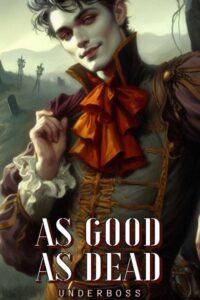
The finale to A Good Girl's Guide to Murder series. By the end of this mystery series, you'll never think of good girls the same way again...
Pip is about to head to college, but she is still haunted by the way her last investigation ended. She’s used to online death threats in the wake of her viral true-crime podcast, but she can’t help noticing an anonymous person who keeps asking her: Who will look for you when you’re the one who disappears?
Soon the threats escalate and Pip realizes that someone is following her in real life. When she starts to find connections between her stalker and a local serial killer caught six years ago, she wonders if maybe the wrong man is behind bars.
Police refuse to act, so Pip has only one choice: find the suspect herself—or be the next victim. As the deadly game plays out, Pip discovers that everything in her small town is coming full circle... and if she doesn’t find the answers, this time she will be the one who disappears...
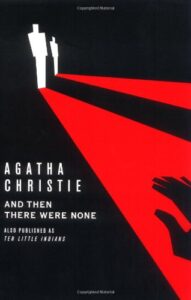
First, there were ten—a curious assortment of strangers summoned as weekend guests to a little private island off the coast of Devon. Their host, an eccentric millionaire unknown to all of them, is nowhere to be found. All that the guests have in common is a wicked past they're unwilling to reveal—and a secret that will seal their fate. For each has been marked for murder. A famous nursery rhyme is framed and hung in every room of the mansion:
"Ten little boys went out to dine; One choked his little self and then there were nine. Nine little boys sat up very late; One overslept himself and then there were eight. Eight little boys traveling in Devon; One said he'd stay there then there were seven. Seven little boys chopping up sticks; One chopped himself in half and then there were six. Six little boys playing with a hive; A bumblebee stung one and then there were five. Five little boys going in for law; One got in Chancery and then there were four. Four little boys going out to sea; A red herring swallowed one and then there were three. Three little boys walking in the zoo; A big bear hugged one and then there were two. Two little boys sitting in the sun; One got frizzled up and then there was one. One little boy left all alone; He went out and hanged himself and then there were none."
When they realize that murders are occurring as described in the rhyme, terror mounts. One by one they fall prey. Before the weekend is out, there will be none. Who has choreographed this dastardly scheme? And who will be left to tell the tale? Only the dead are above suspicion.
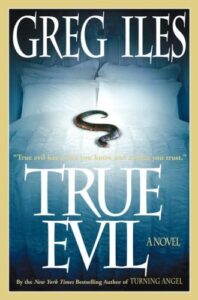
Dr. Chris Shepard, a busy young doctor in Natchez, Mississippi, has never seen his new patient Alex Morse before. But the attractive young woman with the scarred face has come to Dr. Shepards office on a mission to catch a killer. This New York Times bestseller is available in a tall Premium Edition.
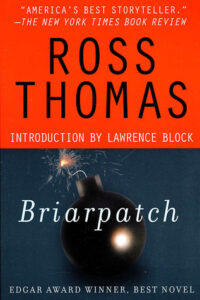
A long-distance call from a Texas city on his birthday gives Benjamin Dill the news that his sister—it's her birthday, too, they were born exactly ten years apart—has died in a car bomb explosion. It's the chief of police calling—Felicity Dill worked for him; she was a homicide detective. Dill is there that night, the beginning of his dogged search for her killer. What he finds is no surprise to him, because Benjamin Dill is never surprised at what awful things people will do—but it's a real surprise to the reader. As Newsday said when the novel was first published, "One sure thing about Ross Thomas's novels: A reader won't get bored waiting for the action to start."
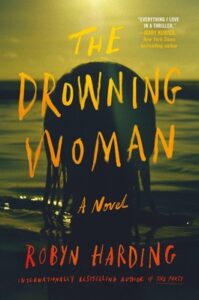
A deliciously twisted story of friendship, retribution, and betrayal about a homeless woman fleeing a dangerous past—and the wealthy society wife she saves from drowning, who pulls her into a dark web of secrets and lies.
Lee Gulliver never thought she’d find herself living on the streets—no one ever does—but when her restaurant fails, and she falls deeper into debt, she leaves her old life behind with nothing but her clothes and her Toyota Corolla. In Seattle, she parks in a secluded spot by the beach to lay low and plan her next move—until early one morning, she sees a sobbing woman throw herself into the ocean. Lee hauls the woman back to the surface, but instead of appreciation, she is met with fury. The drowning woman, Hazel, tells her that she wanted to die, that she’s trapped in a toxic, abusive marriage, that she’s a prisoner in her own home. Lee has thwarted her one chance to escape her life.
Out of options, Hazel retreats to her gilded cage, and Lee thinks she’s seen the last of her, until her unexpected return the next morning. Bonded by disparate but difficult circumstances, the women soon strike up a close and unlikely friendship. And then one day, Hazel makes a shocking request: she wants Lee to help her disappear. It’ll be easy, Hazel assures her, but Lee soon learns that nothing is as it seems, and that Hazel may not be the friend Lee thought she was.
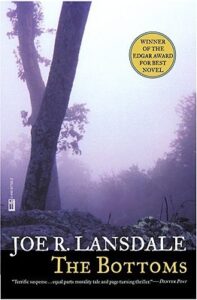
The narrator of The Bottoms is Harry Collins, an old man obsessively reflecting on certain key experiences of his childhood. In 1933, the year that forms the centerpiece of the narrative, Harry is 11 years old and living with his mother, father, and younger sister on a farm outside of Marvel Creek, Texas, near the Sabine River bottoms. Harry's world changes forever when he discovers the corpse of a young black woman tied to a tree in the forest near his home. The woman, who is eventually identified as a local prostitute, has been murdered, molested, and sexually mutilated. She is also, as Harry will soon discover, the first in a series of similar corpses, all of them the victims of a new, unprecedented sort of monster: a traveling serial killer.
From his privileged position as the son of constable (and farmer and part-time barber) Jacob Collins, Harry watches as the distinctly amateur investigation unfolds. As more bodies -- not all of them "colored" -- surface, the mood of the local residents darkens. Racial tensions -- never far from the surface, even in the best of times -- gradually kindle. When circumstantial evidence implicates an ancient, innocent black man named Mose, the Ku Klux Klan mobilizes, initiating a chilling, graphically described lynching that will occupy a permanent place in Harry Collins's memories. With Mose dead and the threat to local white women presumably put to rest, the residents of Marvel Creek resume their normal lives, only to find that the actual killer remains at large and continues to threaten the safety and stability of the town.
Lansdale uses this protracted murder investigation to open up a window on an insular, poverty-stricken, racially divided community. With humor, precision, and great narrative economy, he evokes the society of Marvel Creek in all its alternating tawdriness and nobility, offering us a varied, absolutely convincing portrait of a world that has receded into history. At the same time, he offers us a richly detailed re-creation of the vibrant, dangerous physical landscapes that were part of that world and have since been buried under the concrete and cement of the industrialized juggernaut of the late 20th century. In Lansdale's hands, the gritty realities of Depression-era Texas are as authentic -- and memorable -- as anything in recent American fiction.
Stripped Bare by Shannon Baker is "A must read" (Alex Kava, New York Times bestselling author) that stars a female Longmire in the atmospheric Nebraska Sandhills.
Kate Fox is living the dream. She’s married to Grand County Sheriff Ted Conner, the heir to her beloved Nebraska Sandhills cattle ranch, where they live with Kate’s orphaned teenage niece, Carly. With the support of the well-connected Fox Clan, which includes Kate’s eight boisterous and interfering siblings, Ted’s reelection as Grand County Sheriff is virtually assured. That leaves Kate to the solitude and satisfaction of Frog Creek, her own slice of heaven.
One night Kate answers a shattering phone call from Roxy at the Bar J. Carly’s granddad Eldon, owner of the ranch, is dead and Ted has been shot and may never walk again. Kate vows to find the killer. She soon discovers Ted responded so quickly to the scene because he was already at the Bar J . . . in Roxy’s bed. And to add to her woes, Carly has gone missing.
Kate finds out that Eldon was considering selling his ranch to an obscenely rich environmentalist. Some in town hate the idea of an outsider buying up land, others are desperate to sell . . . and some might kill to get their way. As she becomes the victim of several “accidents,” Kate knows she must find the killer before it’s too late. . . .
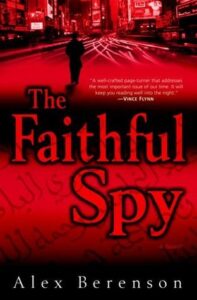
John Wells is the only American CIA agent ever to penetrate al Qaeda. Since before the attacks in 2001, Wells has been hiding in the mountains of Pakistan, biding his time, building his cover." "Now, on the orders of Omar Khadri - the malicious mastermind plotting more al Qaeda strikes on America - Wells is coming home. Neither Khadri nor Jennifer Exley, Wells's superior at Langley, knows quite what to expect. For Wells has changed during his years in the mountains. He has become a Muslim. He finds the United States decadent and shallow. Yet he hates al Qaeda and the way it uses Islam to justify its murderous assaults on innocents. He is a man alone, and the CIA - still reeling from its failure to predict 9/11 or find weapons of mass destruction in Iraq - does not know whether to trust him. Among his handlers at Langley, only Exley believes in him, and even she sometimes wonders. And so the agency freezes Wells out, preferring to rely on high-tech means for gathering intelligence." "But as that strategy fails and Khadri moves closer to unleashing the most devastating terrorist attack in history, Wells and Exley must somehow find a way to stop him, with or without the government's consent.
Welcome Back!
Track your reading progress and sync your library.