Librarian’s note: An alternate cover edition can be found here
One of the most revered novelists of our time – a brilliant chronicler of Native-American life – Louise Erdrich returns to the territory of her bestselling, Pulitzer Prize finalist The Plague of Doves with The Round House, transporting readers to the Ojibwe reservation in North Dakota. It is an exquisitely told story of a boy on the cusp of manhood who seeks justice and understanding in the wake of a terrible crime that upends and forever transforms his family.
Riveting and suspenseful, arguably the most accessible novel to date from the creator of Love Medicine, The Beet Queen, and The Bingo Palace, Erdrich’s The Round House is a page-turning masterpiece of literary fiction – at once a powerful coming-of-age story, a mystery, and a tender, moving novel of family, history, and culture.
The unsolved murder of a farm family still haunts the white small town of Pluto, North Dakota, generations after the vengeance exacted and the distortions of fact transformed the lives of Ojibwe living on the nearby reservation.
Part Ojibwe, part white, Evelina Harp is an ambitious young girl prone to falling hopelessly in love. Mooshum, Evelina's grandfather, is a repository of family and tribal history with an all-too-intimate knowledge of the violent past. And Judge Antone Bazil Coutts, who bears witness, understands the weight of historical injustice better than anyone. Through the distinct and winning voices of three unforgettable narrators, the collective stories of two interwoven communities ultimately come together to reveal a final wrenching truth.
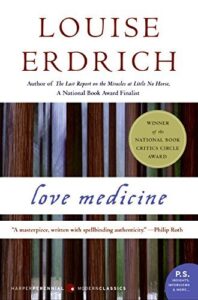
The first book in Louise Erdrich's highly acclaimed "Native American" trilogy that includes "The Beet Queen," "Tracks," and "The Bingo Palace," re-sequenced and expanded to include never-before-published chapters.
Set on and around a North Dakota Ojibwe reservation, Love Medicine is the epic story about the intertwined fates of two families: the Kashpaws and the Lamartines.
With astonishing virtuosity, each chapter draws on a range of voices to limn its tales. Black humor mingles with magic, injustice bleeds into betrayal, and through it all, bonds of love and family marry the elements into a tightly woven whole that pulses with the drama of life.
Filled with humor, magic, injustice and betrayal, Erdrich blends family love and loyalty in a stunning work of dramatic fiction.
Tayo, a young Native American, has been a prisoner of the Japanese during World War II, and the horrors of captivity have almost eroded his will to survive. His return to the Laguna Pueblo reservation only increases his feeling of estrangement and alienation. While other returning soldiers find easy refuge in alcohol and senseless violence, Tayo searches for another kind of comfort and resolution. Tayo's quest leads him back to the Indian past and its traditions, to beliefs about witchcraft and evil, and to the ancient stories of his people. The search itself becomes a ritual, a curative ceremony that defeats the most virulent of afflictions—despair.
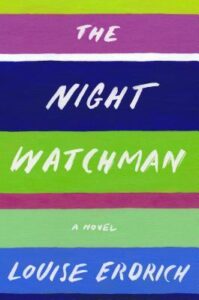
Based on the extraordinary life of National Book Award-winning author Louise Erdrich’s grandfather who worked as a night watchman and carried the fight against Native dispossession from rural North Dakota all the way to Washington, D.C., this powerful novel explores themes of love and death with lightness and gravity and unfolds with the elegant prose, sly humor, and depth of feeling of a master craftsman.
Thomas Wazhashk is the night watchman at the jewel bearing plant, the first factory located near the Turtle Mountain Reservation in rural North Dakota. He is also a Chippewa Council member who is trying to understand the consequences of a new “emancipation” bill on its way to the floor of the United States Congress. It is 1953 and he and the other council members know the bill isn’t about freedom; Congress is fed up with Indians. The bill is a “termination” that threatens the rights of Native Americans to their land and their very identity. How can the government abandon treaties made in good faith with Native Americans “for as long as the grasses shall grow, and the rivers run”?
Since graduating high school, Pixie Paranteau has insisted that everyone call her Patrice. Unlike most of the girls on the reservation, Patrice, the class valedictorian, has no desire to wear herself down with a husband and kids. She makes jewel bearings at the plant, a job that barely pays her enough to support her mother and brother. Patrice’s shameful alcoholic father returns home sporadically to terrorize his wife and children and bully her for money. But Patrice needs every penny to follow her beloved older sister, Vera, who moved to the big city of Minneapolis. Vera may have disappeared; she hasn’t been in touch in months, and is rumored to have had a baby. Determined to find Vera and her child, Patrice makes a fateful trip to Minnesota that introduces her to unexpected forms of exploitation and violence, and endangers her life.
Thomas and Patrice live in this impoverished reservation community along with young Chippewa boxer Wood Mountain and his mother Juggie Blue, her niece and Patrice’s best friend Valentine, and Stack Barnes, the white high school math teacher and boxing coach who is hopelessly in love with Patrice.
In the Night Watchman, Louise Erdrich creates a fictional world populated with memorable characters who are forced to grapple with the worst and best impulses of human nature. Illuminating the loves and lives, the desires and ambitions of these characters with compassion, wit, and intelligence, The Night Watchman is a majestic work of fiction from this revered cultural treasure.
One family’s deepest pain. Another’s darkest secret. Who will they be when the truth comes out?
On a hot day in 1960s Maine, six-year-old Joe watches his little sister Ruthie, sitting on her favourite rock at the edge of the blueberry fields, while their family, Mi’kmaq people from Nova Scotia, pick fruit. That afternoon, Ruthie vanishes without a trace. As the last person to see her, Joe will be forever haunted by grief, guilt, and the agony of imagining how his life could have been.
In an affluent suburb nearby, Norma is growing up as the only child of unhappy parents. She is smart, precocious, and bursting with questions she isn’t allowed to ask – questions about her missing baby photos; questions about her dark skin; questions about the strange, vivid dreams of campfires and warm embraces that return night after night. Norma senses there are things her parents aren’t telling her, but it will take decades to unravel the secrets they have kept buried since she was a little girl.
The Berry Pickers is an exquisitely moving story of unrelenting hope, unwavering love, and the power of family – even in the face of grief and betrayal.
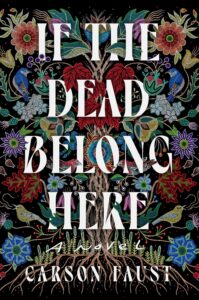
When a young girl goes missing, the ghosts of the past collide with her family’s secrets in a mesmerizing Native American Southern Gothic
When six-year-old Laurel Taylor vanishes without a trace, her family is left shattered, struggling to navigate the darkness of grief and unanswered questions. As their search turns to despair, Laurel’s older sister, Nadine, begins experiencing nightmares that blur the line between dream and reality, and she becomes convinced that Laurel’s disappearance could be connected to other family tragedies. Guided by her elders, Nadine sets out to uncover whether laying the ghosts to rest is the key to finding her sister and healing her fractured family.
Carson Faust captivates in this chilling literary debut that confronts the specter of colonization and the generational scars it leaves on Native American families. Steeped in Indigenous folklore and drawing from the author’s own family history, If the Dead Belong Here examines what it means to be haunted—both by the supernatural and by terrors of our own making. Faust crafts a powerful, kaleidoscopic tale about the complicated legacies of violence that shape our present, the importance of honoring our past, and the resilience of a family—and a people—determined to heal from old wounds.
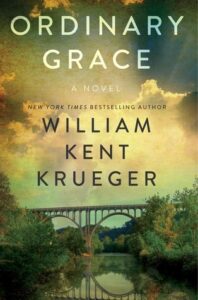
“That was it. That was all of it. A grace so ordinary there was no reason at all to remember it. Yet I have never across the forty years since it was spoken forgotten a single word.”
New Bremen, Minnesota, 1961. The Twins were playing their debut season, ice-cold root beers were selling out at the soda counter of Halderson’s Drugstore, and Hot Stuff comic books were a mainstay on every barbershop magazine rack. It was a time of innocence and hope for a country with a new, young president. But for thirteen-year-old Frank Drum it was a grim summer in which death visited frequently and assumed many forms. Accident. Nature. Suicide. Murder.
Frank begins the season preoccupied with the concerns of any teenage boy, but when tragedy unexpectedly strikes his family—which includes his Methodist minister father; his passionate, artistic mother; Juilliard-bound older sister; and wise-beyond-his-years kid brother—he finds himself thrust into an adult world full of secrets, lies, adultery, and betrayal, suddenly called upon to demonstrate a maturity and gumption beyond his years.
Told from Frank’s perspective forty years after that fateful summer, Ordinary Grace is a brilliantly moving account of a boy standing at the door of his young manhood, trying to understand a world that seems to be falling apart around him. It is an unforgettable novel about discovering the terrible price of wisdom and the enduring grace of God.
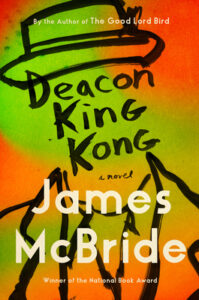
The funny, sharp, and surprising story of the shooting of a Brooklyn drug dealer and the people who witnessed it—from James McBride, author of the National Book Award-winning The Good Lord Bird
In September 1969, a fumbling, cranky old church deacon known in the neighborhood as Sportcoat shuffles into the courtyard of the Causeway Housing project in south Brooklyn, pulls a .38 from his pocket, and in front of everybody shoots the project's drug dealer at point-blank range.
The reasons for this desperate burst of violence and the consequences that spring from it lie at the heart of Deacon King Kong, James McBride's novel and his first since his National Book Award-winning The Good Lord Bird. In McBride brings to vivid life the people affected by the shooting: the victim, the African-American and Latinx residents who witnessed it, the white neighbors, the local NYPD cops assigned to investigate what happened, the members of the Five Ends Baptist Church where Sportcoat was deacon, the neighborhood's Italian mobsters, and Sportcoat himself.
As the story deepens, it becomes clear that the lives of the characters—caught in the tumultuous swirl of New York in the late 1960s—overlap in unexpected ways. When the truth finally emerges, McBride shows us that not all secrets can be hidden, that the best way to grow is to face change without fear, and that the seeds of love lie in compassion and hope.
Welcome Back!
Track your reading progress and sync your library.