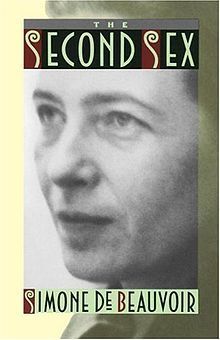
Newly translated and unabridged in English for the first time, Simone de Beauvoir’s masterwork is a powerful analysis of the Western notion of “woman,” and a groundbreaking exploration of inequality and otherness. This long-awaited new edition reinstates significant portions of the original French text that were cut in the first English translation. Vital and groundbreaking, Beauvoir’s pioneering and impressive text remains as pertinent today as it was back then, and will continue to provoke and inspire generations of men and women to come.
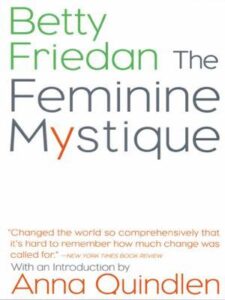
The book that changed the consciousness of a country―and the world.
Landmark, groundbreaking, classic―these adjectives barely describe the earthshaking and long-lasting effects of Betty Friedan's The Feminine Mystique. This is the book that defined "the problem that has no name," that launched the Second Wave of the feminist movement, and has been awakening women and men with its insights into social relations, which still remain fresh, ever since. A national bestseller, with over 1 million copies sold.
One of the most influential works of this century, this is a crucial exposition of existentialist thought. Influenced by works such as Don Juan, and the novels of Kafka, these essays begin with a meditation on suicide: the question of living or not living in an absurd universe devoid of order or meaning. With lyric eloquence, Camus posits a way out of despair, reaffirming the value of personal existence, and the possibility of life lived with dignity and authenticity.
A Room of One's Own is an extended essay by Virginia Woolf. First published on the 24th of October, 1929, the essay was based on a series of lectures she delivered at Newnham College and Girton College, two women's colleges at Cambridge University in October 1928. While this extended essay in fact employs a fictional narrator and narrative to explore women both as writers and characters in fiction, the manuscript for the delivery of the series of lectures, titled Women and Fiction, and hence the essay, are considered nonfiction. The essay is seen as a feminist text, and is noted in its argument for both a literal and figural space for women writers within a literary tradition dominated by patriarchy.
By one of the most profoundly influential thinkers of our century, The Rebel is a classic essay on revolution. For Albert Camus, the urge to revolt is one of the "essential dimensions" of human nature, manifested in man's timeless Promethean struggle against the conditions of his existence, as well as the popular uprisings against established orders throughout history. And yet, with an eye toward the French Revolution and its regicides and deicides, he shows how inevitably the course of revolution leads to tyranny, as old regimes throughout the world collapse, The Rebel resonates as an ardent, eloquent, and supremely rational voice of conscience for our tumultuous times.
Após o enorme sucesso de Sejamos todos feministas, Chimamanda Ngozi Adichie retoma o tema da igualdade de gêneros neste manifesto com quinze sugestões de como criar filhos dentro de uma perspectiva feminista. Escrito no formato de uma carta da autora a uma amiga que acaba de se tornar mãe de uma menina, Para educar crianças feministas traz conselhos simples e precisos de como oferecer uma formação igualitária a todas as crianças, o que se inicia pela justa distribuição de tarefas entre pais e mães. E é por isso que este breve manifesto pode ser lido igualmente por homens e mulheres, pais de meninas e meninos. Partindo de sua experiência pessoal para mostrar o longo caminho que ainda temos a percorrer, Adichie oferece uma leitura essencial para quem deseja preparar seus filhos para o mundo contemporâneo e contribuir para uma sociedade mais justa.
O Ser e o Nada (1943), escrito durante a ocupação nazi, é um dos textos fundamentais do século XX. O livro que marcou como nenhum outro uma época a braços com o desmoronamento de uma civilização é ao mesmo tempo a bíblia do existencialismo e o último grande sistema filosófico.
Para Sartre, o sentido das nossas vidas não é predeterminado nem por Deus nem pela natureza, não há nenhuma essência que preceda a existê o que nos define não é dado a priori, mas decorre das escolhas que fizermos. Primeiro existimos, e só depois nos definimos. Não existe natureza humana à qual tenhamos irresistivelmente de estamos condenados a ser livres e somos os únicos responsáveis pelos nossos destinos.
No âmago destas posições, está a conceção sartriana de consciência, influenciada pela fenomenologia de Husserl e pela ontologia de Heidegger. Como a consciência é sempre consciência de alguma coisa, ela própria não é nada enquanto não visa algo fora de si. O ser-para-si, a consciência humana, caracteriza-se por ser permanente projeção para o exterior. Daí os conceitos filosóficos de angústia e de «má-fé», ilustrada pelo famoso exemplo do empregado de mesa, e a problemática relação com os demais, tipificada na investigação sobre o desejo sexual e o «olhar» do Outro.
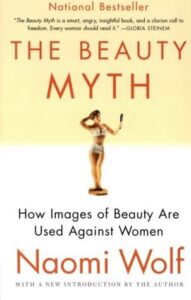
The bestselling classic that redefined our view of the relationship between beauty and female identity. In today's world, women have more power, legal recognition, and professional success than ever before. Alongside the evident progress of the women's movement, however, writer and journalist Naomi Wolf is troubled by a different kind of social control, which, she argues, may prove just as restrictive as the traditional image of homemaker and wife. It's the beauty myth, an obsession with physical perfection that traps the modern woman in an endless spiral of hope, self-consciousness, and self-hatred as she tries to fulfill society's impossible definition of "the flawless beauty."
The Quran (English pronunciation: /kɔrˈɑːn/; Arabic: القرآن al-qurʾān, IPA: [qurˈʔaːn], literally meaning "the recitation"), also transliterated Qur'an, Koran, Al-Coran, Coran, Kur'an, and Al-Qur'an, is the central religious text of Islam, which Muslims believe to be the verbatim word of God (Arabic: الله, Allah).
The Quran is composed of verses (Ayat) that make up 114 chapters (suras) of unequal length which are classified either as Meccan (المكية) or Medinan (المدنية) depending upon the place and time of their claimed revelation. Muslims believe the Quran to be verbally revealed through the angel Jibrīl (Gabriel) from God to Muhammad gradually over a period of approximately 23 years beginning on 22 December 609 CE, when Muhammad was 40, and concluding in 632 CE, the year of his death.
Muslims regard the Quran as the main miracle of Muhammad, the proof of his prophethood and the culmination of a series of divine messages that started with the messages revealed to Adam, regarded in Islam as the first prophet, and continued with Suhuf Ibrahim (Scrolls of Abraham), the Tawrat (Torah or Pentateuch) of Moses, the Zabur (Tehillim or Book of Psalms) of David, and the Injil (Gospel) of Jesus. The Quran assumes familiarity with major narratives recounted in Jewish and Christian scriptures, summarizing some, dwelling at length on others and in some cases presenting alternative accounts and interpretations of events. The Quran describes itself as a book of guidance, sometimes offering detailed accounts of specific historical events, and often emphasizing the moral significance of an event over its narrative sequence.
Welcome Back!
Track your reading progress and sync your library.