A gripping, inspiring novel based on the true story of Johanna Bonger, Vincent van Gogh’s sister-in-law.
When Hollywood auctioneer Emsley Wilson finds her famous grandmother’s diary while cleaning out her New York brownstone, the pages are full of surprises. The first surprise is, the diary isn’t her grandmother’s. It belongs to Johanna Bonger, Vincent van Gogh’s sister-in-law.
Johanna inherited Vincent van Gogh’s paintings. They were all she had, and they weren’t worth anything. She was a 28 year old widow with a baby in the 1800s, without any means of supporting herself, living in Paris where she barely spoke the language. Yet she managed to introduce Vincent’s legacy to the world.
The inspiration couldn’t come at a better time for Emsley. With her business failing, an unexpected love turning up in her life, and family secrets unraveling, can she find answers in the past?
When Robert crossed the bridge, he wasn’t expecting anything out of the ordinary. He was on the way to meet his girlfriend, but when he reached the other side, she didn’t know who he was. Robert finds himself thrown back in time, further and further, reliving the history of Amsterdam through war, riots and the plague. Each time, his fate is bound up with the same woman, and with the work of the Netherlands' greatest painter, Rembrandt. Robert is caught in a race against time. Will he make it back to his normal life? Or will he be trapped in the past with his discovery as his insulin runs out?
With more than a million copies sold worldwide, a modern classic of Palestinian literature from “a major writer of our time” (Alice Walker).
“Timeless in its truth.” —Fattima Bhutto “Powerful and passionate.” —Michael Palin “A novel to savor.” —Maureen Corrigan “Relevant, powerful, emotional and vivid.” —Bidisha Mamat
Mornings in Jenin is a heart-wrenching multi-generational account of one family's struggle and survival through the decades before and after Zionist colonization and theft of Palestine. Carrying us from Ein Hod to Jenin to Jerusalem, to Lebanon, then to the anonymity of America and finally back to Occupied Palestine, it is a novel of vital importance, “affirming all that is enduring and valuable in the undefeated human spirit” (Hanan Ashrawi).
“Affects me emotionally in a way only great novels can.” —Henning Mankell “Achingly beautiful.” —Saleem Haddad “When we grow numb to horror, when our minds slam shut in shock and denial, sometimes a story can slip to reawaken our humanity. This is that story, never more relevant.” —Laline Paull
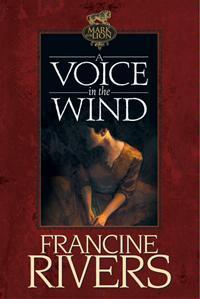
“The city was silently bloating in the hot sun, rotting like the thousands of bodies that lay where they had fallen in street battles.” With this opening sentence, A Voice in the Wind transports readers back to Jerusalem during the first Jewish-Roman War, some seventy years after the death of Christ. Following the prides and passions of a group of Jews, Romans and Barbarians living at the time of the siege, the narrative is centered on an ill-fated romance between a steadfast slave girl, Hadassah, and Marcus, the brother of her owner and a handsome aristocrat. After surviving the massacre of her family and the destruction of Jerusalem by the Romans, Hadassah is captured and sold to a well-to-do merchant’s family. Brought to Rome, she is pressed into service as a personal slave to hedonistic Julia Valerian. Hadassah struggles to walk in the footsteps of Jesus and to treat her masters in a manner in keeping with His teachings, but she is forced to keep her religious identity a secret in order to survive. Confused and alone, she has only her faith to cling to as she tries to subtly bring God into the lives of her captors. Reckless, impulsive, and villainous, Julia tries to undermine Hadassah at every turn. But Julia’s brother, Marcus, is a different sort altogether. Is it possible for a love between Hadassah and Marcus to flourish considering not only their differing stations in life, but also the gap between Hadassah’s unrelenting faith and Marcus’ lack of belief in anything? Simultaneously, Atretes, a captured soldier from Germania, is forced to become a gladiator. This is the time of Rome’s decline and the decadence of a civilization on the verge of self-destruction serves as a powerful backdrop to the Barbarian’s struggle for survival in the arena.
Alessandra Cecchi is not quite fifteen when her father, a prosperous cloth merchant, brings a young painter back from northern Europe to decorate the chapel walls in the family’s Florentine palazzo. A child of the Renaissance, with a precocious mind and a talent for drawing, Alessandra is intoxicated by the painter’s abilities.
But their burgeoning relationship is interrupted when Alessandra’s parents arrange her marriage to a wealthy, much older man. Meanwhile, Florence is changing, increasingly subject to the growing suppression imposed by the fundamentalist monk Savonarola, who is seizing religious and political control. Alessandra and her native city are caught between the Medici state, with its love of luxury, learning, and dazzling art, and the hellfire preaching and increasing violence of Savonarola’s reactionary followers. Played out against this turbulent backdrop, Alessandra’s married life is a misery, except for the surprising freedom it allows her to pursue her powerful attraction to the young painter and his art.
The Birth of Venus is a tour de force, the first historical novel from one of Britain’s most innovative writers of literary suspense. It brings alive the history of Florence at its most dramatic period, telling a compulsively absorbing story of love, art, religion, and power through the passionate voice of Alessandra, a heroine with the same vibrancy of spirit as her beloved city.
In her most accomplished novel, Barbara Kingsolver takes us on an epic journey from the Mexico City of artists Diego Rivera and Frida Kahlo to the America of Pearl Harbor, FDR, and J. Edgar Hoover. The Lacuna is a poignant story of a man pulled between two nations as they invent their modern identities.
Born in the United States, reared in a series of provisional households in Mexico—from a coastal island jungle to 1930s Mexico City—Harrison Shepherd finds precarious shelter but no sense of home on his thrilling odyssey. Life is whatever he learns from housekeepers who put him to work in the kitchen, errands he runs in the streets, and one fateful day, by mixing plaster for famed Mexican muralist Diego Rivera. He discovers a passion for Aztec history and meets the exotic, imperious artist Frida Kahlo, who will become his lifelong friend. When he goes to work for Lev Trotsky, an exiled political leader fighting for his life, Shepherd inadvertently casts his lot with art and revolution, newspaper headlines and howling gossip, and a risk of terrible violence.
Meanwhile, to the north, the United States will soon be caught up in the internationalist goodwill of World War II. There in the land of his birth, Shepherd believes he might remake himself in America's hopeful image and claim a voice of his own. He finds support from an unlikely kindred soul, his stenographer, Mrs. Brown, who will be far more valuable to her employer than he could ever know. Through darkening years, political winds continue to toss him between north and south in a plot that turns many times on the unspeakable breach—the lacuna—between truth and public presumption.
With deeply compelling characters, a vivid sense of place, and a clear grasp of how history and public opinion can shape a life, Barbara Kingsolver has created an unforgettable portrait of the artist—and of art itself. The Lacuna is a rich and daring work of literature, establishing its author as one of the most provocative and important of her time.
Orphaned at birth, Eliza Sommers is raised in the British colony of Valparaíso, Chile, by the well-intentioned Victorian spinster Miss Rose and her more rigid brother Jeremy. Just as she meets and falls in love with the wildly inappropriate Joaquín Andieta, a lowly clerk who works for Jeremy, gold is discovered in the hills of northern California. By 1849, Chileans of every stripe have fallen prey to feverish dreams of wealth. Joaquín takes off for San Francisco to seek his fortune, and Eliza, pregnant with his child, decides to follow him.
As we follow her spirited heroine on a perilous journey north in the hold of a ship to the rough-and-tumble world of San Francisco and northern California, we enter a world whose newly arrived inhabitants are driven mad by gold fever. A society of single men and prostitutes among whom Eliza moves--with the help of her good friend and savior, the Chinese doctor Tao Chien--California opens the door to a new life of freedom and independence for the young Chilean. Her search for the elusive Joaquín gradually turns into another kind of journey that transforms her over time, and what began as a search for love ends up as the conquest of personal freedom.
The novel addresses the challenges faced by women in the 1960s, particularly in male-dominated fields like science, through the story of Elizabeth Zott, who confronts systemic sexism and discrimination that reflect broader societal issues of class and gender inequality. Education emerges as a crucial tool for empowerment, illustrating how knowledge can defy societal norms and enhance one's socio-economic status. The novel subtly critiques capitalist structures that restrict women's roles and opportunities, portraying Elizabeth's struggles against societal expectations as a challenge to the patriarchal norms of her time. Ultimately, the narrative explores personal and professional conflicts within a larger context of class struggles, highlighting the determination of women striving for equality.
Giants in the Earth (Norwegian: Verdens Grøde) is a novel by Norwegian-American author Ole Edvart Rølvaag. First published in Norway as two books in 1924 and 1925, the author collaborated with Minnesotan Lincoln Colcord on the English translation.
The novel follows a Norwegian family's struggles as they try to make a new life as pioneers in the Dakota territory. Rølvaag is interested in psychology and the human cost of empire building, at a time when other writers focused on the glamor and romance of the West. The book reflects his personal experiences as a settler as well as the immigrant homesteader experience of his wife’s family. Both the grim realities of pioneering and the gloomy fatalism of the Norse mind are captured in depictions of snow storms, locusts, poverty, hunger, loneliness, homesickness, the difficulty of fitting into a new culture, and the estrangement of immigrant children who grow up in a new land. It is a novel at once palpably European and distinctly American.
Giants in the Earth was turned into an opera by Douglas Moore and Arnold Sundgaard; it won the Pulitzer Prize for Music in 1951.
Welcome Back!
Track your reading progress and sync your library.