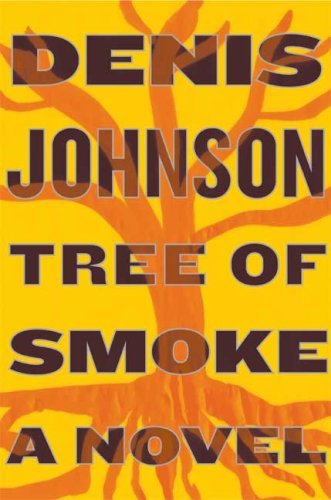
This is the story of Skip Sands—spy-in-training, engaged in Psychological Operations against the Vietcong—and the disasters that befall him thanks to his famous uncle, a war hero known in intelligence circles simply as the Colonel. This is also the story of the Houston brothers, Bill and James, young men who drift out of the Arizona desert into a war in which the line between disinformation and delusion has blurred away. In its vision of human folly, and its gritty, sympathetic portraits of men and women desperate for an end to their loneliness, whether in sex or death or by the grace of God, this is a story like nothing in our literature. Tree of Smoke is Denis Johnson’s first full-length novel in nine years, and his most gripping, beautiful, and powerful work to date.
Tree of Smoke was the 2007 National Book Award Winner for Fiction.
Peter Matthiessen’s great American epic–Killing Mister Watson, Lost Man’s River, and Bone by Bone–was conceived as one vast mysterious novel, but because of its length it was originally broken up into three books. In this bold new rendering, Matthiessen has cut nearly a third of the overall text and collapsed the time frame while deepening the insights and motivations of his characters with brilliant rewriting throughout. In Shadow Country, he has marvelously distilled a monumental work, realizing his original vision.
Inspired by a near-mythic event of the wild Florida frontier at the turn of the twentieth century, Shadow Country reimagines the legend of the inspired Everglades sugar planter and notorious outlaw E. J. Watson, who drives himself relentlessly toward his own violent end at the hands of neighbors who mostly admired him, in a killing that obsessed his favorite son. Shadow Country traverses strange landscapes and frontier hinterlands inhabited by Americans of every provenance and color, including the black and Indian inheritors of the archaic racism that, as Watson’s wife observed, "still casts its shadow over the nation."
With more than a million copies sold worldwide, a modern classic of Palestinian literature from “a major writer of our time” (Alice Walker).
“Timeless in its truth.” —Fattima Bhutto “Powerful and passionate.” —Michael Palin “A novel to savor.” —Maureen Corrigan “Relevant, powerful, emotional and vivid.” —Bidisha Mamat
Mornings in Jenin is a heart-wrenching multi-generational account of one family's struggle and survival through the decades before and after Zionist colonization and theft of Palestine. Carrying us from Ein Hod to Jenin to Jerusalem, to Lebanon, then to the anonymity of America and finally back to Occupied Palestine, it is a novel of vital importance, “affirming all that is enduring and valuable in the undefeated human spirit” (Hanan Ashrawi).
“Affects me emotionally in a way only great novels can.” —Henning Mankell “Achingly beautiful.” —Saleem Haddad “When we grow numb to horror, when our minds slam shut in shock and denial, sometimes a story can slip to reawaken our humanity. This is that story, never more relevant.” —Laline Paull
Winner of the 1979 National Book Award, Going After Cacciato captures the peculiar mixture of horror and hallucination that marked this strangest of wars.
In a blend of reality and fantasy, this novel tells the story of a young soldier who one day lays down his rifle and sets off on a quixotic journey from the jungles of Indochina to the streets of Paris. In its memorable evocation of men both fleeing from and meeting the demands of battle, Going After Cacciato stands as much more than just a great war novel. Ultimately it's about the forces of fear and heroism that do battle in the hearts of us all.
Once upon a time that was called 1828, before all the living things on the land and the fishes in the sea were destroyed, there was a man named William Buelow Gould, a convict in Van Dieman's Land who fell in love with a black woman and discovered too late that to love is not safe. Silly Billy Gould, invader of Australia, liar, murderer, forger, fantasist, condemned to live in the most brutal penal colony in the British Empire, and there ordered to paint a book of fish. Once upon a time, miraculous things happened...
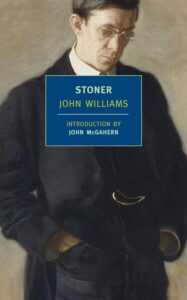
William Stoner is born at the end of the nineteenth century into a dirt-poor Missouri farming family. Sent to the state university to study agronomy, he instead falls in love with English literature and embraces a scholar’s life, so different from the hardscrabble existence he has known. And yet as the years pass, Stoner encounters a succession of disappointments: marriage into a “proper” family estranges him from his parents; his career is stymied; his wife and daughter turn coldly away from him; a transforming experience of new love ends under threat of scandal. Driven ever deeper within himself, Stoner rediscovers the stoic silence of his forebears and confronts an essential solitude.
John Williams’s luminous and deeply moving novel is a work of quiet perfection. William Stoner emerges from it not only as an archetypal American, but as an unlikely existential hero, standing, like a figure in a painting by Edward Hopper, in stark relief against an unforgiving world.
A big, powerful saga of men in combat, written over the course of thirty-five years by a highly decorated Vietnam veteran.
Intense, powerful, and compelling, Matterhorn is an epic war novel in the tradition of Norman Mailer's The Naked and the Dead and James Jones's The Thin Red Line. It is the timeless story of a young Marine lieutenant, Waino Mellas, and his comrades in Bravo Company, who are dropped into the mountain jungle of Vietnam as boys and forced to fight their way into manhood. Standing in their way are not merely the North Vietnamese but also monsoon rain and mud, leeches and tigers, disease and malnutrition. Almost as daunting, it turns out, are the obstacles they discover between each other: racial tension, competing ambitions, and duplicitous superior officers. But when the company finds itself surrounded and outnumbered by a massive enemy regiment, the Marines are thrust into the raw and all-consuming terror of combat. The experience will change them forever.
Written over the course of thirty years by a highly decorated Vietnam veteran, Matterhorn is a visceral and spellbinding novel about what it is like to be a young man at war. It is an unforgettable novel that transforms the tragedy of Vietnam into a powerful and universal story of courage, camaraderie, and sacrifice: a parable not only of the war in Vietnam but of all war, and a testament to the redemptive power of literature.
A graduate of Yale University and a Rhodes Scholar at Oxford University, Karl Marlantes served as a Marine in Vietnam, where he was awarded the Navy Cross, the Bronze Star, two Navy Commendation Medals for valor, two Purple Hearts, and ten air medals. This is his first novel. He lives in rural Washington State.
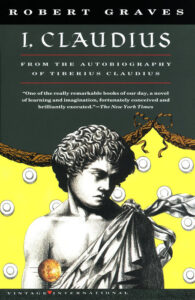
A modern classic of historical fiction written in the form of Claudius's autobiography.
Tiberius Claudius Drusus Nero Germanicus lived from 10 B.C. to 54 A.D. Despised as a weakling and dismissed as an idiot because of his physical infirmities, Claudius survived the intrigues and poisonings that marked the reigns of Augustus, Tiberius, and the mad Caligula to become emperor of Rome in 41 A.D. The first part of Robert Graves’s two-part account of the life of Tiberius Claudius, I, Claudius stands as a landmark historical novel of the 20th century from one of its great writers.
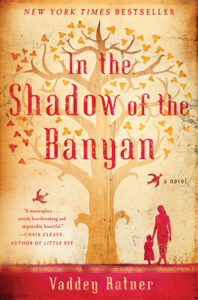
Displaying the author's extraordinary gift for language, In the Shadow of the Banyan is testament to the transcendent power of narrative and a brilliantly wrought tale of human resilience.
For seven-year-old Raami, the shattering end of childhood begins with the footsteps of her father returning home in the early dawn hours bringing details of the civil war that has overwhelmed the streets of Phnom Penh, Cambodia's capital. Soon the family's world of carefully guarded royal privilege is swept up in the chaos of revolution and forced exodus.
Over the next four years, as she endures the deaths of family members, starvation, and brutal forced labor, Raami clings to the only remaining vestige of childhood - the mythical legends and poems told to her by her father. In a climate of systematic violence where memory is sickness and justification for execution, Raami fights for her improbable survival. Displaying the author's extraordinary gift for language, In the Shadow of the Banyan is testament to the transcendent power of narrative and a brilliantly wrought tale of human resilience.
Welcome Back!
Track your reading progress and sync your library.