In his most famous and controversial book, Utopia, Thomas More imagines a perfect island nation where thousands live in peace and harmony, men and women are both educated, and all property is communal. Through dialogue and correspondence between the protagonist Raphael Hythloday and his friends and contemporaries, More explores the theories behind war, political disagreements, social quarrels, and wealth distribution and imagines the day-to-day lives of those citizens enjoying freedom from fear, oppression, violence, and suffering. Originally written in Latin, this vision of an ideal world is also a scathing satire of Europe in the sixteenth century and has been hugely influential since publication, shaping utopian fiction even today.
After years of exploitation, neglect, and despair, the animals of Manor Farm revolt. They drive owner Mr. Jones off the land and rechristen the property Animal Farm, a utopia of equality and mutual support. But Napoleon, a young boar who assumes command after the rebellion, is hungry for power. And as the pigs consolidate control, all the good intentions of Animal Farm are crushed by a new and inevitable tyranny.
George Orwell’s Animal Farm, the chilling allegorical satire about the working class and the gripping rhetoric of despots, illustrates just how easy the slide into oppression and totalitarianism can be.
Revised Previously published as Animal Farm , this edition of Animal Farm (AmazonClassics Edition) includes editorial revisions.
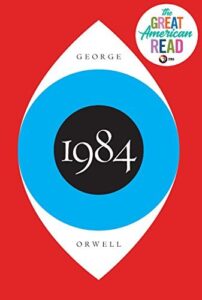
Among the seminal texts of the 20th century, Nineteen Eighty-Four is a rare work that grows more haunting as its futuristic purgatory becomes more real. Published in 1949, the book offers political satirist George Orwell's nightmarish vision of a totalitarian, bureaucratic world and one poor stiff's attempt to find individuality. The brilliance of the novel is Orwell's prescience of modern life—the ubiquity of television, the distortion of the language—and his ability to construct such a thorough version of hell. Required reading for students since it was published, it ranks among the most terrifying novels ever written.
Anthem is Ayn Rand's classic tale of a dystopian future of the great "We"—a world that deprives individuals of a name or independence—that anticipates her later masterpieces, The Fountainhead and Atlas Shrugged.
They existed only to serve the state. They were conceived in controlled Palaces of Mating. They died in the Home of the Useless. From cradle to grave, the crowd was one—the great WE.
In all that was left of humanity, there was only one man who dared to think, seek, and love. He lived in the dark ages of the future. In a loveless world, he dared to love the woman of his choice. In an age that had lost all trace of science and civilization, he had the courage to seek and find knowledge. But these were not the crimes for which he would be hunted. He was marked for death because he had committed the unpardonable sin: He had stood forth from the mindless human herd. He was a man alone. He had rediscovered the lost and holy word—I.
"I worship individuals for their highest possibilities as individuals, and I loathe humanity, for its failure to live up to these possibilities." —Ayn Rand
This edition features George Orwell’s best-known novels—1984 and Animal Farm—with an introduction by Christopher Hitchens.
In 1984, London is a grim city where Big Brother is always watching you and the Thought Police can practically read your mind. Winston Smith joins a secret revolutionary organisation called The Brotherhood, dedicated to the destruction of the Party. Together with his beloved Julia, he hazards his life in a deadly match against the powers that be.
Animal Farm is Orwell’s classic satire of the Russian Revolution - an account of the bold struggle, initiated by the animals, that transforms Mr. Jones’s Manor Farm into Animal Farm - a wholly democratic society built on the credo that All Animals Are Created Equal. But are they? AUTHOR: George Orwell (1903-1950) was born in India and served with the Imperial Police in Burma before joining the Republican Army in the Spanish Civil War. Orwell was the author of six novels as well as numerous essays and nonfiction works.
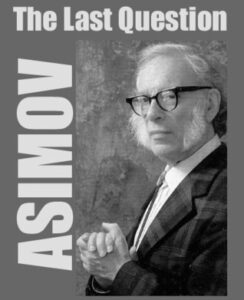
¿Es posible revertir el inevitable final del Universo, o el mundo debe acabar de todas formas? es la pregunta que desde un día del siglo XXI, hasta generaciones y generaciones posteriores en el tiempo, hacen los humanos a los ordenadores.
En un relato aparentemente sencillo sobre un asunto sobrecogedor, el fin de los días, Asimov demuestra, una vez más, una mente preclara y una mano maestra para sobrecoger al lector y dejarlo en vilo, incluso después de la lectura.
Alternate cover edition of ISBN-13: 978-0140286809, ISBN-10/ASIN: 0140286802
For the first time in English, all the fiction by the writer who has been called “the greatest Spanish-language writer of our century” collected in a single volume
A Penguin Classics Deluxe Edition with flaps and deckle-edged paper
For some fifty years, in intriguing and ingenious fictions that reimagined the very form of the short story—from his 1935 debut with A Universal History of Iniquity through his immensely influential collections Ficciones and The Aleph, the enigmatic prose poems of The Maker, up to his final work in the 1980s, Shakespeare’s Memory—Jorge Luis Borges returned again and again to his celebrated themes: dreams, duels, labyrinths, mirrors, infinite libraries, the manipulations of chance, gauchos, knife fighters, tigers, and the elusive nature of identity itself. Playfully experimenting with ostensibly subliterary genres, he took the detective story and turned it into metaphysics; he took fantasy writing and made it, with its questioning and reinventing of everyday reality, central to the craft of fiction; he took the literary essay and put it to use reviewing wholly imaginary books.
Bringing together for the first time in English all of Borges’s magical stories, and all of them newly rendered into English in brilliant translations by Andrew Hurley, Collected Fictions is the perfect one-volume compendium for all who have long loved Borges, and a superb introduction to the master’s work for all who have yet to discover this singular genius.
This is the story of a man who said that he would stop the motor of the world and did. Was he a destroyer or the greatest of liberators?
Why did he have to fight his battle, not against his enemies, but against those who needed him most, and his hardest battle against the woman he loved? What is the world’s motor — and the motive power of every man? You will know the answer to these questions when you discover the reason behind the baffling events that play havoc with the lives of the characters in this story.
Tremendous in its scope, this novel presents an astounding panorama of human life — from the productive genius who becomes a worthless playboy — to the great steel industrialist who does not know that he is working for his own destruction — to the philosopher who becomes a pirate — to the composer who gives up his career on the night of his triumph — to the woman who runs a transcontinental railroad — to the lowest track worker in her Terminal tunnels.
You must be prepared, when you read this novel, to check every premise at the root of your convictions.
This is a mystery story, not about the murder — and rebirth — of man’s spirit. It is a philosophical revolution, told in the form of an action thriller of violent events, a ruthlessly brilliant plot structure and an irresistible suspense. Do you say this is impossible? Well, that is the first of your premises to check.
For nearly a century, the original version of Upton Sinclair's classic novel has remained almost entirely unknown.
When it was published in serial form in 1905, it was a full third longer than the censored, commercial edition published in book form the following year. That expurgated commercial edition edited out much of the ethnic flavor of the original, as well as some of the goriest descriptions of the meat-packing industry and much of Sinclair's most pointed social and political commentary.
The text of this new edition is as it appeared in the original uncensored edition of 1905. It contains the full 36 chapters as originally published, rather than the 31 of the expurgated edition.
A new foreword describes the discovery in the 1980s of the original edition and its subsequent suppression, and a new introduction places the novel in historical context by explaining the pattern of censorship in the shorter commercial edition.
Welcome Back!
Track your reading progress and sync your library.