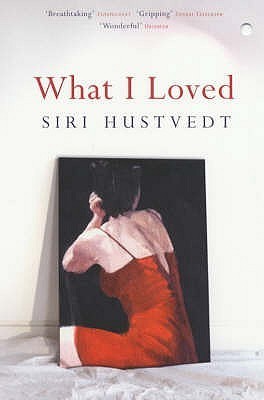
This is the story of two men who first become friends in 1970s New York, of the women in their lives, of their sons, born the same year, and of how relations between the two families become strained, first by tragedy, then by a monstrous duplicity which comes slowly and corrosively to the surface.
Passionate, compassionate, vitally inventive and scrupulously playful, Ali Smith’s novels are like nothing else. A true original, she is a one-of-a-kind literary sensation. Her novels consistently attract serious acclaim and discussion—and have won her a dedicated readership who are drawn again and again to the warmth, humanity and humor of her voice.
How to be both is a novel all about art’s versatility. Borrowing from painting’s fresco technique to make an original literary double-take, it’s a fast-moving genre-bending conversation between forms, times, truths and fictions. There’s a Renaissance artist of the 1460s. There’s the child of a child of the 1960s. Two tales of love and injustice twist into a singular yarn where time gets timeless, structural gets playful, knowing gets mysterious, fictional gets real—and all life’s givens get given a second chance.
A NOTE TO THE READER: Who says stories reach everybody in the same order? This novel can be read in two ways and this book provides you with both. In half of all printed editions of the novel the narrative EYES comes before CAMERA. In the other half of printed editions the narrative CAMERA precedes EYES. The narratives are exactly the same in both versions, just in a different order.
The books are intentionally printed in two different ways, so that readers can randomly have different experiences reading the same text. So, depending on which edition you happen to receive, the book will be: EYES, CAMERA, or CAMERA, EYES. Enjoy the adventure.
In the dawning light of a late-summer morning, the people of lower Manhattan stand hushed, staring up in disbelief at the Twin Towers. It is August 1974, and a mysterious tightrope walker is running, dancing, leaping between the towers, suspended a quarter mile above the ground. In the streets below, a slew of ordinary lives become extraordinary in bestselling novelist Colum McCann’s stunningly intricate portrait of a city and its people. Let the Great World Spin is the critically acclaimed author’s most ambitious novel yet: a dazzlingly rich vision of the pain, loveliness, mystery, and promise of New York City in the 1970s.
Corrigan, a radical young Irish monk, struggles with his own demons as he lives among the prostitutes in the middle of the burning Bronx. A group of mothers gather in a Park Avenue apartment to mourn their sons who died in Vietnam, only to discover just how much divides them even in grief. A young artist finds herself at the scene of a hit-and-run that sends her own life careening sideways. Tillie, a thirty-eight-year-old grandmother, turns tricks alongside her teenage daughter, determined not only to take care of her family but to prove her own worth.
Elegantly weaving together these and other seemingly disparate lives, McCann’s powerful allegory comes alive in the unforgettable voices of the city’s people, unexpectedly drawn together by hope, beauty, and the “artistic crime of the century.” A sweeping and radical social novel, Let the Great World Spin captures the spirit of America in a time of transition, extraordinary promise, and, in hindsight, heartbreaking innocence. Hailed as a “fiercely original talent” (San Francisco Chronicle), award-winning novelist McCann has delivered a triumphantly American masterpiece that awakens in us a sense of what the novel can achieve, confront, and even heal.
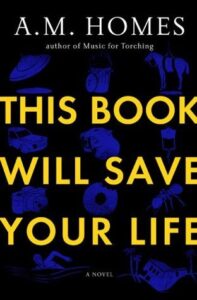
Disconnected from the outside world until a health scare and a sink hole in his yard force him to forge new relationships, middle-aged everyman Richard Novak finds his life changed by a doughnut shop owner, a kidnapped woman, a counterculture icon, and others. 40,000 first printing.
From the #1 New York Times bestselling author of A Man Called Ove and “writer of astonishing depth” (The Washington Times) comes a poignant comedy about a crime that never took place, a would-be bank robber who disappears into thin air, and eight extremely anxious strangers who find they have more in common than they ever imagined.
Viewing an apartment normally doesn’t turn into a life-or-death situation, but this particular open house becomes just that when a failed bank robber bursts in and takes everyone in the apartment hostage. As the pressure mounts, the eight strangers begin slowly opening up to one another and reveal long-hidden truths.
First is Zara, a wealthy bank director who has been too busy to care about anyone else until tragedy changed her life. Now, she’s obsessed with visiting open houses to see how ordinary people live—and, perhaps, to set an old wrong to right. Then there’s Roger and Anna-Lena, an Ikea-addicted retired couple who are on a never-ending hunt for fixer-uppers to hide the fact that they don’t know how to fix their own failing marriage. Julia and Ro are a young lesbian couple and soon-to-be parents who are nervous about their chances for a successful life together since they can’t agree on anything. And there’s Estelle, an eighty-year-old woman who has lived long enough to be unimpressed by a masked bank robber waving a gun in her face. And despite the story she tells them all, Estelle hasn’t really come to the apartment to view it for her daughter, and her husband really isn’t outside parking the car.
As police surround the premises and television channels broadcast the hostage situation live, the tension mounts and even deeper secrets are slowly revealed. Before long, the robber must decide which is the more terrifying prospect: going out to face the police, or staying in the apartment with this group of impossible people.
Rich with Fredrik Backman’s “pitch-perfect dialogue and an unparalleled understanding of human nature” (Shelf Awareness), Anxious People’s whimsical plot serves up unforgettable insights into the human condition and a gentle reminder to be compassionate to all the anxious people we encounter every day.
A heartstrong story of family and romance, tribulation and tenacity, set on the High Plains east of Denver.
In the small town of Holt, Colorado, a high school teacher is confronted with raising his two boys alone after their mother retreats first to the bedroom, then altogether. A teenage girl—her father long since disappeared, her mother unwilling to have her in the house—is pregnant, alone herself, with nowhere to go. And out in the country, two brothers, elderly bachelors, work the family homestead, the only world they've ever known.
From these unsettled lives emerges a vision of life, and of the town and landscape that bind them together—their fates somehow overcoming the powerful circumstances of place and station, their confusion, curiosity, dignity and humor intact and resonant. As the milieu widens to embrace fully four generations, Kent Haruf displays an emotional and aesthetic authority to rival the past masters of a classic American tradition.
Utterly true to the rhythms and patterns of life, Plainsong is a novel to care about, believe in, and learn from.
Thelonious (Monk) Ellison has never allowed race to define his identity. But as both a writer and an African American, he is offended and angered by the success of We's Lives in Da Ghetto, the exploitative debut novel of a young, middle-class black woman who once visited "some relatives in Harlem for a couple of days." Hailed as an authentic representation of the African American experience, the book is a national bestseller and its author feted on the Kenya Dunston television show. The book's success rankles all the more as Monk's own most recent novel has just notched its seventh rejection.
Even as his career as a writer appears to have stalled, Monk finds himself coping with changes in his personal life. In need of distraction from old memories, new responsibilities, and his professional stagnation, Monk composes, in a heat of inspiration and energy, a fierce parody of the sort of exploitative, ghetto wanna-be lit represented by We's Lives in Da Ghetto.
But when his agent sends this literary indictment (included here in its entirety) out to publishers, it is greeted as an authentic new voice of black America. Monk -- or his pseudonymous alter ego, Stagg R. Leigh -- is offered money, fame, success beyond anything he has known. And as demand begins to build for meetings with and appearances by Leigh, Monk is faced with a whole new set of problems.
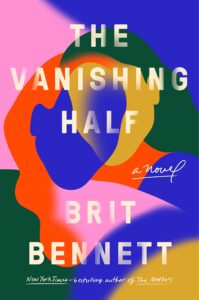
The Vignes twin sisters will always be identical. But after growing up together in a small, southern black community and running away at age sixteen, it's not just the shape of their daily lives that is different as adults, it's everything: their families, their communities, their racial identities. Many years later, one sister lives with her black daughter in the same southern town she once tried to escape. The other passes for white, and her white husband knows nothing of her past. Still, even separated by so many miles and just as many lies, the fates of the twins remain intertwined. What will happen to the next generation, when their own daughters' storylines intersect?
Weaving together multiple strands and generations of this family, from the Deep South to California, from the 1950s to the 1990s, Brit Bennett produces a story that is at once a riveting, emotional family story and a brilliant exploration of the American history of passing. Looking well beyond issues of race, The Vanishing Half considers the lasting influence of the past as it shapes a person's decisions, desires, and expectations, and explores some of the multiple reasons and realms in which people sometimes feel pulled to live as something other than their origins.
Everyone in Shaker Heights was talking about it that summer: how Isabelle, the last of the Richardson children, had finally gone around the bend and burned the house down.
In Shaker Heights, a placid, progressive suburb of Cleveland, everything is meticulously planned – from the layout of the winding roads, to the colours of the houses, to the successful lives its residents will go on to lead. And no one embodies this spirit more than Elena Richardson, whose guiding principle is playing by the rules.
Enter Mia Warren – an enigmatic artist and single mother – who arrives in this idyllic bubble with her teenage daughter Pearl, and rents a house from the Richardsons. Soon Mia and Pearl become more than just tenants: all four Richardson children are drawn to the mother–daughter pair. But Mia carries with her a mysterious past, and a disregard for the rules that threatens to upend this carefully ordered community.
When old family friends attempt to adopt a Chinese-American baby, a custody battle erupts that dramatically divides the town – and puts Mia and Elena on opposing sides. Suspicious of Mia and her motives, Elena is determined to uncover the secrets in Mia's past. But her obsession will come at an unexpected and devastating cost . . .
Welcome Back!
Track your reading progress and sync your library.