White Nights is a short story by Fyodor Dostoevsky that was published in 1848. Set in St. Petersburg, it is the story of a young man fighting his inner restlessness. A light and tender narrative, it delves into the torment and guilt of unrequited love. Both protagonists suffer from a deep sense of alienation that initially brings them together. A blend of romanticism and realism, the story appeals gently to the senses and feelings.
Hailed as one of the world's supreme masterpieces on the subject of death and dying, The Death of Ivan Ilyich is the story of a worldly careerist, a high court judge who has never given the inevitability of his dying so much as a passing thought. But one day, death announces itself to him, and to his shocked surprise, he is brought face to face with his own mortality.
How, Tolstoy asks, does an unreflective man confront his one and only moment of truth?
This short novel was an artistic culmination of a profound spiritual crisis in Tolstoy's life, a nine-year period following the publication of Anna Karenina during which he wrote not a word of fiction. A thoroughly absorbing, and, at times, terrifying glimpse into the abyss of death, it is also a strong testament to the possibility of finding spiritual salvation.
As the turbulent years following the Russian revolution of 1917 settle down into a new Soviet reality, the brilliant and eccentric zoologist Persikov discovers an amazing ray that drastically increases the size and reproductive rate of living organisms. At the same time, a mysterious plague wipes out all the chickens in the Soviet republics. The government expropriates Persikov's untested invention in order to rebuild the poultry industry, but a horrible mix-up quickly leads to a disaster that could threaten the entire world.
This H. G. Wells-inspired novel by the legendary Mikhail Bulgakov is the only one of his larger works to have been published in its entirety during the author's lifetime. A poignant work of social science fiction and a brilliant satire on the Soviet revolution, it can now be enjoyed by English-speaking audiences through this accurate new translation.
This epic tale about the effects of the Russian Revolution and its aftermath on a bourgeois family was not published in the Soviet Union until 1987. One of the results of its publication in the West was Pasternak's complete rejection by Soviet authorities; when he was awarded the Nobel Prize for Literature in 1958 he was compelled to decline it. The book quickly became an international best-seller.
Dr. Yury Zhivago, Pasternak's alter ego, is a poet, philosopher, and physician whose life is disrupted by the war and by his love for Lara, the wife of a revolutionary. His artistic nature makes him vulnerable to the brutality and harshness of the Bolsheviks. The poems he writes constitute some of the most beautiful writing featured in the novel.
Acclaimed by many as the world's greatest novel, Anna Karenina provides a vast panorama of contemporary life in Russia and of humanity in general. In it Tolstoy uses his intense imaginative insight to create some of the most memorable characters in all of literature. Anna is a sophisticated woman who abandons her empty existence as the wife of Karenin and turns to Count Vronsky to fulfil her passionate nature - with tragic consequences. Levin is a reflection of Tolstoy himself, often expressing the author's own views and convictions.
Throughout, Tolstoy points no moral, merely inviting us not to judge but to watch. As Rosemary Edmonds comments, 'He leaves the shifting patterns of the kaleidoscope to bring home the meaning of the brooding words following the title, 'Vengeance is mine, and I will repay.
Published two weeks after his seventieth birthday, Ada, or Ardor is one of Nabokov's greatest masterpieces, the glorious culmination of his career as a novelist. It tells a love story troubled by incest. But more: it is also at once a fairy tale, epic, philosophical treatise on the nature of time, parody of the history of the novel, and erotic catalogue. Ada, or Ardor is no less than the superb work of an imagination at white heat.
This is the first American edition to include the extensive and ingeniously sardonic appendix by the author, written under the anagrammatic pseudonym Vivian Darkbloom.
Librarian's note: Alternate cover edition of ISBN 9780141182537.
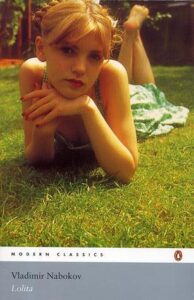
Humbert Humbert - scholar, aesthete and romantic - has fallen completely and utterly in love with Dolores Haze, his landlady's gum-snapping, silky skinned twelve-year-old daughter. Reluctantly agreeing to marry Mrs Haze just to be close to Lolita, Humbert suffers greatly in the pursuit of romance; but when Lo herself starts looking for attention elsewhere, he will carry her off on a desperate cross-country misadventure, all in the name of Love. Hilarious, flamboyant, heart-breaking and full of ingenious word play, Lolita is an immaculate, unforgettable masterpiece of obsession, delusion and lust.
In Russia's struggle with Napoleon, Tolstoy saw a tragedy that involved all mankind.
War and Peace broadly focuses on Napoleon’s invasion of Russia in 1812 and follows three of the most well-known characters in literature: Pierre Bezukhov, the illegitimate son of a count who is fighting for his inheritance and yearning for spiritual fulfillment; Prince Andrei Bolkonsky, who leaves his family behind to fight in the war against Napoleon; and Natasha Rostov, the beautiful young daughter of a nobleman who intrigues both men.
As Napoleon’s army invades, Tolstoy brilliantly follows characters from diverse backgrounds—peasants and nobility, civilians and soldiers—as they struggle with the problems unique to their era, their history, and their culture. And as the novel progresses, these characters transcend their specificity, becoming some of the most moving—and human—figures in world literature.
Tolstoy gave his personal approval to this translation, published here in a new single volume edition, which includes an introduction by Henry Gifford, and Tolstoy's important essay `Some Words about War and Peace'.
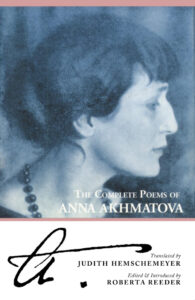
Initially published in 1990, when the New York Times Book Review named it one of fourteen "Best Books of the Year," Judith Hemschemeyer's translation of The Complete Poems of Anna Akhmatova is the definitive edition, and has sold over 13,000 copies, making it one of the most successful poetry titles of recent years. This reissued and revised printing features a new biographical essay as well as expanded notes to the poems, both by Roberta Reeder, project editor and author of Anna Akhmatova: Poet and Prophet (St. Martin's Press, 1994). Encyclopedic in scope, with more than 800 poems, 100 photographs, a historical chronology, index of first lines, and a bibliography. The Complete Poems will be the definitive English language collection of Akhmatova for many years to come.
Welcome Back!
Track your reading progress and sync your library.