This is the first-ever publication in book form of Witness for the Prosecution, Christie’s highly successful stage thriller which was made into a film by Billy Wilder. Also included are Towards Zero, Verdict and Go Back for Murder.
Adventures of Sherlock Holmes : A scandal in Bohemia ; The red-headed league ; A case of identity ; The Boscombe Valley mystery ; The five orange pips ; The man with the twisted lip ; The adventure of the blue carbuncle ; The adventure of the speckled band ; The adventure of the engineer's thumb ; The adventure of the noble bachelor ; The adventure of the beryl coronet ; The adventure of the copper beeches --
Memoirs of Sherlock Holmes : Silver blaze ; The yellow face ; The stock-broker's clerk ; The "Gloria Scott" ; The Musgrave ritual ; The Reigate puzzle ; The crooked man ; The resident patient ; The Greek interpreter ; The naval treaty ; The final problem --
The return of Sherlock Holmes : The adventure of the empty house ; The adventure of the Norwood builder ; The adventure of the dancing men ; The adventure of the solitary cyclist ; The adventure of the priory school ; The adventure of Black Peter ; The adventure of Charles Augustus Milverton ; The adventure of the six Napoleons ; The adventure of the three students ; The adventure of the golden pince-nez ; The adventure of the missing three-quarter ; The adventure of the abbey grange ; The adventure of the second stain.
Volume 2. Introduction / by Loren D. Estleman --
The hound of the Baskervilles --
The valley of fear --
His last bow : The adventure of Wisteria Lodge : The singular experience of Mr. John Scott Eccles ; The tiger of San Pedro ; The adventure of the cardboard box ; The adventure of the red circle ; The adventure of the Bruce-Partington plans ; The adventure of the dying detective ; The disappearance of Lady Frances Carfax ; The adventure of the devil's foot ; His last bow --
The case-book of Sherlock Holmes : The adventure of the illustrious client ; The adventure of the blanched soldier ; The adventure of the Mazarin stone ; The adventure of the three gables ; The adventure of the Sussex vampire ; The adventure of the three Garridebs ; The problem of Thor Bridge ; The adventure of the creeping man ; The adventure of the lion's mane ; The adventure of the veiled lodger ; The adventure of Shoscombe old place ; The adventure of the retired colourman.
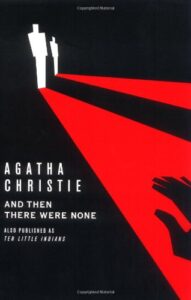
First, there were ten—a curious assortment of strangers summoned as weekend guests to a little private island off the coast of Devon. Their host, an eccentric millionaire unknown to all of them, is nowhere to be found. All that the guests have in common is a wicked past they're unwilling to reveal—and a secret that will seal their fate. For each has been marked for murder. A famous nursery rhyme is framed and hung in every room of the mansion:
"Ten little boys went out to dine; One choked his little self and then there were nine. Nine little boys sat up very late; One overslept himself and then there were eight. Eight little boys traveling in Devon; One said he'd stay there then there were seven. Seven little boys chopping up sticks; One chopped himself in half and then there were six. Six little boys playing with a hive; A bumblebee stung one and then there were five. Five little boys going in for law; One got in Chancery and then there were four. Four little boys going out to sea; A red herring swallowed one and then there were three. Three little boys walking in the zoo; A big bear hugged one and then there were two. Two little boys sitting in the sun; One got frizzled up and then there was one. One little boy left all alone; He went out and hanged himself and then there were none."
When they realize that murders are occurring as described in the rhyme, terror mounts. One by one they fall prey. Before the weekend is out, there will be none. Who has choreographed this dastardly scheme? And who will be left to tell the tale? Only the dead are above suspicion.
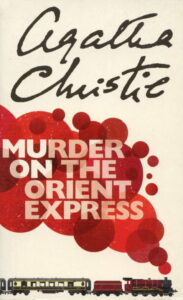
Just after midnight, a snowdrift stops the famous Orient Express in its tracks as it travels through the mountainous Balkans. The luxurious train is surprisingly full for the time of the year but, by the morning, it is one passenger fewer. An American tycoon lies dead in his compartment, stabbed a dozen times, his door locked from the inside.
One of the passengers is none other than detective Hercule Poirot. On vacation.
Isolated and with a killer on board, Poirot must identify the murderer—in case he or she decides to strike again.
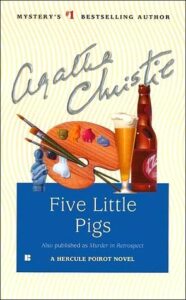
It was an open and shut case. All the evidence said Caroline Crale poisoned her philandering husband, a brilliant painter. She was quickly and easily convicted and sentenced to life in prison. Now, sixteen years later, in a posthumous letter, Mrs. Crale has assured her grown daughter that she was innocent. But instead of setting the young woman's mind at ease, the letter only raises disquieting questions. Did Caroline indeed write the truth? And if she didn't kill her husband, who did?
To find out, the Crale’s daughter asks Hercule Poirot to reopen the case. His investigation takes him deep into the conflicting memories and motivations of the five other people who were with the Crales on the fatal day. With his keen understanding of human psychology, he manages to discover the surprising truth behind the artist's death.
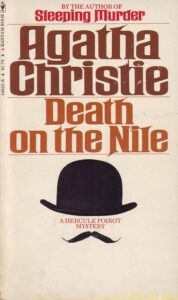
The tranquility of a lovely cruise along the Nile is shattered by the discovery that Linnet Ridgeway has been shot. She was young, stylish and beautiful, a girl who had everything – until she lost her life.
Who is also on board? Christie's great detective Hercule Poirot is on holiday. He recalls an earlier outburst by a fellow passenger: ‘I’d like to put my dear little pistol against her head and just press the trigger.’ Despite the exotic setting, nothing is ever quite what it seems…
Considered to be one of Agatha Christie's greatest and also, most controversial mysteries. 'The Murder Of Roger Ackroyd' breaks the rules of traditional mystery.
The peaceful English village of King’s Abbot is stunned. The widow Ferrars dies from an overdose of Veronal. Not twenty-four hours later, Roger Ackroyd—the man she had planned to marry—is murdered. It is a baffling case involving blackmail and death that taxes Hercule Poirot’s “little grey cells” before he reaches one of the most startling conclusions of his career.
Librarian's note: the first fifteen novels in the Hercule Poirot series are 1) The Mysterious Affair at Styles, 1920; 2) The Murder on the Links, 1923; 3) The Murder of Roger Ackroyd, 1926; 4) The Big Four, 1927; 5) The Mystery of the Blue Train, 1928; 6) Peril at End House, 1932; 7) Lord Edgware Dies, 1933; 8) Murder on the Orient Express, 1934; 9) Three Act Tragedy, 1935; 10) Death in the Clouds, 1935; 11) The A.B.C. Murders, 1936; 12) Murder in Mesopotamia, 1936; 13) Cards on the Table, 1936; 14) Dumb Witness, 1937; and 15) Death on the Nile, 1937. These are just the novels; Poirot also appears in this period in a play, Black Coffee, 1930, and two collections of short stories, Poirot Investigates, 1924, and Murder in the Mews, 1937. Each novel, play and short story has its own entry on Goodreads.
When Alice Asher is murdered in Andover, Hercule Poirot is already looking into the clues. Alphabetically speaking, it's one letter down, twenty-five to go.
There's a serial killer on the loose. His macabre calling card is to leave the ABC Railway Guide beside each victim's body. But if A is for Alice Asher, bludgeoned to death in Andover, and B is for Betty Bernard, strangled with her belt on the beach at Bexhill, who will then be Victim C? More importantly, why is this happening?
Often considered to be one of Agatha Christie's best.
Librarian's note: the first fifteen novels in the Hercule Poirot series are 1) The Mysterious Affair at Styles, 1920; 2) The Murder on the Links, 1923; 3) The Murder of Roger Ackroyd, 1926; 4) The Big Four, 1927; 5) The Mystery of the Blue Train, 1928; 6) Peril at End House, 1932; 7) Lord Edgware Dies, 1933; 8) Murder on the Orient Express, 1934; 9) Three Act Tragedy, 1935; 10) Death in the Clouds, 1935; 11) The A.B.C. Murders, 1936; 12) Murder in Mesopotamia, 1936; 13) Cards on the Table, 1936; 14) Dumb Witness, 1937; and 15) Death on the Nile, 1937. These are just the novels; Poirot also appears in this period in a play, Black Coffee, 1930, and two collections of short stories, Poirot Investigates, 1924, and Murder in the Mews, 1937. Each novel, play and short story has its own entry on Goodreads.
Arthritic and immobilized, Poirot calls on his old friend Captain Hastings to join him at Styles to be the eyes and ears that will feed observations to Poirot's still razor sharp mind. Though aware of the criminal's identity, Poirot will not reveal it to the frustrated Hastings, and dubs the nameless personage 'X'. Already responsible for several murders, X, Poirot warns, is ready to strike again, and the partners must work swiftly to prevent imminent murder.
Poirot’s final case, a mystery which brings him and Hastings back to Styles where they first solved a crime together. The story was both anticipated and dreaded by Agatha Christie fans worldwide, many of whom still refuse to read it, as it is known to contain Poirot’s death.
Agatha Christie wrote it during World War II, as a gift for her daughter should she not survive the bombings, and it was kept in a safe for over thirty years. It was agreed among the family that Curtain would be published finally in 1975 by Collins, her long-standing publishers, and that Sleeping Murder (the Marple story written during the war for her husband, Max) would follow.
The reception of Poirot’s death was international, even earning him an obituary in The New York Times; he is still the only fictional character to have received such an honour. The first actor to take on the role of portraying Poirot in his final hours was David Suchet, as the final episode of the series Agatha Christie’s Poirot for which he’d been playing the role for twenty-five years. The episode was adapted in 2013.
Welcome Back!
Track your reading progress and sync your library.