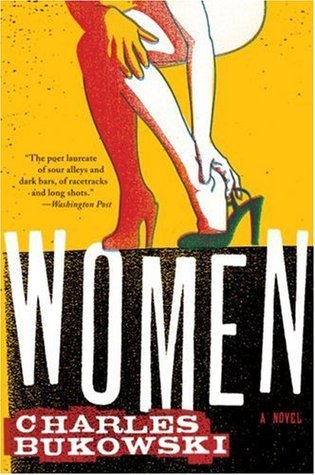
Low-life writer and unrepentant alcoholic Henry Chinaski was born to survive. After decades of slacking off at low-paying dead-end jobs, blowing his cash on booze and women, and scrimping by in flea-bitten apartments, Chinaski sees his poetic star rising at last. Now, at fifty, he is reveling in his sudden rock-star life, running three hundred hangovers a year, and maintaining a sex life that would cripple Casanova.
One of Bukowski's best, this beer-soaked, deliciously degenerate novel follows the wanderings of aspiring writer Henry Chinaski across World War II-era America. Deferred from military service, Chinaski travels from city to city, moving listlessly from one odd job to another, always needing money but never badly enough to keep a job. His day-to-day existence spirals into an endless litany of pathetic whores, sordid rooms, dreary embraces, and drunken brawls, as he makes his bitter, brilliant way from one drink to the next.
Charles Bukowski's posthumous legend continues to grow. Factotum is a masterfully vivid evocation of slow-paced, low-life urbanity and alcoholism, and an excellent introduction to the fictional world of Charles Bukowski.
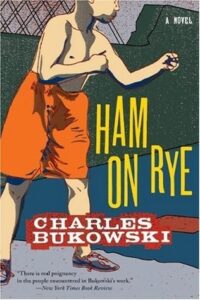
In what is widely hailed as the best of his many novels, Charles Bukowski details the long, lonely years of his own hardscrabble youth in the raw voice of alter ego Henry Chinaski. From a harrowingly cheerless childhood in Germany through acne-riddled high school years and his adolescent discoveries of alcohol, women, and the Los Angeles Public Library's collection of D. H. Lawrence, "Ham on Rye" offers a crude, brutal, and savagely funny portrait of an outcast's coming-of-age during the desperate days of the Great Depression.
“The first of my father’s illusions was that bears could survive the life lived by human beings, and the second was that human beings could survive a life led in hotels.” So says John Berry, son of a hapless dreamer, brother to a cadre of eccentric siblings, and chronicler of the lives lived, the loves experienced, the deaths met, and the myriad strange and wonderful times encountered by the family Berry. Hoteliers, pet-bear owners, friends of Freud (the animal trainer and vaudevillian, that is), and playthings of mad fate, they “dream on” in a funny, sad, outrageous, and moving novel by the remarkable author of A Prayer for Owen Meany and Last Night in Twisted River.
The National Book Award-winning classic from the author of Underworld and Libra, now a Netflix film starring Adam Driver, Don Cheadle, and Greta Gerwig
White Noise tells the story of Jack Gladney, his fourth wife, Babette, and four ultramodern offspring as they navigate the rocky passages of family life to the background babble of brand-name consumerism. When an industrial accident unleashes an "airborne toxic event," a lethal black chemical cloud floats over their lives. The menacing cloud is a more urgent and visible version of the "white noise" engulfing the Gladneys—radio transmissions, sirens, microwaves, ultrasonic appliances, and TV murmurings—pulsing with life, yet suggesting something ominous.
Part of the Penguin Orange Collection, a limited-run series of twelve influential and beloved American classics in a bold series design offering a modern take on the iconic Penguin paperback
Winner of the 2016 AIGA + Design Observer 50 Books | 50 Covers competition
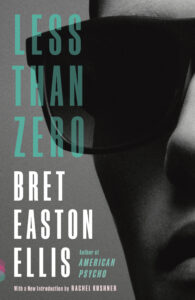
Set in Los Angeles in the early 1980s, this coolly mesmerizing novel is a raw, powerful portrait of a lost generation that experienced sex, drugs, and disaffection at too early an age, growing up in a world shaped by casual nihilism, passivity, and too much money.
Clay comes home for Christmas vacation from his Eastern college and re-enters a landscape of limitless privilege and absolute moral entropy, where everyone drives Porches, dines at Spago, and snorts mountains of cocaine. He tries to renew feelings for his girlfriend, Blair, and for his best friend from high school, Julian, who is careering into hustling and heroin. Clay's holiday turns into a dizzying spiral of desperation that takes him through the relentless parties in glitzy mansions, seedy bars, and underground rock clubs, and into the seamy world of L.A. after dark.
Que signifie V. ? Victoire, vol d'oiseaux, ou encore Vheissu, un pays imaginaire et mystérieux ? C'est la question que se pose Herbert Stencil depuis qu'il a repéré le fameux signe dans le journal intime de son père défunt. Très vite, V. devient une énigme aux nombreuses significations, une figure féminine aux multiples visages, la clé de voûte de la vaste réalité. Un récit vertigineux, dans le sillage de Kerouac et Joyce.
Richard Brautigan was a literary idol of the 1960s and 1970s whose comic genius and iconoclastic vision of American life caught the imagination of young people everywhere. He came of age during the Haight-Ashbury period and has been called "the last of the Beats." His early books became required reading for the hip generation, and on its publication Trout Fishing in America became an international bestseller. An indescribable romp, the novel is best summed up in one word: mayonnaise.
This new edition includes an introduction by the poet Billy Collins, who first encountered Brautigan's work as a student in California.
"It began as a mistake." By middle age, Henry Chinaski has lost more than twelve years of his life to the U.S. Postal Service. In a world where his three true, bitter pleasures are women, booze, and racetrack betting, he somehow drags his hangover out of bed every dawn to lug waterlogged mailbags up mud-soaked mountains, outsmart vicious guard dogs, and pray to survive the day-to-day trials of sadistic bosses and certifiable coworkers. This classic 1971 novel--the one that catapulted its author to national fame--is the perfect introduction to the grimly hysterical world of legendary writer, poet, and Dirty Old Man Charles Bukowski and his fictional alter ego, Chinaski.
Welcome Back!
Track your reading progress and sync your library.