

More by Jean-Paul Sartre

O Ser e o Nada (1943), escrito durante a ocupação nazi, é um dos textos fundamentais do século XX. O livro que marcou como nenhum outro uma época a braços com o desmoronamento de uma civilização é ao mesmo tempo a bíblia do existencialismo e o último grande sistema filosófico.
Para Sartre, o sentido das nossas vidas não é predeterminado nem por Deus nem pela natureza, não há nenhuma essência que preceda a existê o que nos define não é dado a priori, mas decorre das escolhas que fizermos. Primeiro existimos, e só depois nos definimos. Não existe natureza humana à qual tenhamos irresistivelmente de estamos condenados a ser livres e somos os únicos responsáveis pelos nossos destinos.
No âmago destas posições, está a conceção sartriana de consciência, influenciada pela fenomenologia de Husserl e pela ontologia de Heidegger. Como a consciência é sempre consciência de alguma coisa, ela própria não é nada enquanto não visa algo fora de si. O ser-para-si, a consciência humana, caracteriza-se por ser permanente projeção para o exterior. Daí os conceitos filosóficos de angústia e de «má-fé», ilustrada pelo famoso exemplo do empregado de mesa, e a problemática relação com os demais, tipificada na investigação sobre o desejo sexual e o «olhar» do Outro.
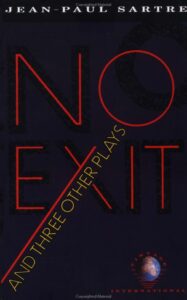
In these four plays, Jean-Paul Sartre, the great existentialist novelist and philosopher, displays his mastery of drama. NO EXIT is an unforgettable portrayal of hell. THE FLIES is a modern reworking of the Electra-Orestes story. DIRTY HANDS is about a young intellectual torn between theory and praxis. THE RESPECTFUL PROSTITUTE is an attack on American racism.

Nausea is the story of Antoine Roquentin, a French writer who is horrified at his own existence. In impressionistic, diary form he ruthlessly catalogues his every feeling and sensation about the world and people around him.
His thoughts culminate in a pervasive, overpowering feeling of nausea which "spread at the bottom of the viscous puddle, at the bottom of our time, the time of purple suspenders and broken chair seats; it is made of wide, soft instants, spreading at the edge, like an oil stain."
Roquentin's efforts to try and come to terms with his life, his philosophical and psychological struggles, give Sartre the opportunity to dramatize the tenets of his Existentialist creed.
The introduction for this edition of Nausea by Hayden Carruth gives background on Sartre's life and major works, a summary of the principal themes of Existentialist philosophy, and a critical analysis of the novel itself.