

MaddAddam
Books in This Series 3


More by Margaret Atwood
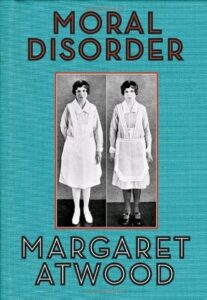
Margaret Atwood is acknowledged as one of the foremost writers of our time. In Moral Disorder she has created a series of interconnected stories that trace the course of a life and also the lives intertwined with it--those of parents, of siblings, of children, of friends, of enemies, of teachers, and even of animals. As in a photograph album, time is measured in sharp, clearly observed moments. The '30s, the '40s, the '50s, the '60s, the '70s, the '80s, the '90s, and the present --all are here. The settings vary: large cities, suburbs, farms, northern forests.
The first story, "The Bad News," is set in the present, as a couple no longer young situate themselves in a larger world no longer safe. The narrative then switches time as the central character moves through childhood and adolescence in "The Art of Cooking and Serving," "The Headless Horseman," and "My Last Duchess." We follow her into young adulthood in "The Other Place" and then through a complex relationship, traced in four of the stories: "Monopoly," "Moral Disorder," "White Horse," and "The Entities." The last two stories, "The Labrador Fiasco" and "The Boys at the Lab," deal with the heartbreaking old age of parents but circle back again to childhood, to complete the cycle.
By turns funny, lyrical, incisive, tragic, earthy, shocking, and deeply personal, Moral Disorder displays Atwood's celebrated storytelling gifts and unmistakable style to their best advantage. As the New York Times has said: "The reader has the sense that Atwood has complete access to her people's emotional histories, complete understanding of their hearts and imaginations."

Cat's Eye is the story of Elaine Risley, a controversial painter who returns to Toronto, the city of her youth, for a retrospective of her art. Engulfed by vivid images of the past, she reminisces about a trio of girls who initiated her into the fierce politics of childhood and its secret world of friendship, longing, and betrayal. Elaine must come to terms with her own identity as a daughter, a lover, and artist, and woman—but above all she must seek release from her haunting memories. Disturbing, hilarious, and compassionate, Cat's Eye is a breathtaking novel of a woman grappling with the tangled knots of her life.

Now a Hulu series starring Elizabeth Moss. The Handmaid's Tale is an instant classic and eerily prescient cultural phenomenon, from "the patron saint of feminist dystopian fiction" ( New York Times ) The Handmaid’s Tale is a novel of such power that the reader will be unable to forget its images and its forecast. Set in the near future, it describes life in what was once the United States and is now called the Republic of Gilead, a monotheocracy that has reacted to social unrest and a sharply declining birthrate by reverting to, and going beyond, the repressive intolerance of the original Puritans. The regime takes the Book of Genesis absolutely at its word, with bizarre consequences for the women and men in its population. The story is told through the eyes of Offred, one of the unfortunate Handmaids under the new social order. In condensed but eloquent prose, by turns cool-eyed, tender, despairing, passionate, and wry, she reveals to us the dark corners behind the establishment’s calm facade, as certain tendencies now in existence are carried to their logical conclusions. The Handmaid’s Tale is funny, unexpected, horrifying, and altogether convincing. It is at once scathing satire, dire warning, and a tour de force. It is Margaret Atwood at her best.

Margaret Atwood takes the art of storytelling to new heights in a dazzling novel that unfolds layer by astonishing layer and concludes in a brilliant and wonderfully satisfying twist. Told in a style that magnificently captures the colloquialisms and clichés of the 1930s and 1940s, The Blind Assassin is a richly layered and uniquely rewarding experience.
It opens with these simple, resonant words: "Ten days after the war ended, my sister drove a car off the bridge." They are spoken by Iris, whose terse account of her sister Laura's death in 1945 is followed by an inquest report proclaiming the death accidental. But just as the reader expects to settle into Laura's story, Atwood introduces a novel-within-a-novel. Entitled The Blind Assassin, it is a science fiction story told by two unnamed lovers who meet in dingy backstreet rooms. When we return to Iris, it is through a 1947 newspaper article announcing the discovery of a sailboat carrying the dead body of her husband, a distinguished industrialist.
For the past twenty-five years, Margaret Atwood has written works of striking originality and imagination. In The Blind Assassin, she stretches the limits of her accomplishments as never before, creating a novel that is entertaining and profoundly serious. The Blind Assassin proves once again that Atwood is one of the most talented, daring, and exciting writers of our time. Like The Handmaid's Tale, it is destined to become a classic.

It's 1843, and Grace Marks has been convicted for her involvement in the vicious murders of her employer and his housekeeper and mistress. Some believe Grace is innocent; others think her evil or insane. Now serving a life sentence, Grace claims to have no memory of the murders.
An up-and-coming expert in the burgeoning field of mental illness is engaged by a group of reformers and spiritualists who seek a pardon for Grace. He listens to her story while bringing her closer and closer to the day she cannot remember. What will he find in attempting to unlock her memories?
Captivating and disturbing, Alias Grace showcases best-selling, Booker Prize-winning author Margaret Atwood at the peak of her powers.

Life is hard enough for a teenage girl in 1950s suburbia without having a mother who may—or may not—be a witch. A single mother at that. Sure, she fits in with her starched dresses, string of pearls, and floral aprons. Then there are the hushed and mystical consultations with neighborhood women in distress. The unsavory, mysterious plants in the flower beds. The divined warning to steer clear of a boyfriend whose fate is certainly doomed. But as the daughter of this bewitching homemaker comes of age and her mother’s claims become more and more outlandish, she begins to question everything she once took for granted.

Offred is a Handmaid in the Republic of Gilead. She may leave the home of the Commander and his wife once a day to walk to food markets whose signs are now pictures instead of words because women are no longer allowed to read. She must lie on her back once a month and pray that the Commander makes her pregnant, because in an age of declining births, Offred and the other Handmaids are valued only if their ovaries are viable. Offred can remember the years before, when she lived and made love with her husband, Luke; when she played with and protected her daughter; when she had a job, money of her own, and access to knowledge. But all of that is gone now…
Funny, unexpected, horrifying, and altogether convincing, The Handmaid's Tale is at once scathing satire, dire warning, and tour de force.