

Murder at the Vicarage

The Body in the Library
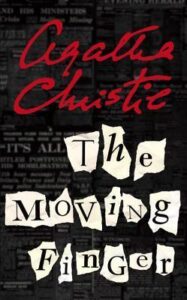
The Moving Finger
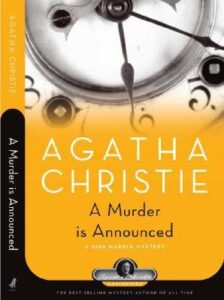
A Murder Is Announced
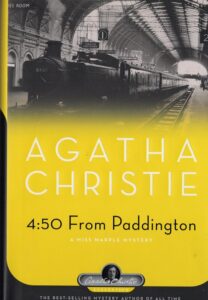
4:50 from Paddington
More by Agatha Christie

,,Miért nem szóltak Evansnak?" - ezt kérdezi a haldokló, akit Bobby Jones talál a népszerű golfpálya alatt, a völgyben. Bobby először is arra lenne kíváncsi, ki zuhant a szakadékba, és halt meg a szeme láttára, azonosító iratot ugyanis nem találnak a férfinál. Csak egy gyönyörű fiatal nő fényképét... Bobby nyomozni kezd, és hamarosan kiderül, hogy a végzetes baleset nem véletlen történt: ez bizony gyilkosság volt, mégpedig igen rejtélyes gyilkosság. Szerencsére Bobbynak merész segítőtársa is akad Lady Frances Derwent személyében. Frankie, ahogy az ifjú arisztokrata lányt mindenki nevezi, hatalmas lelkesedéssel veti bele magát a rejtélybe. Az sem riasztja vissza, hogy Bobbyt is, őt is megpróbálják eltenni láb alól. A meglepetésekben és kalandokban bővelkedő könyv végére kiderül, kicsoda Evans, miért nem szóltak neki, és hogy egy lelkész negyedik fia és egy arisztokrata lánya csak nyomozóként alkot-e nyerő párost.

Three young women share a London flat. The first is a coolly efficient secretary. The second is an artist. The third interrupts Hercule Poirot’s breakfast confessing that she is a murderer—and then promptly disappears. Slowly, Poirot learns of the rumors surrounding the mysterious third girl, her family, and her disappearance. Yet hard evidence is needed before the great detective can pronounce her guilty, innocent, or insane.
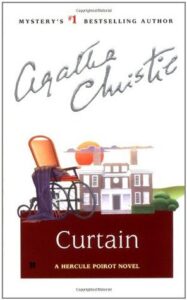
Arthritic and immobilized, Poirot calls on his old friend Captain Hastings to join him at Styles to be the eyes and ears that will feed observations to Poirot's still razor sharp mind. Though aware of the criminal's identity, Poirot will not reveal it to the frustrated Hastings, and dubs the nameless personage 'X'. Already responsible for several murders, X, Poirot warns, is ready to strike again, and the partners must work swiftly to prevent imminent murder.
Poirot’s final case, a mystery which brings him and Hastings back to Styles where they first solved a crime together. The story was both anticipated and dreaded by Agatha Christie fans worldwide, many of whom still refuse to read it, as it is known to contain Poirot’s death.
Agatha Christie wrote it during World War II, as a gift for her daughter should she not survive the bombings, and it was kept in a safe for over thirty years. It was agreed among the family that Curtain would be published finally in 1975 by Collins, her long-standing publishers, and that Sleeping Murder (the Marple story written during the war for her husband, Max) would follow.
The reception of Poirot’s death was international, even earning him an obituary in The New York Times; he is still the only fictional character to have received such an honour. The first actor to take on the role of portraying Poirot in his final hours was David Suchet, as the final episode of the series Agatha Christie’s Poirot for which he’d been playing the role for twenty-five years. The episode was adapted in 2013.

"Wickedness...such wickedness...."
The dying woman turned to Father Gorman with agony in her eyes. "Stopped....It must be stopped....You will...."
The priest spoke with reassuring authority. "I will do what is necessary. You can trust me."
Father Gorman tucked the list of names she had given him into his shoe. It was a meaningless list; the names were of people who had nothing in common.
On his way home, Father Gorman was murdered. But the police found the list and when Mark Easterbrook came to inquire into the circumstances of the people listed, he began to discover a connection between them, and an ominous pattern....
Every name of that list was either already dead or, he suspected, marked for murder.

A teenage murder witness is drowned in a tub of apples at a Hallowe'en party.
Joyce, a hostile thirteen-year-old, had boasted that she once witnessed a murder. When no-one believes her, she storms off home. But within hours her body is found, still in the house, drowned in an apple-bobbing tub.
That night, Hercule Poirot is called in to find the 'evil presence.' But first he must establish whether he is looking for a murderer or a double-murderer!
It's Agatha Christie and Hercule Poirot at their finest.
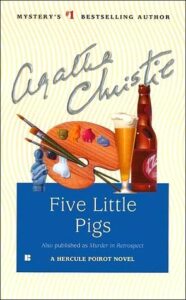
It was an open and shut case. All the evidence said Caroline Crale poisoned her philandering husband, a brilliant painter. She was quickly and easily convicted and sentenced to life in prison.
Now, sixteen years later, in a posthumous letter, Mrs. Crale has assured her grown daughter that she was innocent. But instead of setting the young woman's mind at ease, the letter only raises disquieting questions. Did Caroline indeed write the truth? And if she didn't kill her husband, who did?
To find out, the Crale’s daughter asks Hercule Poirot to reopen the case. His investigation takes him deep into the conflicting memories and motivations of the five other people who were with the Crales on the fatal day. With his keen understanding of human psychology, he manages to discover the surprising truth behind the artist's death.

Considered to be one of Agatha Christie's greatest and also, most controversial mysteries. 'The Murder Of Roger Ackroyd' breaks the rules of traditional mystery.
The peaceful English village of King’s Abbot is stunned. The widow Ferrars dies from an overdose of Veronal. Not twenty-four hours later, Roger Ackroyd—the man she had planned to marry—is murdered. It is a baffling case involving blackmail and death that taxes Hercule Poirot’s “little grey cells” before he reaches one of the most startling conclusions of his career.
Librarian's note: the first fifteen novels in the Hercule Poirot series are 1) The Mysterious Affair at Styles, 1920; 2) The Murder on the Links, 1923; 3) The Murder of Roger Ackroyd, 1926; 4) The Big Four, 1927; 5) The Mystery of the Blue Train, 1928; 6) Peril at End House, 1932; 7) Lord Edgware Dies, 1933; 8) Murder on the Orient Express, 1934; 9) Three Act Tragedy, 1935; 10) Death in the Clouds, 1935; 11) The A.B.C. Murders, 1936; 12) Murder in Mesopotamia, 1936; 13) Cards on the Table, 1936; 14) Dumb Witness, 1937; and 15) Death on the Nile, 1937. These are just the novels; Poirot also appears in this period in a play, Black Coffee, 1930, and two collections of short stories, Poirot Investigates, 1924, and Murder in the Mews, 1937. Each novel, play and short story has its own entry on Goodreads.

Pretty, young Anne came to London looking for adventure. In fact, adventure comes looking for her—and finds her immediately at Hyde Park Corner tube station. Anne is present on the platform when a thin man, reeking of mothballs, loses his balance and is electrocuted on the rails.
The Scotland Yard verdict is accidental death. But Anne is not satisfied. After all, who was the man in the brown suit who examined the body? And why did he race off, leaving a cryptic message behind: "17-122 Kilmorden Castle"?
Twisty, clever, and intriguing, The Man in the Brown Suit showcases Agatha Christie once again at her very best.
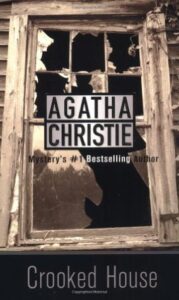
Described by the queen of mystery herself as one of her favorites of her published work, Crooked House is a classic Agatha Christie thriller revolving around a devastating family mystery.
The Leonides are one big happy family living in a sprawling, ramshackle mansion. That is until the head of the household, Aristide, is murdered with a fatal barbiturate injection.
Suspicion naturally falls on the old man’s young widow, fifty years his junior. But the murderer has reckoned without the tenacity of Charles Hayward, fiancé of the late millionaire’s granddaughter.

The beautiful bronzed body of Arlena Stuart lay facedown on the beach. But strangely, there was no sun and she was not sunbathing... she had been strangled.
Ever since Arlena's arrival the air had been thick with sexual tension. Each of the guests had a motive to kill her. But Hercule Poirot suspects that this apparent 'crime of passion' conceals something much more evil.

Gipsy’s Acre was a truly beautiful upland site with views out to sea – and in Michael Rogers it stirred a child-like fantasy. There, amongst the dark fir trees, he planned to build a house, find a girl and live happily ever after. Yet, as he left the village, a shadow of menace hung over the land. For this was the place where accidents happened. Perhaps Michael should have heeded the locals’ warnings: ‘There’s no luck for them as meddles with Gipsy’s Acre.’ Michael Rogers is a man who is about to learn the true meaning of the old saying ‘In my end is my beginning.’
The title Endless Night was taken from William Blake’s Auguries of Innocence and describes Christie’s favourite theme in the novel: a “twisted” character, who always chooses evil over good.
Christie finished Endless Night in six weeks, as opposed to the three-four months that most of her other novels took. Despite being in her seventies while writing it, she told an interviewer that being Michael, the twenty-something narrator, “wasn’t difficult. After all, you hear people like him talking all the time.”
The book is dedicated to Christie's relative "Nora Prichard from whom I first heard the legend of Gipsy's Acre." Gipsy's Acre was a field on the Welsh moors.
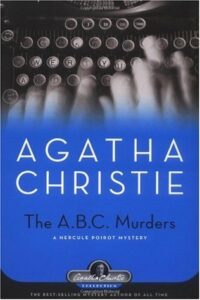
When Alice Asher is murdered in Andover, Hercule Poirot is already looking into the clues. Alphabetically speaking, it's one letter down, twenty-five to go.
There's a serial killer on the loose. His macabre calling card is to leave the ABC Railway Guide beside each victim's body. But if A is for Alice Asher, bludgeoned to death in Andover, and B is for Betty Bernard, strangled with her belt on the beach at Bexhill, who will then be Victim C? More importantly, why is this happening?
Often considered to be one of Agatha Christie's best.
Librarian's note: the first fifteen novels in the Hercule Poirot series are 1) The Mysterious Affair at Styles, 1920; 2) The Murder on the Links, 1923; 3) The Murder of Roger Ackroyd, 1926; 4) The Big Four, 1927; 5) The Mystery of the Blue Train, 1928; 6) Peril at End House, 1932; 7) Lord Edgware Dies, 1933; 8) Murder on the Orient Express, 1934; 9) Three Act Tragedy, 1935; 10) Death in the Clouds, 1935; 11) The A.B.C. Murders, 1936; 12) Murder in Mesopotamia, 1936; 13) Cards on the Table, 1936; 14) Dumb Witness, 1937; and 15) Death on the Nile, 1937. These are just the novels; Poirot also appears in this period in a play, Black Coffee, 1930, and two collections of short stories, Poirot Investigates, 1924, and Murder in the Mews, 1937. Each novel, play and short story has its own entry on Goodreads.