

More by Anonymous

Miraculously preserved on clay tablets dating back as much as four thousand years, the poem of Gilgamesh, king of Uruk, is the world’s oldest epic, predating Homer by many centuries. The story tells of Gilgamesh’s adventures with the wild man Enkidu, and of his arduous journey to the ends of the earth in quest of the Babylonian Noah and the secret of immortality. Alongside its themes of family, friendship and the duties of kings, the Epic of Gilgamesh is, above all, about mankind’s eternal struggle with the fear of death.
The Babylonian version has been known for over a century, but linguists are still deciphering new fragments in Akkadian and Sumerian.
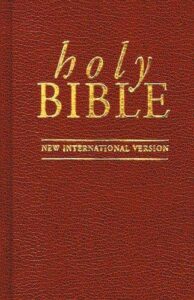
Special This red-letter edition eBook has been optimized for reading on color screens, but will still function effectively on other devices. The Bible is the bestselling book in history, and the New International Version (NIV) Bible is the bestselling version year after year. This bestselling modern-English Bible has sold more than 450 million copies since its first full publication in 1978. It is also the bestselling modern-English Bible eBook, and it’s designed for an intuitive user experience. The font is crisp and clear, and readability is great on both E-Ink® screens and color screens. With quick page turns and a numbered footnoting system that allows you to easily jump from Bible text to footnote and back again, this NIV eBook is faster and more robust than ever before. And with a “How to Use This Bible” page included, navigating the Bible has never been easier. Read the Bible on your device just as if you were reading a physical book. NIV ©2011 The New International Version (NIV) translation of the Bible is the world’s most popular modern English Bible – easy to understand, yet rich with the detail found in the original languages.

The King James Version is an Early Modern English translation of the Christian Bible for the Church of England, which was commissioned in 1604 and published in 1611. The 80 books of the King James Version include 39 books of the Old Testament, 14 books of Apocrypha, and the 27 books of the New Testament.

The Quran (English pronunciation: /kɔrˈɑːn/; Arabic: القرآن al-qurʾān, IPA: [qurˈʔaːn], literally meaning "the recitation"), also transliterated Qur'an, Koran, Al-Coran, Coran, Kur'an, and Al-Qur'an, is the central religious text of Islam, which Muslims believe to be the verbatim word of God (Arabic: الله, Allah).
The Quran is composed of verses (Ayat) that make up 114 chapters (suras) of unequal length which are classified either as Meccan (المكية) or Medinan (المدنية) depending upon the place and time of their claimed revelation. Muslims believe the Quran to be verbally revealed through the angel Jibrīl (Gabriel) from God to Muhammad gradually over a period of approximately 23 years beginning on 22 December 609 CE, when Muhammad was 40, and concluding in 632 CE, the year of his death.
Muslims regard the Quran as the main miracle of Muhammad, the proof of his prophethood and the culmination of a series of divine messages that started with the messages revealed to Adam, regarded in Islam as the first prophet, and continued with Suhuf Ibrahim (Scrolls of Abraham), the Tawrat (Torah or Pentateuch) of Moses, the Zabur (Tehillim or Book of Psalms) of David, and the Injil (Gospel) of Jesus. The Quran assumes familiarity with major narratives recounted in Jewish and Christian scriptures, summarizing some, dwelling at length on others and in some cases presenting alternative accounts and interpretations of events. The Quran describes itself as a book of guidance, sometimes offering detailed accounts of specific historical events, and often emphasizing the moral significance of an event over its narrative sequence.