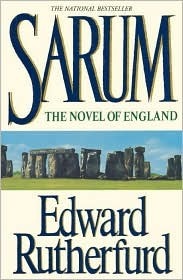
A masterpiece of breathtaking scope—a brilliantly conceived epic novel that traces the entire turbulent course of English history.
This rich tapestry weaves a compelling saga of five families—the Wilsons, the Masons, the family of Porteus, the Shockleys, and the Godfreys—who reflect the changing character of Britain.
As their fates and fortunes intertwine over the course of the centuries, their greater destinies offer a fascinating glimpse into the future.
An absorbing historical chronicle, Sarum is a keen tale of struggle and adventure, a profound human drama, and a magnificent work of sheer storytelling.
An alternate cover edition for this ISBN can be found here.
Pulitzer Prize–winning author James A. Michener brings Hawaii’s epic history vividly to life in a classic saga that has captivated readers since its initial publication in 1959. As the volcanic Hawaiian Islands sprout from the ocean floor, the land remains untouched for centuries—until, little more than a thousand years ago, Polynesian seafarers make the perilous journey across the Pacific, flourishing in this tropical paradise according to their ancient traditions. Then, in the early nineteenth century, American missionaries arrive, bringing with them a new creed and a new way of life. Based on exhaustive research and told in Michener’s immersive prose, Hawaii is the story of disparate peoples struggling to keep their identity, live in harmony, and, ultimately, join together.
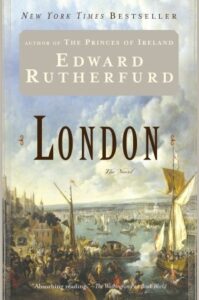
London has perhaps the most remarkable history of any city in the world. Now its story has a unique voice. In this epic novel, Edward Rutherfurd takes the reader on a magnificent journey across sixteen centuries from the days of the Romans to the Victorian engineers of Tower Bridge and the era of dockland development of today. Through the lives and adventures of his colourful cast of characters, he brings all the richness of London's past unforgettably to life.
Spanning four and a half centuries, James A. Michener’s monumental saga chronicles the epic history of Texas, from its Spanish roots in the age of the conquistadors to its current reputation as one of America’s most affluent, diverse, and provocative states. Among his finely drawn cast of characters, emotional and political alliances are made and broken, as the loyalties established over the course of each turbulent age inevitably collapse under the weight of wealth and industry. With Michener as our guide, Texas is a tale of patriotism and statesmanship, growth and development, violence and betrayal—a stunning achievement by a literary master.
Praise for Texas
“Fascinating.”—Time
“A book about oil and water, rangers and outlaws, frontier and settlement, money and power . . . [James A. Michener] manages to make history vivid.”—The Boston Globe
“A sweeping panorama . . . [Michener] grapples earnestly with the Texas character in a way that Texas’s own writers often don’t.”—The Washington Post Book World “Vast, sprawling, and eclectic in population and geography, the state has just the sort of larger-than-life history that lends itself to Mr. Michener’s taste for multigenerational epics.”—The New York Times
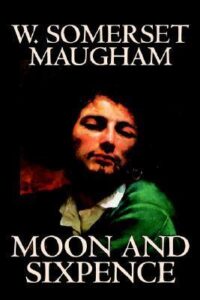
Based on the life of Paul Gauguin, The Moon and Sixpence is W. Somerset Maugham's ode to the powerful forces behind creative genius. Charles Strickland is a staid banker, a man of wealth and privilege. He is also a man possessed of an unquenchable desire to create art. As Strickland pursues his artistic vision, he leaves London for Paris and Tahiti, and in his quest makes sacrifices that leave the lives of those closest to him in tatters. Through Maugham's sympathetic eye, Strickland's tortured and cruel soul becomes a symbol of the blessing and the curse of transcendent artistic genius, and the cost in humans' lives it sometimes demands.
Birmingham, England, c. 1973: industrial strikes, bad pop music, corrosive class warfare, adolescent angst, IRA bombings. Four friends: a class clown who stoops very low for a laugh; a confused artist enthralled by guitar rock; an earnest radical with socialist leanings; and a quiet dreamer obsessed with poetry, God, and the prettiest girl in school. As the world appears to self-destruct around them, they hold together to navigate the choppy waters of a decidedly ambiguous decade.
Librarian's note: An alternate cover edition can be found here
World Without End takes place in the same town of Kingsbridge, two centuries after the townspeople finished building the exquisite Gothic cathedral that was at the heart of The Pillars of the Earth. The cathedral and the priory are again at the center of a web of love and hate, greed and pride, ambition and revenge, but this sequel stands on its own. This time the men and women of an extraordinary cast of characters find themselves at a crossroads of new ideas—about medicine, commerce, architecture, and justice. In a world where proponents of the old ways fiercely battle those with progressive minds, the intrigue and tension quickly reach a boiling point against the devastating backdrop of the greatest natural disaster ever to strike the human race—the Black Death.
Agincourt is one of the epic battles of history. It was fought by two badly matched armies that met in atrocious conditions on St Crispin's Day 1415, and resulted in an extraordinary victory that was celebrated in England long before Shakespeare immortalised it in Henry V. It has always been held to be the triumph of the longbow against the armoured knight, and of the common man against the feudal aristocrat, but those are history's myths. Bernard Cornwell, who has long wanted to write this story, depicts the reality behind the myths.
Nicholas Hook is an English archer. He seems born to trouble and, when his lord orders him to London as part of a force sent to quell an expected Lollard uprising, Nick's headstrong behaviour leads to him being proscribed an outlaw. He finds refuge across the Channel, part of an English mercenary force protecting the town of Soissons against the French. What happened at the Siege of Soissons shocked all Europe, and propels Nick back to England where he is enrolled in the archer companyof the doughty Sir John Cornwaille, a leader of Henry V's army. The army was superb, but sickness and the unexpected French defiance at Harfleur, reduce it to near-shambolic condition. Henry stubbornly refuses to accept defeat and, in appalling weather, leads his shrunken force to what appears to be inevitable disaster.
Azincourt culminates in the battle. Seen from several points of view on the English side, but also from the French ranks, the scene is vivid, convincing and compelling. Bernard Cornwell has a great understanding of men at war and battlefields and this is his masterpiece. This is what it must have been like to fight at Agincourt.
They were called "The Devil's Brood," though never to their faces. They were the four surviving sons of Henry Plantagenet and Eleanor of Aquitaine. With two such extraordinary parents, much was expected of them. But the eldest-charming yet mercurial-would turn on his father and, like his brother Geoffrey, meet an early death. When Henry died, Richard would take the throne and, almost immediately, set off for the Holy Land. This was the Third Crusade, and it would be characterized by internecine warfare among the Christians and extraordinary campaigns against the Saracens. And, back in England, by the conniving of Richard's youngest brother, John, to steal his crown.
Welcome Back!
Track your reading progress and sync your library.