Beginning with All the Pretty Horses and continuing through The Crossing and Cities of the Plain, McCarthy chronicles the lives of two young men coming of age in the Southwest and Mexico, poised on the edge of a world about to change forever. Hauntingly beautiful, filled with sorrow and humor, The Border Trilogy is a masterful elegy for the American frontier.
The magnificent second novel from the legendary author of One Flew Over the Cuckoo's Nest...
Following the astonishing success of his first novel, One Flew Over the Cuckoo's Nest, Ken Kesey wrote what Charles Bowden calls "one of the few essential books written by an American in the last half century." This wild-spirited tale tells of a bitter strike that rages through a small lumber town along the Oregon coast. Bucking that strike out of sheer cussedness are the Stampers. Out of the Stamper family's rivalries and betrayals Ken Kesey has crafted a novel with the mythic impact of Greek tragedy.
Cannery Row is a book without much of a plot. Rather, it is an attempt to capture the feeling and people of a place, the cannery district of Monterey, California, which is populated by a mix of those down on their luck and those who choose for other reasons not to live "up the hill" in the more respectable area of town. The flow of the main plot is frequently interrupted by short vignettes that introduce us to various denizens of the Row, most of whom are not directly connected with the central story. These vignettes are often characterized by direct or indirect reference to extreme violence: suicides, corpses, and the cruelty of the natural world.
The "story" of Cannery Row follows the adventures of Mack and the boys, a group of unemployed yet resourceful men who inhabit a converted fish-meal shack on the edge of a vacant lot down on the Row.
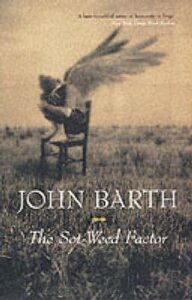
Considered by critics to be Barth's most distinguished masterpiece, The Sot-Weed Factor has acquired the status of a modern classic. Set in the late 1600s, it recounts the wildly chaotic odyssey of hapless, ungainly Ebenezer Cooke, sent to the New World to look after his father's tobacco business and to record the struggles of the Maryland colony in an epic poem.
On his mission, Cooke experiences capture by pirates and Indians; the loss of his father's estate to roguish impostors; love for a farmer prostitute; stealthy efforts to rob him of his virginity, which he is (almost) determined to protect; and an extraordinary gallery of treacherous characters who continually switch identities. A hilarious, bawdy tribute to all the most insidious human vices, The Sot-Weed Factor has a lasting relevance for readers of all times.
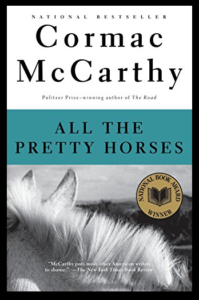
Teenager John Grady Cole, the last of a long line of Texas ranchers, has nothing left to stay for. Across the border Mexico beckons—beautiful and desolate, rugged and cruelly civilized. With neighbor Rawlins, and scruffy boy, he rides toward an idyllic, sometimes comic adventure, to a place where dreams are paid for in blood.
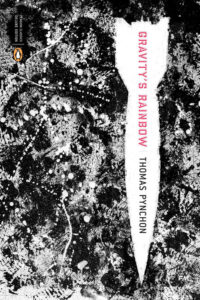
Winner of the 1973 National Book Award, Gravity's Rainbow is a postmodern epic, a work as exhaustively significant to the second half of the 20th century as Joyce's Ulysses was to the first. Its sprawling, encyclopedic narrative, and penetrating analysis of the impact of technology on society make it an intellectual tour de force.
Billy Parham, un cowboy aflat la varsta adolescentei, prinde in capcana o lupoaica, dupa ce aceasta atacase vitele de la ferma familiei sale. Dar, in loc sa o omoare, hotaraste sa o duca inapoi in tinuturile de unde venise, strabatand intinderile nesfarsite de prerie si muntii aflati la granita cu Mexicul. Calatoria lor curajoasa, prin locuri inspaimantator de pustii, insa atat de frumoase, ajunge in impas din clipa in care dau peste oameni. Baiatul devine martor al unor intamplari la limita dintre basm si cosmar, intr-o lume marcata de atata cruzime si violenta, incat nu pare a fi guvernata decat de legea implacabila a mortii.
Charles Mason (1728-1786) and Jeremiah Dixon (1733-1779) were the British surveyors best remembered for running the boundary between Pennsylvania and Maryland that we know today as the Mason-Dixon Line. Here is their story as re-imagined by Thomas Pynchon, featuring Native Americans and frontier folk, ripped bodices, naval warfare, conspiracies erotic and political, major caffeine abuse.
We follow the mismatch'd pair—one rollicking, the other depressive; one Gothic, the other pre-Romantic—from their first journey together to the Cape of Good Hope, to pre-Revolutionary America and back, through the strange yet redemptive turns of fortune in their later lives, on a grand tour of the Enlightenment's dark hemisphere, as they observe and participate in the many opportunities for insanity presented them by the Age of Reason.
In American Pastoral, Philip Roth gives us a novel of unqualified greatness that is an elegy for all the twentieth century's promises of prosperity, civic order, and domestic bliss. Roth's protagonist is Seymour 'Swede' Levov—a legendary high school athlete, a devoted family man, a hard worker, the prosperous inheritor of his father's Newark glove factory—comes of age in thriving, triumphant post-war America. And then one day in 1968, Swede's beautiful American luck deserts him.
For Swede's adored daughter, Merry, has grown from a loving, quick-witted girl into a sullen, fanatical teenager—a teenager capable of an outlandishly savage act of political terrorism. And overnight Swede is wrenched out of the longed-for American pastoral and into the indigenous American berserk. Compulsively readable, propelled by sorrow, rage, and a deep compassion for its characters, this is Roth's masterpiece.
Welcome Back!
Track your reading progress and sync your library.