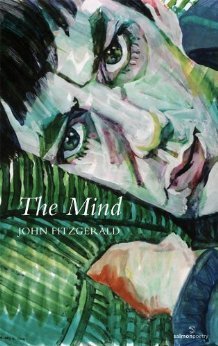
The Mind is JOHN FITZGERALD’s third poetry collection and continues and expands on his insight into the myriad aspects of human emotion. The poems are philosophical; emotions are set against the ‘objective’ consciousness of the mind. The result is a deep exploration of what it means to be human.
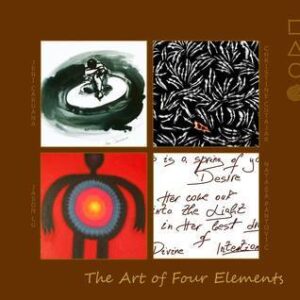
Art of 4 Elements Spiritual Poetry Book. Discover Alchemy through Poetry and Love through Alchemy.
Four artists, a poet Nataša Pantović, a photographer Christine Cutajar, and two painters Jason Lu and Jeni Caruana, worked together to create The Art of Four Elements book with 120 art works and 120 poems. The poetry acted as an inspiration for the work of the artists: each one of them chose 40 poems and created the art work based on the theme and the ‘vibe' of the poems.
The poetry, the photography, the drawings, you will find in the Art of 4 Elements book attempt to deeper explore the infinite game of Life, through the exploration of:
Earth that is fixed, rigid, static and quiet, and symbolizes the world of senses; Water that is the primordial Chaos, is fluidity and flexibility, and symbolizes the world of emotions; Air that has no shape and is incapable of any fixed form. It is a symbol of thoughts. Fire that is boundless and invisible, and is a parching heat that consumes all, or within its highest manifestation, becomes the expression of Divine Love; and Spirit that stands at the center of the four elements as an Essence, an Observer, Consciousness coming forth to experience the magic of Life.
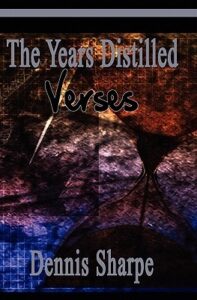
The Years Distilled are the verses from twenty years of spoken word and performance poetry on stages and in coffee houses around the United States. While the collection only represents a small fraction of the writing done over two decades (1990-2010) it is an almost complete collection of the pieces performed. The ranting and rambling contained within this book is often juvenile, sometimes petty, and commonly complaining; however all the works are all born of passion.
The people and places that inspired the words between these covers are too numerous to mention individually, but they are all held very dear. It is because these souls, times, and locations have touched so deeply that a permanent mark was left. These memories are now yours to share, for what they're worth.
These are all very different works of varied style and subject matter, plucked at random from a collection of writing. They are in no order whatsoever. What is the common thread? Everyone one of them was written to be performed, and with only two exceptions, they all have been.
For out-starting upstarts of all ages, here is a wonderfully wise and blessedly brief graduation speech from the one and only Dr. Seuss!
In his inimitable, humorous verse and pictures, he addresses the Great Balancing Act (life itself, and the ups and downs it presents) while encouraging us to find the success that lies within us.
"And will you succeed? Yes! You will indeed! (98 and ¾ percent guaranteed.)"
A modern classic, Oh, the Places You'll Go! was first published one year before Dr. Seuss's death at the age of eighty-seven. In a mere fifty-six pages, Dr, Seuss managed to impart a lifetime of wisdom. It is the perfect send-off for children starting out in the maze of life, be they nursery school grads or newly-minted PhD's. Everyone will find it inspired good fun.
With his unique combination of hilarious stories, zany pictures and riotous rhymes, Dr. Seuss has been delighting young children and helping them learn to read for over fifty years. Creator of the wonderfully anarchic 'Cat in the Hat', and ranked among the world's top children's authors, Dr. Seuss is a global best-seller, with nearly half a billion books sold worldwide.
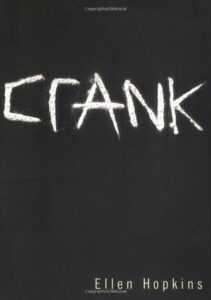
In Crank, Ellen Hopkins chronicles the turbulent and often disturbing relationship between Kristina, a character based on her own daughter, and the "monster," the highly addictive drug crystal meth, or "crank." Kristina is introduced to the drug while visiting her largely absent and ne'er-do-well father. While under the influence of the monster, Kristina discovers her sexy alter-ego, Bree: "there is no perfect daughter, / no gifted high school junior, / no Kristina Georgia Snow. / There is only Bree." Bree will do all the things good girl Kristina won't, including attracting the attention of dangerous boys who can provide her with a steady flow of crank.
Kahlil Gibran’s masterpiece, The Prophet, is one of the most beloved classics of our time. Published in 1923, it has been translated into more than twenty languages, and the American editions alone have sold more than nine million copies.
The Prophet is a collection of poetic essays that are philosophical, spiritual, and, above all, inspirational. Gibran’s musings are divided into twenty-eight chapters covering such sprawling topics as love, marriage, children, giving, eating and drinking, work, joy and sorrow, housing, clothes, buying and selling, crime and punishment, laws, freedom, reason and passion, pain, self-knowledge, teaching, friendship, talking, time, good and evil, prayer, pleasure, beauty, religion, and death.
The American poet John Shade is dead. His last poem, 'Pale Fire', is put into a book, together with a preface, a lengthy commentary and notes by Shade's editor, Charles Kinbote. Known on campus as the 'Great Beaver', Kinbote is haughty, inquisitive, intolerant, but is he also mad, bad - and even dangerous? As his wildly eccentric annotations slide into the personal and the fantastical, Kinbote reveals perhaps more than he should be.
Nabokov's darkly witty, richly inventive masterpiece is a suspenseful whodunit, a story of one-upmanship and dubious penmanship, and a glorious literary conundrum.
Part of a major new series of the works of Vladimir Nabokov, author of Lolita and Pale Fire, in Penguin Classics.
Maya Angelou’s debut memoir is a modern American classic beloved worldwide. Her life story is told in the documentary film And Still I Rise, as seen on PBS’s American Masters.
Here is a book as joyous and painful, as mysterious and memorable, as childhood itself. I Know Why the Caged Bird Sings captures the longing of lonely children, the brute insult of bigotry, and the wonder of words that can make the world right. Maya Angelou’s debut memoir is a modern American classic beloved worldwide.
Sent by their mother to live with their devout, self-sufficient grandmother in a small Southern town, Maya and her brother, Bailey, endure the ache of abandonment and the prejudice of the local “powhitetrash.” At eight years old and back at her mother’s side in St. Louis, Maya is attacked by a man many times her age—and has to live with the consequences for a lifetime. Years later, in San Francisco, Maya learns that love for herself, the kindness of others, her own strong spirit, and the ideas of great authors (“I met and fell in love with William Shakespeare”) will allow her to be free instead of imprisoned.
Poetic and powerful, I Know Why the Caged Bird Sings will touch hearts and change minds for as long as people read.
Welcome Back!
Track your reading progress and sync your library.