First published in 1967 and re-issued in 1983, I Have No Mouth and I Must Scream contains seven stories with copyrights ranging from 1958 through 1967. This edition contains the original introduction by Theodore Sturgeon and the original foreword by Harlan Ellison, along with a brief update comment by Ellison that was added in the 1983 edition. Among Ellison’s more famous stories, two consistently noted as among his very best ever are the title story and the volume’s concluding one, Pretty Maggie Moneyeyes.
Since Ellison himself strongly resists categorization of his work, we won’t call them science fiction, or SF, or speculative fiction or horror or anything else except compelling reading experiences that are sui generis. They could only have been written by Harlan Ellison and they are incomparably original.
CONTENTS “I Have No Mouth & I Must Scream” “Big Sam Was My Friend” “Eyes of Dust” “World of the Myth” “Lonelyache” “Delusion for Dragonslayer” “Pretty Maggie Moneyeyes”
In a thirtieth anniversary edition of the classic, the Harlequin, a rebel, inhabits a world where conformity and punctuality are top priorities, and the Ticktockman cannot accept the Harlequin's presence in his perfectly ordered world. 25,000 first printing. IP.
“H. P. Lovecraft has yet to be surpassed as the 20th century’s greatest practitioner of the classic horror tale.”―Stephen King The most important tales of the godfather of the modern horror genre―a master who influenced the works of a generation of writers including Stephen King and Anne Rice―are gathered in one volume by National Book Award-winning author Joyce Carol Oates. Combining the 19th-century gothic sensibility of Edgar Allan Poe with a daring internal vision, Lovecraft’s tales foretold a psychically troubled world to come. Set in a meticulously wrought, historically grounded New England landscape, his harrowing stories explore the collapse of sanity beneath the weight of chaotic events. Lovecraft’s universe is a frightening shadow world were reality and nightmare intertwine, and redemption can come only from below. For aficionados and a new generation of 21st-century readers , Tales of H. P. Lovecraft is a classic not to be missed.
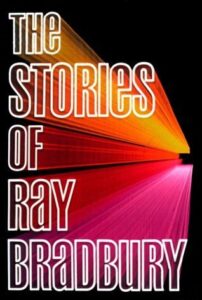
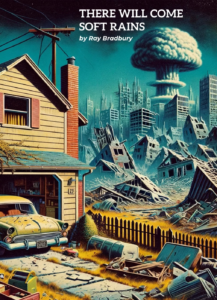
Drunk, and in charge of a bicycle / introduction by Ray Bradbury-- The night -- Homecoming-- Uncle Einar -- The traveler -- The lake -- The coffin -- The crowd -- The scythe -- There was an old woman -- There will come soft rains -- Mars is heaven -- The silent towns -- The earth men -- The off season -- The million-year picnic -- The fox and the forest -- Kaleidoscope -- The rocket man -- Marionettes, inc. -- No particular night or morning -- The city -- The fire balloons -- The last night of the world -- The veldt -- The long rain -- The great fire -- The wilderness -- A sound of thunder -- The murderer -- The April witch -- Invisible boy -- The golden kite, the silver wind -- The fog horn -- The black black and white game -- Embroidery -- The golden apples of the sun -- Powerhouse -- Hail and farewell -- The great wide world over there -- The playground -- Skeleton -- The man upstairs -- Touched with fire -- The emissary -- The jar -- The small assasin -- The next in line -- Jack-in-the-box -- The leave-taking -- Exorcism -- The happiness machine -- Calling Mexico -- The wonderful ice cream suit -- Dark they were, and golden-eyed -- The strawberry window -- A scent of sarsaparilla -- The Picasso summer -- The day it rained forever -- A medicine for melancholy -- The shoreline at sunset -- Fever dream -- The town where no one got off -- All summer in a day -- Frost and fire -- The anthem sprinters -- And so died Riabouchinska -- Boys! Raise giant mushrooms in your cellar! -- The vacation -- The illustrated woman -- Some live like Lazarus -- The best of all possible worlds -- The one who waits -- Tyrannosaurus Rex -- The screaming woman -- The terrible conflagration up at the place -- Night call, collect -- The tombling day -- The haunting of the new -- Tomorrow's child -- I sing the body electric! -- The women -- The inspired chicken motel -- Yes, we'll gather at the river -- Have I got a chocolate bar for you! -- A story of love -- The parrot who met Papa -- The October game -- Punishment without crime -- A piece of wood -- The blue bottle -- Long after midnight -- The utterly perfect murder -- The better part of wisdom -- Interval in sunlight -- The black ferris -- Farewell summer -- McGillahee's brat -- The aqueduct -- Gotcha! -- The end of the beginning.
That The Illustrated Man has remained in print since being published in 1951 is fair testimony to the universal appeal of Ray Bradbury's work. Only his second collection (the first was Dark Carnival, later reworked into The October Country), it is a marvelous, if mostly dark, quilt of science fiction, fantasy, and horror. In an ingenious framework to open and close the book, Bradbury presents himself as a nameless narrator who meets the Illustrated Man--a wanderer whose entire body is a living canvas of exotic tattoos. What's even more remarkable, and increasingly disturbing, is that the illustrations are themselves magically alive, and each proceeds to unfold its own story, such as "The Veldt," wherein rowdy children take a game of virtual reality way over the edge. Or "Kaleidoscope," a heartbreaking portrait of stranded astronauts about to reenter our atmosphere--without the benefit of a spaceship. Or "Zero Hour," in which invading aliens have discovered a most logical ally--our own children. Even though most were written in the 1940s and 1950s, these 18 classic stories will be just as chillingly effective 50 years from now. --Stanley Wiater
Contents:
· Prologue: The Illustrated Man · ss * · The Veldt [“The World the Children Made”] · ss The Saturday Evening Post Sep 23 ’50 · Kaleidoscope · ss Thrilling Wonder Stories Oct ’49 · The Other Foot · ss New Story Magazine Mar ’51 · The Highway [as by Leonard Spalding] · ss Copy Spr ’50 · The Man · ss Thrilling Wonder Stories Feb ’49 · The Long Rain [“Death-by-Rain”] · ss Planet Stories Sum ’50 · The Rocket Man · ss Maclean’s Mar 1 ’51 · The Fire Balloons [“‘In This Sign...’”] · ss Imagination Apr ’51 · The Last Night of the World · ss Esquire Feb ’51 · The Exiles [“The Mad Wizards of Mars”] · ss Maclean’s Sep 15 ’49; F&SF Win ’50 · No Particular Night or Morning · ss * · The Fox and the Forest [“To the Future”] · ss Colliers May 13 ’50 · The Visitor · ss Startling Stories Nov ’48 · The Concrete Mixer · ss Thrilling Wonder Stories Apr ’49 · Marionettes, Inc. [Marionettes, Inc.] · ss Startling Stories Mar ’49 · The City [“Purpose”] · ss Startling Stories Jul ’50 · Zero Hour · ss Planet Stories Fll ’47 · The Rocket [“Outcast of the Stars”] · ss Super Science Stories Mar ’50 · Epilogue · aw *
The mind of Ray Bradbury is a wonder-filled carnival of delight and terror that stretches from the verdant Irish countryside to the coldest reaches of outer space. Yet all his work is united by one common thread: a vivid and profound understanding of the vast set of emotions that bring strength and mythic resonance to our frail species. Ray Bradbury characters may find themselves anywhere and anywhen. A horrified mother may give birth to a strange blue pyramid. A man may take Abraham Lincoln out of the grave—and meet another who puts him back. An amazing Electrical Grandmother may come to live with a grieving family. An old parrot may have learned over long evenings to imitate the voice of Ernest Hemingway, and became the last link to the great man. A priest on Mars may confront his fondest dream: to meet the Messiah. Each of these magnificent creations has something to tell us about our humanity—and all of their fates await you in this new trade edition of twenty-eight classic Bradbury stories and one luscious poem. Travel on an unpredictable and unforgettable literary journey—safe in the hands of one of the century's great men of imagination.
'It was a monstrous constellation of unnatural light, like a glutted swarm of corpse-fed fireflies dancing hellish sarabands over an accursed marsh...' H.P. Lovecraft was perhaps the greatest twentieth century practitioner of the horror story, introducing to the genre a new evil, monstrous, pervasive and unconquerable. At the heart of these three stories are terrors unthinkable and strange: a crash-landing meteorite, the wretched inhabitant of an ancient castle and a grave-robber's curse. This book includes "The Colour Out Of Space", "The Outsider" and "The Hound".
Welcome Back!
Track your reading progress and sync your library.