

In a small American town, the local residents are abuzz with excitement and nervousness when they wake on the morning of the twenty-seventh of June. Everything has been prepared for the town’s annual tradition—a lottery in which every family must participate, and no one wants to win.
“The Lottery” stands out as one of the most famous short stories in American literary history. Originally published in The New Yorker, the author immediately began receiving letters from readers who demanded an explanation of the story’s meaning. “The Lottery” has been adapted for stage, television, radio and film.

"The Cask of Amontillado" (sometimes spelled "The Casque ..") is a short story written by Edgar Allan Poe and first published in the November 1846 issue of "Godey's Lady's Book."
It is set in a nameless Italian city in an unspecified year (possibly during the eighteenth century) and concerns the revenge taken by the narrator on a friend who he claims has insulted him. Like several of Poe's stories, and in keeping with the 19th-century fascination with the subject, the narrative revolves around the possibility of a person being buried alive or enclosed in a small space with not possibility of escape (aka immurement).
Librarian's note: this entry relates to the story "The Cask of Amontillado." Collections of short stories by the author can be found elsewhere on Goodreads.

In Gustave Doré, one of the most prolific and successful book illustrators of the late 19h century, Edgar Allan Poe's renowned poem The Raven found perhaps its most perfect artistic interpreter. Doré's dreamlike, otherworldly style, tinged with melancholy, seems ideally matched to the bleak despair of Poe's celebrated work, among the most popular American poems ever written.
This volume reprints all 26 of Doré's detailed, masterly engravings from a rare 19th-century edition of the poem. Relevant lines from the poem are printed on facing pages and the complete text is also included. Admirers of Doré will find ample evidence here of his characteristic ability to capture the mood and meaning of a work of literature in striking imagery; lovers of The Raven will delight in seeing its mournful musing on love and loss given dramatic pictorial form.
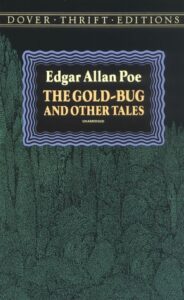
Nine gripping tales of psychological terror and the supernatural, by the undisputed master of the American Gothic horror story: *Ligeia
*The Fall of the House of Usher
*The Murders in the Rue Morgue
*The Masque of the Red Death
*The Pit and the Pendulum
*The Tell-Tale Heart
*The Gold-Bug
*The Black Cat
*The Cask of Amontillado

A classic work of American literature that has not stopped changing minds and lives since it burst onto the literary scene, The Things They Carried is a ground-breaking meditation on war, memory, imagination, and the redemptive power of storytelling.
The Things They Carried depicts the men of Alpha Company: Jimmy Cross, Henry Dobbins, Rat Kiley, Mitchell Sanders, Norman Bowker, Kiowa, and the character Tim O’Brien, who has survived his tour in Vietnam to become a father and writer at the age of forty-three.
Taught everywhere—from high school classrooms to graduate seminars in creative writing—it has become required reading for any American and continues to challenge readers in their perceptions of fact and fiction, war and peace, courage and fear and longing. The Things They Carried won France's prestigious Prix du Meilleur Livre Etranger and the Chicago Tribune Heartland Prize; it was also a finalist for the Pulitzer Prize and the National Book Critics Circle Award.
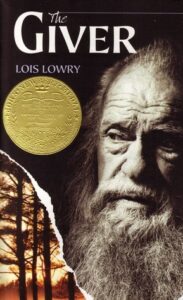
At the age of twelve, Jonas, a young boy from a seemingly utopian, futuristic world, is singled out to receive special training from The Giver, who alone holds the memories of the true joys and pain of life.
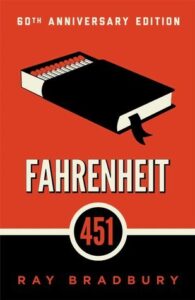
Fahrenheit 451 ofrece la historia de un sombrío y horroroso futuro. Montag, el protagonista, pertenece a una extraña brigada de bomberos cuya misión, paradójicamente, no es la de sofocar incendios sino la de provocarlos, para quemar libros. Porque en el país de Montag está terminantemente prohibido leer. Porque leer obliga a pensar, y en el país de Montag esta prohibido pensar. Porque leer impide ser ingenuamente feliz, y en el país de Montag hay que ser feliz a la fuerza...
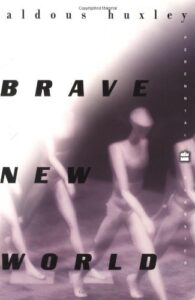
Brave New World is a dystopian social science fiction novel by English author Aldous Huxley. Largely set in a futuristic World State, whose citizens are environmentally engineered into an intelligence-based social hierarchy, the novel anticipates huge scientific advancements in reproductive technology, sleep-learning, psychological manipulation and classical conditioning that are combined to make a dystopian society which is challenged by only a single individual: the story's protagonist.
