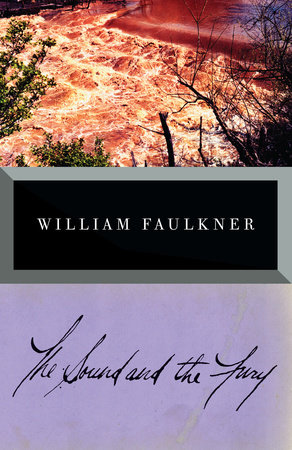
The tragedy of the Compson family features some of the most memorable characters in literature: beautiful, rebellious Caddy; the manchild Benjy; haunted, neurotic Quentin; Jason, the brutal cynic; and Dilsey, their black servant. Their lives fragmented and harrowed by history and legacy, the character’s voices and actions mesh to create what is arguably Faulkner’s masterpiece and one of the greatest novels of the twentieth century.
As I Lay Dying is Faulkner’s harrowing account of the Bundren family’s odyssey across the Mississippi countryside to bury Addie, their wife and mother. Narrated in turn by each of the family members -- including Addie herself -- as well as others; the novel ranges in mood, from dark comedy to the deepest pathos. Considered one of the most influential novels in American fiction in structure, style, and drama, As I Lay Dying is a true 20th-century classic.
This edition reproduces the corrected text of As I Lay Dying as established in 1985 by Noel Polk.
DeDaumier-Smith's Blue Period, Teddy, and A Perfect Day for Bananafish are among the nine works in a collection of Salinger's perceptive and realistic short stories
The Waste Land, first published in 1922, is often regarded as T.S. Eliot's masterpiece, as well as one of the most important poems of the 20th century and a central work of modernist poetry.
The work, divided in 5 sections, juxtaposes the legend of the Holy Grail and the Fisher King, with a snapshot of early twentieth-century British society. In contemporary times, it is often read published within The Waste Land and Other Poems and has come to be Eliot's most popular poem.
T.S. Elliot was a poet, essayist, publisher, playwright, literary critic and editor. Born in 1888 in St. Louis (MO, USA), he is considered one of the 20th century's major poets, and a central figure in English-language Modernist poetry."In ten years' time," wrote Edmund Wilson in Axel's Castle (1931), "Elliot has left upon English poetry a mark more unmistakable than that of any other poet writing in English." In 1948, Eliot was awarded the Nobel Price "for his work as a trail-blazing pioneer of modern poetry."
Cannery Row is a book without much of a plot. Rather, it is an attempt to capture the feeling and people of a place, the cannery district of Monterey, California, which is populated by a mix of those down on their luck and those who choose for other reasons not to live "up the hill" in the more respectable area of town. The flow of the main plot is frequently interrupted by short vignettes that introduce us to various denizens of the Row, most of whom are not directly connected with the central story. These vignettes are often characterized by direct or indirect reference to extreme violence: suicides, corpses, and the cruelty of the natural world.
The "story" of Cannery Row follows the adventures of Mack and the boys, a group of unemployed yet resourceful men who inhabit a converted fish-meal shack on the edge of a vacant lot down on the Row.
Winner of the 1973 National Book Award, Gravity's Rainbow is a postmodern epic, a work as exhaustively significant to the second half of the 20th century as Joyce's Ulysses was to the first. Its sprawling, encyclopedic narrative, and penetrating analysis of the impact of technology on society make it an intellectual tour de force.
Librarian's note: An alternate cover edition can be found here
This short novel, already a modern classic, is the superbly told, tragic story of a Cuban fisherman in the Gulf Stream and the giant Marlin he kills and loses—specifically referred to in the citation accompanying the author's Nobel Prize for literature in 1954.
The serene and maternal Mrs. Ramsay, the tragic yet absurd Mr. Ramsay, and their children and assorted guests are on holiday on the Isle of Skye. From the seemingly trivial postponement of a visit to a nearby lighthouse, Woolf constructs a remarkable, moving examination of the complex tensions and allegiances of family life and the conflict between men and women.
As time winds its way through their lives, the Ramsays face, alone and simultaneously, the greatest of human challenges and its greatest triumph—the human capacity for change.
A quintessential novel of America & the Beat Generation On the Road chronicles Jack Kerouac's years traveling the N. American continent with his friend Neal Cassady, "a sideburned hero of the snowy West." As "Sal Paradise" & "Dean Moriarty," the two roam the country in a quest for self-knowledge & experience. Kerouac's love of America, compassion for humanity & sense of language as jazz combine to make On the Road an inspirational work of lasting importance. This classic novel of freedom & longing defined what it meant to be "Beat" & has inspired every generation since its initial publication.
Welcome Back!
Track your reading progress and sync your library.