When Sylvia Plath died, she not only left behind a prolific life but also her unpublished literary masterpiece, Ariel. Her husband, Ted Hughes, brought the collection to life in 1966, and its publication garnered worldwide acclaim. This collection showcases the beloved poet’s brilliant, provoking, and always moving poems, including “Ariel” and once again shows why readers have fallen in love with her work throughout the generations.
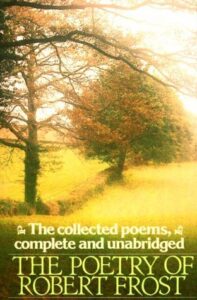
The only comprehensive gathering of Frost's published poetry, this affordable volume offers the entire contents of his eleven books of verse, from A Boy's Will (1913) to In the Clearing (1962). Frost scholar Lathem, who was also a close friend of the four-time Pulitzer Prize-winner, scrupulously annotated the 350-plus poems in this collection, which has been the standard edition of Frost's work since it first appeared in 1969.
“And I will show you something different from either Your shadow at morning striding behind you Or your shadow at evening rising to meet you I will show you fear in a handful of dust”
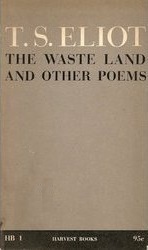
When The Waste Land was published in 1922, initial reaction to the poem was decidedly negative. Critics attacked the poem's "kaleidoscopic" design, and nearly everyone disagreed furiously about its meaning. The poem was even rumored to a hoax. Eventually, though, The Waste Land went on to become what many regard as the most influential poem written in English in the twentieth century.
"In ten years' time," wrote Edmund Wilson in Axel's Castle (1931), "Elliot has left upon English poetry a mark more unmistakable than that of any other poet writing in English." In 1948, T.S. Eliot was awarded the Nobel Price "for his work as a trail-blazing pioneer of modern poetry."
In addition to the title poem, this selection includes "The Love Song of J. Alfred Prufrock," "Geronition," "Ash-Wednesday," and other poems from Eliot's early and middle work.
Includes: - The Love Song of J. Alfred Prufrock - Preludes - Gerontion - Sweeney Among the Nightingales - The Waste Land: I. The Burial of the Dead II. A Game of Chess III. The Fire Sermon IV. Death by Water V. What the Thunder Said Notes on 'The Waste Land' - Ash-Wednesday -J ourney of the Magi - Marina - Landscapes: I. New Hampshire II. Virginia III. USK - Two Choruses from 'The Rock'
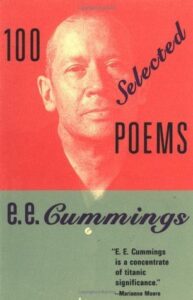
E.E. Cummings is without question one of the major poets of the 20th century, and this volume, first published in 1959, is indispensable for every lover of modern lyrical verse. It contains one hundred of Cummings’s wittiest and most profound poems, harvested from thirty-five of the most radically creative years in contemporary American poetry. These poems exhibit all the extraordinary lyricism, playfulness, technical ingenuity, and compassion for which Cummings is famous. They demonstrate beautifully his extrapolations from traditional poetic structures and his departures from them, as well as the unique synthesis of lavish imagery and acute artistic precision that has won him the adulation and respect of critics and poetry lovers everywhere.
The Waste Land, first published in 1922, is often regarded as T.S. Eliot's masterpiece, as well as one of the most important poems of the 20th century and a central work of modernist poetry.
The work, divided in 5 sections, juxtaposes the legend of the Holy Grail and the Fisher King, with a snapshot of early twentieth-century British society. In contemporary times, it is often read published within The Waste Land and Other Poems and has come to be Eliot's most popular poem.
T.S. Elliot was a poet, essayist, publisher, playwright, literary critic and editor. Born in 1888 in St. Louis (MO, USA), he is considered one of the 20th century's major poets, and a central figure in English-language Modernist poetry."In ten years' time," wrote Edmund Wilson in Axel's Castle (1931), "Elliot has left upon English poetry a mark more unmistakable than that of any other poet writing in English." In 1948, Eliot was awarded the Nobel Price "for his work as a trail-blazing pioneer of modern poetry."
Dive deep into The Love Song of J. Alfred Prufrock by T.S. Eliot anywhere you on a plane, on a mountain, in a canoe, under a tree. Or grab a flashlight and read Shmoop under the covers. Shmoop's award-winning Poetry Guides are now available on your Nook. Shmoop eBooks are like having a trusted, fun, chatty, expert poetry-tour-guide always by your side, no matter where you are (or how late it is at night).
This Shmoop Poetry Guide offers fresh analysis, a line-by-line close reading of the poem, examination of the poet's technique, form, meter, rhyme, symbolism, jaw-dropping trivia, a glossary of poetry terms, and more. Best of all, Shmoop's analysis aims to look at a topic from multiple points of view to give you the fullest understanding.
Experts and educators from top universities, including Stanford, UC Berkeley, and Harvard, have written Shmoop guides designed to engage you and to get your brain bubbling. Shmoop is here to make you a better lover (of poetry) and to help you make connections to other poems, works of literature, current events, and pop culture. For more information, check out shmoop.com/poetry
"Smart and consistently humorous." - The Academy of American Poets
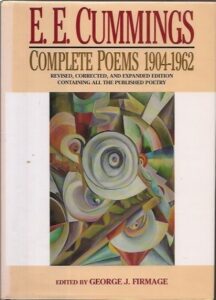
At the time of his death in 1962, E. E. Cummings was, next to Robert Frost, the most widely read poet in America. Combining Thoreau's controlled belligerence with the brash abandon of an uninhibited bohemian, Cummings, together with Pound, Eliot, and William Carlos Williams, helped bring about the twentieth-century revolution in literary expression. He is recognized on the one hand as the author of some of the most beautiful lyric poems written in the English language, and on the other as one of the most inventive American poets of his time in the worlds of Richard Kostelanetz, "the major American poet of the middle-twentieth-century."
Four Quartets is the culminating achievement of T.S. Eliot's career as a poet. While containing some of the most musical and unforgettable passages in twentieth-century poetry, its four parts, 'Burnt Norton', 'East Coker', 'The Dry Salvages' and 'Little Gidding', present a rigorous meditation on the spiritual, philosophical and personal themes which preoccupied the author. It was the way in which a private voice was heard to speak for the concerns of an entire generation, in the midst of war and doubt, that confirmed it as an enduring masterpiece.
Welcome Back!
Track your reading progress and sync your library.