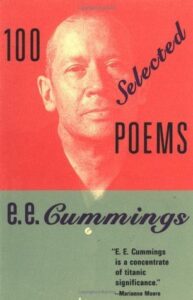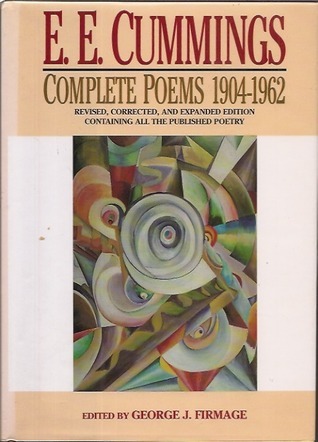
At the time of his death in 1962, E. E. Cummings was, next to Robert Frost, the most widely read poet in America. Combining Thoreau’s controlled belligerence with the brash abandon of an uninhibited bohemian, Cummings, together with Pound, Eliot, and William Carlos Williams, helped bring about the twentieth-century revolution in literary expression. He is recognized on the one hand as the author of some of the most beautiful lyric poems written in the English language, and on the other as one of the most inventive American poets of his time in the worlds of Richard Kostelanetz, “the major American poet of the middle-twentieth-century.”
DeDaumier-Smith's Blue Period, Teddy, and A Perfect Day for Bananafish are among the nine works in a collection of Salinger's perceptive and realistic short stories
Here are sixty-one stories that chronicle the lives of what has been called "the greatest generation." From the early wonder and disillusionment of city life in "The Enormous Radio" to the surprising discoveries and common mysteries of suburbia in "The Housebreaker of Shady Hill" and "The Swimmer," Cheever tells us everything we need to know about "the pain and sweetness of life."
Goodbye, my brother -- The common day -- The enormous radio -- O city of broken dreams -- The Hartleys -- The Sutton Place story -- The summer farmer -- Torch song -- The pot of gold -- Clancy in the Tower of Babel -- Christmas is a sad season for the poor -- The season of divorce -- The chaste Clarissa -- The cure -- The superintendent -- The children -- The sorrows of gin -- O youth and beauty! -- The day the pig fell into the well -- The five-forty-eight -- Just one more time -- The housebreaker of Shady Hill -- The bus to St. James's -- The worm in the apple -- The trouble of Marcie Flint -- The bella lingua -- The Wrysons -- The country husband -- The duchess -- The scarlet moving van -- Just tell me who it was -- Brimmer -- The golden age -- The lowboy -- The music teacher -- A woman without a country -- The death of Justina -- Clementina -- Boy in Rome -- A miscellany of characters that will not appear -- The chimera -- The seaside houses -- The angel of the bridge -- The brigadier and the golf widow -- A vision of the world -- Reunion -- An educated American woman -- Metamorphoses -- Mene, mene, tekel, upharsin -- Montraldo -- The ocean -- Marito in città -- The geometry of love -- The swimmer -- The world of apples -- Another story -- Percy -- The fourth alarm -- Artemis, the honest well digger -- Three stories -- The jewels of the Cabots.
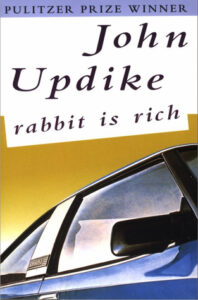
Ten years after Rabbit Redux, Harry Angstrom has come to enjoy prosperity as the Chief Sales Representative of Springer Motors. The rest of the world may be falling to pieces, but Harry's doing all right. That is, until his son returns from the West, and the image of an old love pays a visit to his lot....
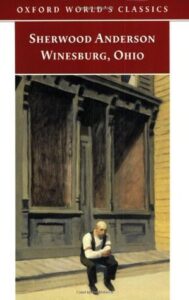
Winesburg, Ohio depicts the strange, secret lives of the inhabitants of a small town. In "Hands," Wing Biddlebaum tries to hide the tale of his banishment from a Pennsylvania town, a tale represented by his hands. In "Adventure," lonely Alice Hindman impulsively walks naked into the night rain. Threaded through the stories is the viewpoint of George Willard, the young newspaper reporter who, like his creator, stands witness to the dark and despairing dealings of a community of isolated people.
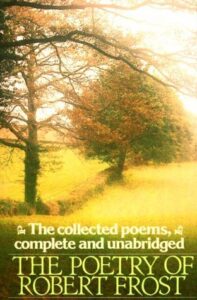
The only comprehensive gathering of Frost's published poetry, this affordable volume offers the entire contents of his eleven books of verse, from A Boy's Will (1913) to In the Clearing (1962). Frost scholar Lathem, who was also a close friend of the four-time Pulitzer Prize-winner, scrupulously annotated the 350-plus poems in this collection, which has been the standard edition of Frost's work since it first appeared in 1969.
E.E. Cummings is without question one of the major poets of the 20th century, and this volume, first published in 1959, is indispensable for every lover of modern lyrical verse. It contains one hundred of Cummings’s wittiest and most profound poems, harvested from thirty-five of the most radically creative years in contemporary American poetry. These poems exhibit all the extraordinary lyricism, playfulness, technical ingenuity, and compassion for which Cummings is famous. They demonstrate beautifully his extrapolations from traditional poetic structures and his departures from them, as well as the unique synthesis of lavish imagery and acute artistic precision that has won him the adulation and respect of critics and poetry lovers everywhere.
Four Quartets is the culminating achievement of T.S. Eliot's career as a poet. While containing some of the most musical and unforgettable passages in twentieth-century poetry, its four parts, 'Burnt Norton', 'East Coker', 'The Dry Salvages' and 'Little Gidding', present a rigorous meditation on the spiritual, philosophical and personal themes which preoccupied the author. It was the way in which a private voice was heard to speak for the concerns of an entire generation, in the midst of war and doubt, that confirmed it as an enduring masterpiece.
“And I will show you something different from either Your shadow at morning striding behind you Or your shadow at evening rising to meet you I will show you fear in a handful of dust”
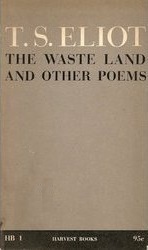
When The Waste Land was published in 1922, initial reaction to the poem was decidedly negative. Critics attacked the poem's "kaleidoscopic" design, and nearly everyone disagreed furiously about its meaning. The poem was even rumored to a hoax. Eventually, though, The Waste Land went on to become what many regard as the most influential poem written in English in the twentieth century.
"In ten years' time," wrote Edmund Wilson in Axel's Castle (1931), "Elliot has left upon English poetry a mark more unmistakable than that of any other poet writing in English." In 1948, T.S. Eliot was awarded the Nobel Price "for his work as a trail-blazing pioneer of modern poetry."
In addition to the title poem, this selection includes "The Love Song of J. Alfred Prufrock," "Geronition," "Ash-Wednesday," and other poems from Eliot's early and middle work.
Includes: - The Love Song of J. Alfred Prufrock - Preludes - Gerontion - Sweeney Among the Nightingales - The Waste Land: I. The Burial of the Dead II. A Game of Chess III. The Fire Sermon IV. Death by Water V. What the Thunder Said Notes on 'The Waste Land' - Ash-Wednesday -J ourney of the Magi - Marina - Landscapes: I. New Hampshire II. Virginia III. USK - Two Choruses from 'The Rock'
Welcome Back!
Track your reading progress and sync your library.