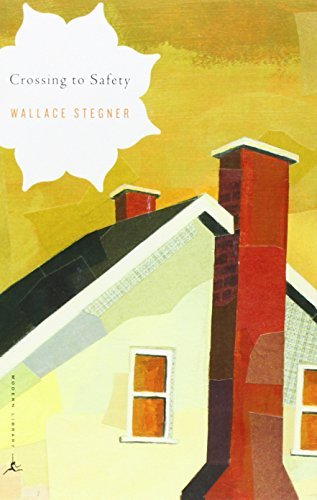
Crossing to Safety has, since its publication in 1987, established itself as one of the greatest and most cherished American novels of the twentieth century. Tracing the lives, loves, and aspirations of two couples who move between Vermont and Wisconsin, it is a work of quiet majesty, deep compassion, and powerful insight into the alchemy of friendship and marriage.
In his journal, Nobel Prize winner John Steinbeck called East of Eden “the first book,” and indeed it has the primordial power and simplicity of myth. Set in the rich farmland of California’s Salinas Valley, this sprawling and often brutal novel follows the intertwined destinies of two families—the Trasks and the Hamiltons—whose generations helplessly reenact the fall of Adam and Eve and the poisonous rivalry of Cain and Abel.
Adam Trask came to California from the East to farm and raise his family on the new rich land. But the birth of his twins, Cal and Aaron, brings his wife to the brink of madness, and Adam is left alone to raise his boys to manhood. One boy thrives nurtured by the love of all those around him; the other grows up in loneliness enveloped by a mysterious darkness.
First published in 1952, East of Eden is the work in which Steinbeck created his most mesmerizing characters and explored his most enduring themes: the mystery of identity, the inexplicability of love, and the murderous consequences of love's absence. A masterpiece of Steinbeck's later years, East of Eden is a powerful and vastly ambitious novel that is at once a family saga and a modern retelling of the Book of Genesis.
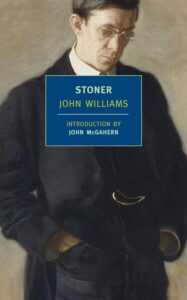
William Stoner is born at the end of the nineteenth century into a dirt-poor Missouri farming family. Sent to the state university to study agronomy, he instead falls in love with English literature and embraces a scholar’s life, so different from the hardscrabble existence he has known. And yet as the years pass, Stoner encounters a succession of disappointments: marriage into a “proper” family estranges him from his parents; his career is stymied; his wife and daughter turn coldly away from him; a transforming experience of new love ends under threat of scandal. Driven ever deeper within himself, Stoner rediscovers the stoic silence of his forebears and confronts an essential solitude.
John Williams’s luminous and deeply moving novel is a work of quiet perfection. William Stoner emerges from it not only as an archetypal American, but as an unlikely existential hero, standing, like a figure in a painting by Edward Hopper, in stark relief against an unforgiving world.
The protagonist of Tobias Wolff’s shrewdly—and at times devastatingly—observed first novel is a boy at an elite prep school in 1960. He is an outsider who has learned to mimic the negligent manner of his more privileged classmates. Like many of them, he wants more than anything on earth to become a writer. But to do that he must first learn to tell the truth about himself.
The agency of revelation is the school literary contest, whose winner will be awarded an audience with the most legendary writer of his time. As the fever of competition infects the boy and his classmates, fraying alliances, exposing weaknesses, Old School explores the ensuing deceptions and betrayals with an unblinking eye and a bottomless store of empathy. The result is further evidence that Wolff is an authentic American master.
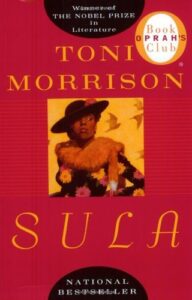
Sula and Nel are born in the Bottom—a small town at the top of a hill. Sula is wild, and daring; she does what she wants, while Nel is well-mannered, a mamma’s girl with a questioning heart. Growing up they forge a bond stronger than anything, stronger even than the dark secret they have to bear. Strong enough, it seems, to last a lifetime—until, decades later, as the girls become women, Sula’s anarchy leads to a betrayal that may be beyond forgiveness.
One of The Atlantic’s Great American Novels of the Past 100 Years
Masterful, richly textured, bittersweet, and vital, Sula is a modern masterpiece about love and kinship, about living in an America birthed from slavery. Nobel Prize laureate Toni Morrison gives life to characters who struggle with what society tells them to be, and the love they long for and crave as Black women. Most of all, they ask: When can we let go? What must we hold back? And just how much can be shared in a friendship?
Joe Kavalier, a young Jewish artist who has also been trained in the art of Houdini-esque escape, has just smuggled himself out of Nazi-invaded Prague and landed in New York City. His Brooklyn cousin Sammy Clay is looking for a partner to create heroes, stories, and art for the latest novelty to hit America - the comic book. Drawing on their own fears and dreams, Kavalier and Clay create the Escapist, the Monitor, and Luna Moth, inspired by the beautiful Rosa Saks, who will become linked by powerful ties to both men. With exhilarating style and grace, Michael Chabon tells an unforgettable story about American romance and possibility.
In the hopeful 1950s, Frank and April Wheeler appear to be a model American couple: bright, beautiful, talented, with two young children and a starter home in the suburbs. Perhaps they married too young and started a family too early. Maybe Frank's job is dull. And April never saw herself as a housewife. Yet they have always lived on the assumption that greatness is only just around the corner. But now that certainty is now about to crumble. With heartbreaking compassion and remorseless clarity, Richard Yates shows how Frank and April mortgage their spiritual birthright, betraying not only each other, but their best selves.
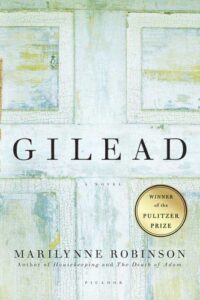
Nearly 25 years after Housekeeping, Marilynne Robinson returns with an intimate tale of three generations, from the Civil War to the 20th century: a story about fathers and sons and the spiritual battles that still rage at America's heart. In the words of Kirkus, it is a novel "as big as a nation, as quiet as thought, and moving as prayer. Matchless and towering." GILEAD tells the story of America and will break your heart.
An old man lies dying. Propped up in his living room and surrounded by his children and grandchildren, George Washington Crosby drifts in and out of consciousness, back to the wonder and pain of his impoverished childhood in Maine. As the clock repairer’s time winds down, his memories intertwine with those of his father, an epileptic, itinerant peddler and his grandfather, a Methodist preacher beset by madness.
At once heartbreaking and life affirming, Tinkers is an elegiac meditation on love, loss, illness, faith, and the fierce beauty of nature.
Welcome Back!
Track your reading progress and sync your library.