
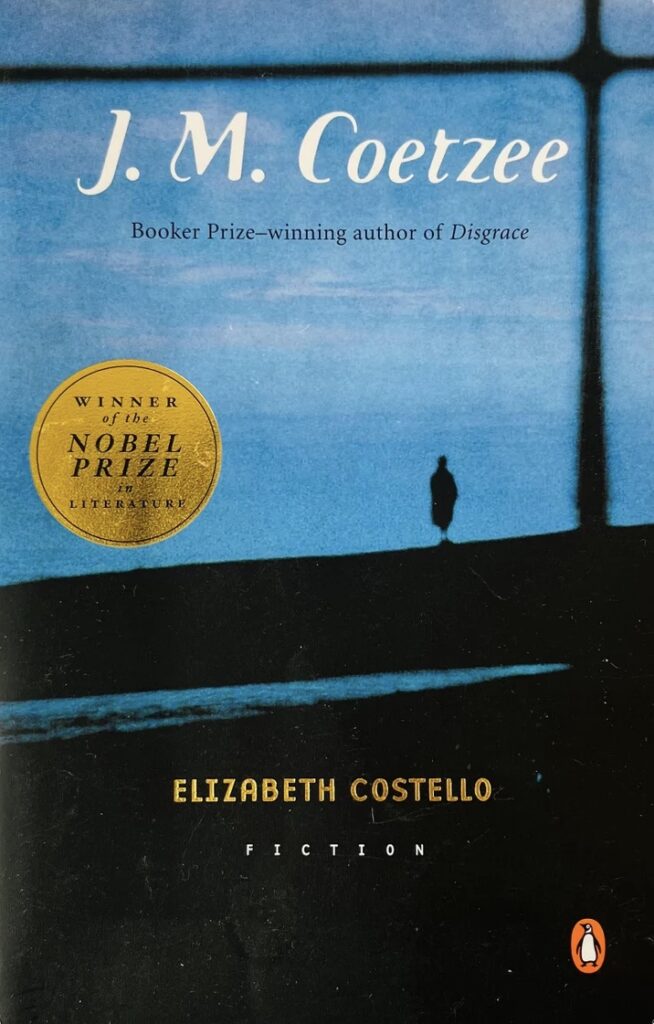
Since 1982, J. M. Coetzee has been dazzling the literary world. After eight novels that have won, among other awards, two Booker Prizes, and most recently, the Nobel Prize for literature, J.M. Coetzee has once again crafted an unusual and deeply affecting tale. Told through an ingenious series of formal addresses, Elizabeth Costello is, on the surface, the story of a woman’s life as a mother, sister, lover, and writer. Yet it is also a profound and haunting meditation on the nature of storytelling.
Summertime is an inventive and inspired work of fiction that allows J.M. Coetzee to imagine his own life with a critical and unsparing eye, revealing painful moral struggles and attempts to come to grips with what it means to care for another human being.
A young English biographer is researching a book about the late South African writer John Coetzee, focusing on Coetzee in his thirties, at a time when he was living in a rundown cottage in the Cape Town suburbs with his widowed father - a time, the biographer is convinced, when Coetzee was finding himself as a writer. Never having met the man himself, the biographer interviews five people who knew Coetzee well, including a married woman with whom he had an affair, his cousin Margot, and a Brazilian dancer whose daughter took English lessons with him. These accounts add up to an image of an awkward, reserved, and bookish young man who finds it hard to make meaningful connections with the people around him.
Summertime is an inventive and inspired work of fiction that allows J.M. Coetzee to imagine his own life with a critical and unsparing eye, revealing painful moral struggles and attempts to come to grips with what it means to care for another human being. Incisive, elegant, and often surprisingly funny, Summertime is a compelling work by one of today's most esteemed writers.
Paul Rayment is on the threshold of a comfortable old age when a calamitous cycling accident results in the amputation of a leg. Humiliated, his body truncated, his life circumscribed, he turns away from his friends.
He hires a nurse named Marijana, with whom he has a European childhood in common: hers in Croatia, his in France. Tactfully and efficiently she ministers to his needs. But his feelings for her, and for her handsome teenage son, are complicated by the sudden arrival on his doorstep of the celebrated Australian novelist Elizabeth Costello, who threatens to take over the direction of his life and the affairs of his heart.
“A superb mirror of a place, a time, and a group of people who capture our immediate interest and hold it tightly.” — The Philadelphia Inquirer
Young Reuven Malter is unsure of himself and his place in life. An unconventional scholar, he struggles for recognition from his teachers. With his old friend Danny Saunders—who himself had abandoned the legacy as the chosen heir to his father's rabbinical dynasty for the uncertain life of a healer — Reuven battles to save a sensitive boy imprisoned by his genius and rage. Painfully, triumphantly, Reuven's understanding of himself, though the boy change, as he starts to approach the peace he has long sought…
Set in post-apartheid South Africa, J. M. Coetzee’s searing novel tells the story of David Lurie, a twice divorced, 52-year-old professor of communications and Romantic Poetry at Cape Technical University. Lurie believes he has created a comfortable, if somewhat passionless, life for himself. He lives within his financial and emotional means. Though his position at the university has been reduced, he teaches his classes dutifully; and while age has diminished his attractiveness, weekly visits to a prostitute satisfy his sexual needs. He considers himself happy. However, when Lurie seduces one of his students, he sets in motion a chain of events that will shatter his complacency and leave him utterly disgraced.
For decades the Magistrate has been a loyal servant of the Empire, running the affairs of a tiny frontier settlement and ignoring the impending war with the barbarians. When interrogation experts arrive, however, he witnesses the Empire's cruel and unjust treatment of prisoners of war. Jolted into sympathy for their victims, he commits a quixotic act of rebellion that brands him an enemy of the state. J. M. Coetzee's prize-winning novel is a startling allegory of the war between oppressor and oppressed. The Magistrate is not simply a man living through a crisis of conscience in an obscure place in remote times; his situation is that of all men living in unbearable complicity with regimes that ignore justice and decency.
When Julie Summers's car breaks down on a sleazy street in a South African city, a young Arab mechanic named Abdu comes to her aid. Their attraction to one another is fueled by different motives. Julie is in rebellion against her wealthy background and her father; Abdu, an illegal immigrant, is desperate to avoid deportation to his impoverished country. In the course of their relationship, there are unpredictable consequences, and overwhelming emotions will overturn each one's notion of the other. Set in the new South Africa and in an Arab village in the desert, The Pickup is "a masterpiece of creative empathy . . . a gripping tale of contemporary anguish and unexpected desire, and it also opens the Arab world to unusually nuanced perception" (Edward W. Said).
Diary of a Bad Year takes on the world of politics—a new topic for Coetzee—and explores the role of the writer in our times with an extraordinary moral compass.
J.M. Coetzee once again breaks literary ground with Diary of a Bad Year, a book that is, in the words of its protagonist, a response to the present in which I find myself. Aging author Senor C has been commissioned to write a series of essays entitled Strong Opinions, of which he has many. After hiring a beautiful young typist named Anya, the two embark on a relationship that will have a profound impact on them both especially when Alan, Anya's no-good boyfriend, develops designs on Senor C's bank account. Told in these three voices simultaneously, Coetzee has created any entirely new way of telling a story, and nothing less than an involving, argumentative, moving novel (The New Yorker).
An exciting literary debut: the unflinching and powerful story of a young girl's journey out of Zimbabwe and to America.
Darling is only ten years old, and yet she must navigate a fragile and violent world. In Zimbabwe, Darling and her friends steal guavas, try to get the baby out of young Chipo's belly, and grasp at memories of Before. Before their homes were destroyed by paramilitary policemen, before the school closed, before the fathers left for dangerous jobs abroad.
But Darling has a chance to escape: she has an aunt in America. She travels to this new land in search of America's famous abundance only to find that her options as an immigrant are perilously few. NoViolet Bulawayo's debut calls to mind the great storytellers of displacement and arrival who have come before her--from Junot Diaz to Zadie Smith to J.M. Coetzee--while she tells a vivid, raw story all her own.
Welcome Back!
Track your reading progress and sync your library.