“A superb mirror of a place, a time, and a group of people who capture our immediate interest and hold it tightly.” — The Philadelphia Inquirer
Young Reuven Malter is unsure of himself and his place in life. An unconventional scholar, he struggles for recognition from his teachers. With his old friend Danny Saunders—who himself had abandoned the legacy as the chosen heir to his father’s rabbinical dynasty for the uncertain life of a healer — Reuven battles to save a sensitive boy imprisoned by his genius and rage. Painfully, triumphantly, Reuven’s understanding of himself, though the boy change, as he starts to approach the peace he has long sought…
Cry, the Beloved Country, the most famous and important novel in South Africa’s history, was an immediate worldwide bestseller in 1948. Alan Paton’s impassioned novel about a black man’s country under white man’s law is a work of searing beauty.
Cry, the beloved country, for the unborn child that is the inheritor of our fear. Let him not love the earth too deeply. Let him not laugh too gladly when the water runs through his fingers, nor stand too silent when the setting sun makes red the veld with fire. Let him not be too moved when the birds of his land are singing, nor give too much of his heart to a mountain or valley. For fear will rob him of all if he gives too much.
The eminent literary critic Lewis Gannett wrote, “We have had many novels from statesmen and reformers, almost all bad; many novels from poets, almost all thin. In Alan Paton’s Cry, the Beloved Country the statesman, the poet and the novelist meet in a unique harmony.”
Cry, the Beloved Country is the deeply moving story of the Zulu pastor Stephen Kumalo and his son, Absalom, set against the background of a land and a people riven by racial injustice. Remarkable for its lyricism, unforgettable for character and incident, Cry, the Beloved Country is a classic work of love and hope, courage and endurance, born of the dignity of man.
In 1939, as Hitler casts his enormous, cruel shadow across the world, the seeds of apartheid take root in South Africa. There, a boy called Peekay is born. His childhood is marked by humiliation and abandonment, yet he vows to survive and conceives heroic dreams, which are nothing compared to what life actually has in store for him. He embarks on an epic journey through a land of tribal superstition and modern prejudice where he will learn the power of words, the power to transform lives and the power of one.
It is the now-classic story of two fathers and two sons and the pressures on all of them to pursue the religion they share in the way that is best suited to each. And as the boys grow into young men, they discover in the other a lost spiritual brother, and a link to an unexplored world that neither had ever considered before. In effect, they exchange places, and find the peace that neither will ever retreat from again.
This is a previously-published edition of ISBN 9781400031047.
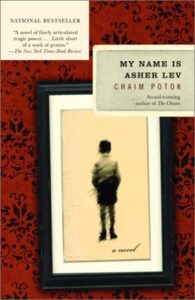
Asher Lev is a Ladover Hasid who keeps kosher, prays three times a day, and believes in the Ribbono Shel Olom, the Master of the Universe. Asher Lev is an artist who is compulsively driven to render the world he sees and feels, even when it leads him to blasphemy. In this stirring and often visionary novel, Chaim Potok traces Asher’s passage between these two identities, the one consecrated to God, the other subject only to the imagination.
Asher Lev grows up in a cloistered Hasidic community in postwar Brooklyn, a world suffused by ritual and revolving around a charismatic Rebbe. But in time, his gift threatens to estrange him from that world and the parents he adores. As it follows his struggle, My Name Is Asher Lev becomes a luminous portrait of the artist, by turns heartbreaking and exultant, a modern classic.
The Poisonwood Bible is a story told by the wife and four daughters of Nathan Price, a fierce, evangelical Baptist who takes his family and mission to the Belgian Congo in 1959. They carry with them everything they believe they will need from home, but soon find that all of it -- from garden seeds to Scripture -- is calamitously transformed on African soil. What follows is a suspenseful epic of one family's tragic undoing and remarkable reconstruction over the course of three decades in postcolonial Africa.
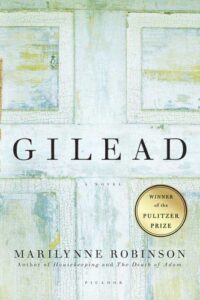
Nearly 25 years after Housekeeping, Marilynne Robinson returns with an intimate tale of three generations, from the Civil War to the 20th century: a story about fathers and sons and the spiritual battles that still rage at America's heart. In the words of Kirkus, it is a novel "as big as a nation, as quiet as thought, and moving as prayer. Matchless and towering." GILEAD tells the story of America and will break your heart.
Paul Rayment is on the threshold of a comfortable old age when a calamitous cycling accident results in the amputation of a leg. Humiliated, his body truncated, his life circumscribed, he turns away from his friends.
He hires a nurse named Marijana, with whom he has a European childhood in common: hers in Croatia, his in France. Tactfully and efficiently she ministers to his needs. But his feelings for her, and for her handsome teenage son, are complicated by the sudden arrival on his doorstep of the celebrated Australian novelist Elizabeth Costello, who threatens to take over the direction of his life and the affairs of his heart.
A novel of breathtaking sweep and emotional power that traces three hundred years in Ghana and along the way also becomes a truly great American novel. Extraordinary for its exquisite language, its implacable sorrow, its soaring beauty, and for its monumental portrait of the forces that shape families and nations, Homegoing heralds the arrival of a major new voice in contemporary fiction.
Two half-sisters, Effia and Esi, are born into different villages in eighteenth-century Ghana. Effia is married off to an Englishman and lives in comfort in the palatial rooms of Cape Coast Castle. Unbeknownst to Effia, her sister, Esi, is imprisoned beneath her in the castle's dungeons, sold with thousands of others into the Gold Coast's booming slave trade, and shipped off to America, where her children and grandchildren will be raised in slavery. One thread of Homegoing follows Effia's descendants through centuries of warfare in Ghana, as the Fante and Asante nations wrestle with the slave trade and British colonization. The other thread follows Esi and her children into America. From the plantations of the South to the Civil War and the Great Migration, from the coal mines of Pratt City, Alabama, to the jazz clubs and dope houses of twentieth-century Harlem, right up through the present day, Homegoing makes history visceral, and captures, with singular and stunning immediacy, how the memory of captivity came to be inscribed in the soul of a nation.
Generation after generation, Yaa Gyasi's magisterial first novel sets the fate of the individual against the obliterating movements of time, delivering unforgettable characters whose lives were shaped by historical forces beyond their control. Homegoing is a tremendous reading experience, not to be missed, by an astonishingly gifted young writer.
Welcome Back!
Track your reading progress and sync your library.