Mary Shelley’s seminal novel of the scientist whose creation becomes a monster.
This edition is the original 1818 text, which preserves the hard-hitting and politically charged aspects of Shelley’s original writing, as well as her unflinching wit and strong female voice. This edition also includes a new introduction and suggestions for further reading by author and Shelley expert Charlotte Gordon, literary excerpts and reviews selected by Gordon and a chronology and essay by preeminent Shelley scholar Charles E. Robinson.
"The Cask of Amontillado" (sometimes spelled "The Casque ..") is a short story written by Edgar Allan Poe and first published in the November 1846 issue of "Godey's Lady's Book."
It is set in a nameless Italian city in an unspecified year (possibly during the eighteenth century) and concerns the revenge taken by the narrator on a friend who he claims has insulted him. Like several of Poe's stories, and in keeping with the 19th-century fascination with the subject, the narrative revolves around the possibility of a person being buried alive or enclosed in a small space with not possibility of escape (aka immurement).
Librarian's note: this entry relates to the story "The Cask of Amontillado." Collections of short stories by the author can be found elsewhere on Goodreads.
In this celebrated work, his only novel, Wilde forged a devastating portrait of the effects of evil and debauchery on a young aesthete in late-19th-century England. Combining elements of the Gothic horror novel and decadent French fiction, the book centers on a striking premise: As Dorian Gray sinks into a life of crime and gross sensuality, his body retains perfect youth and vigor while his recently painted portrait grows day by day into a hideous record of evil, which he must keep hidden from the world. For over a century, this mesmerizing tale of horror and suspense has enjoyed wide popularity. It ranks as one of Wilde's most important creations and among the classic achievements of its kind.
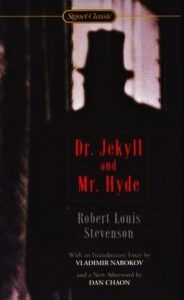
Robert Louis Stevenson's masterpiece of the duality of good and evil in man's nature sprang from the darkest recesses of his own unconscious—during a nightmare from which his wife awakened him, alerted by his screams. More than a hundred years later, this tale of the mild-mannered Dr. Jekyll and the drug that unleashes his evil, inner persona—the loathsome, twisted Mr. Hyde—has lost none of its ability to shock. Its realistic police-style narrative chillingly relates Jekyll's desperation as Hyde gains control of his soul—and gives voice to our own fears of the violence and evil within us. Written before Freud's naming of the ego and the id, Stevenson's enduring classic demonstrates a remarkable understanding of the personality's inner conflicts—and remains the irresistibly terrifying stuff of our worst nightmares.
You can find an alternative cover edition for this ISBN here and here.
When Jonathan Harker visits Transylvania to help Count Dracula with the purchase of a London house, he makes a series of horrific discoveries about his client. Soon afterwards, various bizarre incidents unfold in England: an apparently unmanned ship is wrecked off the coast of Whitby; a young woman discovers strange puncture marks on her neck; and the inmate of a lunatic asylum raves about the 'Master' and his imminent arrival.
In Dracula, Bram Stoker created one of the great masterpieces of the horror genre, brilliantly evoking a nightmare world of vampires and vampire hunters and also illuminating the dark corners of Victorian sexuality and desire.
This Norton Critical Edition includes a rich selection of background and source materials in three areas: Contexts includes probable inspirations for Dracula in the earlier works of James Malcolm Rymer and Emily Gerard. Also included are a discussion of Stoker's working notes for the novel and "Dracula's Guest," the original opening chapter to Dracula. Reviews and Reactions reprints five early reviews of the novel. "Dramatic and Film Variations" focuses on theater and film adaptations of Dracula, two indications of the novel's unwavering appeal. David J. Skal, Gregory A. Waller, and Nina Auerbach offer their varied perspectives. Checklists of both dramatic and film adaptations are included.
Criticism collects seven theoretical interpretations of Dracula by Phyllis A. Roth, Carol A. Senf, Franco Moretti, Christopher Craft, Bram Dijkstra, Stephen D. Arata, and Talia Schaffer.
A Chronology and a Selected Bibliography are included.
In a darkened room a young man sits telling the macabre and eerie story of his life - the story of a vampire, gifted with eternal life, cursed with an exquisite craving for human blood.
Here are the confessions of a vampire. Hypnotic, shocking, and chillingly erotic, this is a novel of mesmerizing beauty and astonishing force --- a story of danger and flight, of love and loss, of suspense and resolution, and of the extraordinary power of the senses. It is a novel only Anne Rice could write.
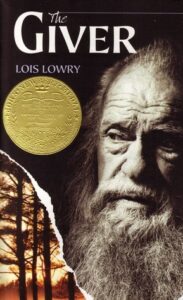
At the age of twelve, Jonas, a young boy from a seemingly utopian, futuristic world, is singled out to receive special training from The Giver, who alone holds the memories of the true joys and pain of life.
This is the 6th Pocket printing. Cover Artist: Harry Bennett
An unearthly voice hisses unholy welcome. And the late, great Allen Carpentier begins his one-way journey into the dim nether regions where flame-colored demons wield diabolically sharp pitchforks and tormented vixens reign forever in a pond of sheer ice. Here, in this land of torment and terror, he discovers the amazing truth of the ultimate adventure that lies beyond the grave.
Frank Herbert -"The somber beauty of INFERNO brought up to the twentieth century with care and humor and with some sins Dante didn't even suspect."
Fahrenheit 451 ofrece la historia de un sombrío y horroroso futuro. Montag, el protagonista, pertenece a una extraña brigada de bomberos cuya misión, paradójicamente, no es la de sofocar incendios sino la de provocarlos, para quemar libros. Porque en el país de Montag está terminantemente prohibido leer. Porque leer obliga a pensar, y en el país de Montag esta prohibido pensar. Porque leer impide ser ingenuamente feliz, y en el país de Montag hay que ser feliz a la fuerza...
Welcome Back!
Track your reading progress and sync your library.