Mary Shelley’s seminal novel of the scientist whose creation becomes a monster.
This edition is the original 1818 text, which preserves the hard-hitting and politically charged aspects of Shelley’s original writing, as well as her unflinching wit and strong female voice. This edition also includes a new introduction and suggestions for further reading by author and Shelley expert Charlotte Gordon, literary excerpts and reviews selected by Gordon and a chronology and essay by preeminent Shelley scholar Charles E. Robinson.
"The Cask of Amontillado" (sometimes spelled "The Casque ..") is a short story written by Edgar Allan Poe and first published in the November 1846 issue of "Godey's Lady's Book."
It is set in a nameless Italian city in an unspecified year (possibly during the eighteenth century) and concerns the revenge taken by the narrator on a friend who he claims has insulted him. Like several of Poe's stories, and in keeping with the 19th-century fascination with the subject, the narrative revolves around the possibility of a person being buried alive or enclosed in a small space with not possibility of escape (aka immurement).
Librarian's note: this entry relates to the story "The Cask of Amontillado." Collections of short stories by the author can be found elsewhere on Goodreads.
In Gustave Doré, one of the most prolific and successful book illustrators of the late 19h century, Edgar Allan Poe's renowned poem The Raven found perhaps its most perfect artistic interpreter. Doré's dreamlike, otherworldly style, tinged with melancholy, seems ideally matched to the bleak despair of Poe's celebrated work, among the most popular American poems ever written. This volume reprints all 26 of Doré's detailed, masterly engravings from a rare 19th-century edition of the poem. Relevant lines from the poem are printed on facing pages and the complete text is also included. Admirers of Doré will find ample evidence here of his characteristic ability to capture the mood and meaning of a work of literature in striking imagery; lovers of The Raven will delight in seeing its mournful musing on love and loss given dramatic pictorial form.
"Day after day, day after day, We stuck, nor breath nor motion; As idle as a painted ship Upon a painted ocean.
The Rime of the Ancient Mariner (originally "The Rime of the Ancyent Marinere") is the longest major poem by the English poet Samuel Taylor Coleridge, written circa 1797 and published in 1798 in the first edition of Lyrical Ballads. Modern editions use a later revised version printed in 1817 and featuring a gloss. Along with other poems in Lyrical Ballads, it was a signal shift to modern poetry and the beginning of British Romantic literature.
It relates the events experienced by a mariner who has returned from a long sea voyage. The Mariner stops a man on his way to a wedding ceremony and begins to narrate a story. The Wedding-Guest's reaction turns from bemusement to impatience, fear, and fascination as the Mariner's story progresses, as can be seen in the language style: for example, the use of narrative techniques such as personification and repetition to create a sense of danger, or the supernatural, or serenity, depending on the mood each different part of the poem.
“H. P. Lovecraft has yet to be surpassed as the 20th century’s greatest practitioner of the classic horror tale.”―Stephen King The most important tales of the godfather of the modern horror genre―a master who influenced the works of a generation of writers including Stephen King and Anne Rice―are gathered in one volume by National Book Award-winning author Joyce Carol Oates. Combining the 19th-century gothic sensibility of Edgar Allan Poe with a daring internal vision, Lovecraft’s tales foretold a psychically troubled world to come. Set in a meticulously wrought, historically grounded New England landscape, his harrowing stories explore the collapse of sanity beneath the weight of chaotic events. Lovecraft’s universe is a frightening shadow world were reality and nightmare intertwine, and redemption can come only from below. For aficionados and a new generation of 21st-century readers , Tales of H. P. Lovecraft is a classic not to be missed.
In this celebrated work, his only novel, Wilde forged a devastating portrait of the effects of evil and debauchery on a young aesthete in late-19th-century England. Combining elements of the Gothic horror novel and decadent French fiction, the book centers on a striking premise: As Dorian Gray sinks into a life of crime and gross sensuality, his body retains perfect youth and vigor while his recently painted portrait grows day by day into a hideous record of evil, which he must keep hidden from the world. For over a century, this mesmerizing tale of horror and suspense has enjoyed wide popularity. It ranks as one of Wilde's most important creations and among the classic achievements of its kind.
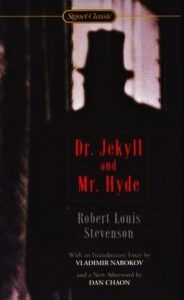
Robert Louis Stevenson's masterpiece of the duality of good and evil in man's nature sprang from the darkest recesses of his own unconscious—during a nightmare from which his wife awakened him, alerted by his screams. More than a hundred years later, this tale of the mild-mannered Dr. Jekyll and the drug that unleashes his evil, inner persona—the loathsome, twisted Mr. Hyde—has lost none of its ability to shock. Its realistic police-style narrative chillingly relates Jekyll's desperation as Hyde gains control of his soul—and gives voice to our own fears of the violence and evil within us. Written before Freud's naming of the ego and the id, Stevenson's enduring classic demonstrates a remarkable understanding of the personality's inner conflicts—and remains the irresistibly terrifying stuff of our worst nightmares.
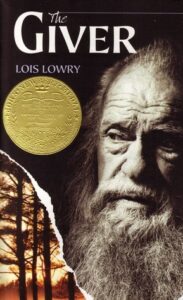
At the age of twelve, Jonas, a young boy from a seemingly utopian, futuristic world, is singled out to receive special training from The Giver, who alone holds the memories of the true joys and pain of life.
You can find an alternative cover edition for this ISBN here and here.
When Jonathan Harker visits Transylvania to help Count Dracula with the purchase of a London house, he makes a series of horrific discoveries about his client. Soon afterwards, various bizarre incidents unfold in England: an apparently unmanned ship is wrecked off the coast of Whitby; a young woman discovers strange puncture marks on her neck; and the inmate of a lunatic asylum raves about the 'Master' and his imminent arrival.
In Dracula, Bram Stoker created one of the great masterpieces of the horror genre, brilliantly evoking a nightmare world of vampires and vampire hunters and also illuminating the dark corners of Victorian sexuality and desire.
This Norton Critical Edition includes a rich selection of background and source materials in three areas: Contexts includes probable inspirations for Dracula in the earlier works of James Malcolm Rymer and Emily Gerard. Also included are a discussion of Stoker's working notes for the novel and "Dracula's Guest," the original opening chapter to Dracula. Reviews and Reactions reprints five early reviews of the novel. "Dramatic and Film Variations" focuses on theater and film adaptations of Dracula, two indications of the novel's unwavering appeal. David J. Skal, Gregory A. Waller, and Nina Auerbach offer their varied perspectives. Checklists of both dramatic and film adaptations are included.
Criticism collects seven theoretical interpretations of Dracula by Phyllis A. Roth, Carol A. Senf, Franco Moretti, Christopher Craft, Bram Dijkstra, Stephen D. Arata, and Talia Schaffer.
A Chronology and a Selected Bibliography are included.
Welcome Back!
Track your reading progress and sync your library.