This is a previously-published edition of ISBN 9781400031047.
Asher Lev is a Ladover Hasid who keeps kosher, prays three times a day, and believes in the Ribbono Shel Olom, the Master of the Universe. Asher Lev is an artist who is compulsively driven to render the world he sees and feels, even when it leads him to blasphemy. In this stirring and often visionary novel, Chaim Potok traces Asher’s passage between these two identities, the one consecrated to God, the other subject only to the imagination.
Asher Lev grows up in a cloistered Hasidic community in postwar Brooklyn, a world suffused by ritual and revolving around a charismatic Rebbe. But in time, his gift threatens to estrange him from that world and the parents he adores. As it follows his struggle, My Name Is Asher Lev becomes a luminous portrait of the artist, by turns heartbreaking and exultant, a modern classic.
“A superb mirror of a place, a time, and a group of people who capture our immediate interest and hold it tightly.” — The Philadelphia Inquirer
Young Reuven Malter is unsure of himself and his place in life. An unconventional scholar, he struggles for recognition from his teachers. With his old friend Danny Saunders—who himself had abandoned the legacy as the chosen heir to his father's rabbinical dynasty for the uncertain life of a healer — Reuven battles to save a sensitive boy imprisoned by his genius and rage. Painfully, triumphantly, Reuven's understanding of himself, though the boy change, as he starts to approach the peace he has long sought…
In the grand storytelling style that is his signature, James Michener sweeps us back through time to the very beginnings of the Jewish faith, thousands of years ago. Through the predecessors of four modern men and women, we experience the entire colorful history of the Jews, including the life of the early Hebrews and their persecutions, the impact of Christianity, the Crusades, and the Spanish Inquisition, all the way to the founding of present-day Israel and the Middle-East conflict. "A sweeping chronology filled with excitement." THE PHILADELPHIA INQUIRER
With precisely 35 canvases to his credit, the Dutch painter Johannes Vermeer represents one of the great enigmas of 17th-century art. The meager facts of his biography have been gleaned from a handful of legal documents. Yet Vermeer's extraordinary paintings of domestic life, with their subtle play of light and texture, have come to define the Dutch golden age. His portrait of the anonymous Girl with a Pearl Earring has exerted a particular fascination for centuries—and it is this magnetic painting that lies at the heart of Tracy Chevalier's second novel of the same title.
Girl with a Pearl Earring centers on Vermeer's prosperous Delft household during the 1660s. When Griet, the novel's quietly perceptive heroine, is hired as a servant, turmoil follows. First, the 16-year-old narrator becomes increasingly intimate with her master. Then Vermeer employs her as his assistant—and ultimately has Griet sit for him as a model.
Willa Cather's best known novel is an epic--almost mythic--story of a single human life lived simply in the silence of the southwestern desert. In 1851 Father Jean Marie Latour comes to serve as the Apostolic Vicar to New Mexico. What he finds is a vast territory of red hills and tortuous arroyos, American by law but Mexican and Indian in custom and belief. In the almost forty years that follow, Latour spreads his faith in the only way he knows--gently, all the while contending with an unforgiving landscape, derelict and sometimes openly rebellious priests, and his own loneliness. Out of these events, Cather gives us an indelible vision of life unfolding in a place where time itself seems suspended.
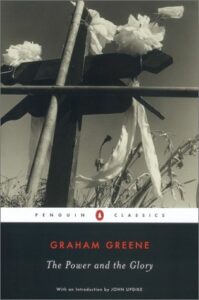
In a poor, remote section of southern Mexico, the paramilitary group, the Red Shirts have taken control. God has been outlawed, and the priests have been systematically hunted down and killed. Now, the last priest is on the run. Too human for heroism, too humble for martyrdom, the nameless little worldly "whiskey priest" is nevertheless impelled toward his squalid Calvary as much by his own compassion for humanity as by the efforts of his pursuers.
In his introduction, John Updike calls The Power and the Glory, "Graham Greene's masterpiece…. The energy and grandeur of his finest novel derive from the will toward compassion, an ideal communism even more Christian than Communist."
A gripping, inspiring novel based on the true story of Johanna Bonger, Vincent van Gogh's sister-in-law.
When Hollywood auctioneer Emsley Wilson finds her famous grandmother's diary while cleaning out her New York brownstone, the pages are full of surprises. The first surprise is, the diary isn't her grandmother's. It belongs to Johanna Bonger, Vincent van Gogh's sister-in-law.
Johanna inherited Vincent van Gogh's paintings. They were all she had, and they weren't worth anything. She was a 28 year old widow with a baby in the 1800s, without any means of supporting herself, living in Paris where she barely spoke the language. Yet she managed to introduce Vincent's legacy to the world.
The inspiration couldn't come at a better time for Emsley. With her business failing, an unexpected love turning up in her life, and family secrets unraveling, can she find answers in the past?
Raised in a wealthy family in Sepphoris with ties to the ruler of Galilee, Ana is rebellious and ambitious, a relentless seeker with a brilliant, curious mind and a daring spirit. She yearns for a pursuit worthy of her life, but finds no outlet for her considerable talents. Defying the expectations placed on women, she engages in furtive scholarly pursuits and writes secret narratives about neglected and silenced women. When she meets the eighteen-year-old Jesus, each is drawn to and enriched by the other’s spiritual and philosophical ideas. He becomes a floodgate for her intellect, but also the awakener of her heart.
Their marriage unfolds with love and conflict, humor and pathos in Nazareth, where Ana makes a home with Jesus, his brothers, James and Simon, and their mother, Mary. Here, Ana’s pent-up longings intensify amid the turbulent resistance to the Roman occupation of Israel, partially led by her charismatic adopted brother, Judas. She is sustained by her indomitable aunt Yaltha, who is searching for her long-lost daughter, as well as by other women, including her friend Tabitha, who is sold into slavery after she was raped, and Phasaelis, the shrewd wife of Herod Antipas. Ana’s impetuous streak occasionally invites danger. When one such foray forces her to flee Nazareth for her safety shortly before Jesus’s public ministry begins, she makes her way with Yaltha to Alexandria, where she eventually finds refuge and purpose in unexpected surroundings.
Grounded in meticulous historical research and written with a reverential approach to Jesus’s life that focuses on his humanity, The Book of Longings is an inspiring account of one woman’s bold struggle to realize the passion and potential inside her, while living in a time, place, and culture devised to silence her.
Alessandra Cecchi is not quite fifteen when her father, a prosperous cloth merchant, brings a young painter back from northern Europe to decorate the chapel walls in the family’s Florentine palazzo. A child of the Renaissance, with a precocious mind and a talent for drawing, Alessandra is intoxicated by the painter’s abilities.
But their burgeoning relationship is interrupted when Alessandra’s parents arrange her marriage to a wealthy, much older man. Meanwhile, Florence is changing, increasingly subject to the growing suppression imposed by the fundamentalist monk Savonarola, who is seizing religious and political control. Alessandra and her native city are caught between the Medici state, with its love of luxury, learning, and dazzling art, and the hellfire preaching and increasing violence of Savonarola’s reactionary followers. Played out against this turbulent backdrop, Alessandra’s married life is a misery, except for the surprising freedom it allows her to pursue her powerful attraction to the young painter and his art.
The Birth of Venus is a tour de force, the first historical novel from one of Britain’s most innovative writers of literary suspense. It brings alive the history of Florence at its most dramatic period, telling a compulsively absorbing story of love, art, religion, and power through the passionate voice of Alessandra, a heroine with the same vibrancy of spirit as her beloved city.
Welcome Back!
Track your reading progress and sync your library.