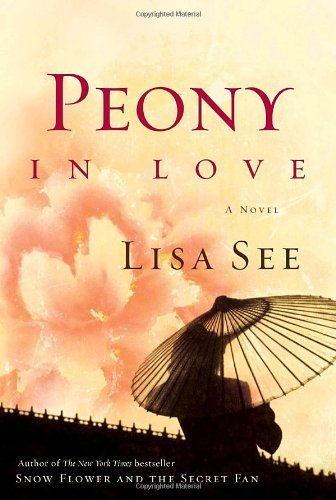
In seventeenth-century China, three women become emotionally involved with The Peony Pavilion, a famed opera rumored to cause lovesickness and even death, including Peony, the cloistered daughter of a wealthy scholar, who succumbs to its spell only to return after her death as a “hungry ghost” to haunt her former fiancé, who has married another.
In nineteenth-century China, in a remote Hunan county, a girl named Lily, at the tender age of seven, is paired with a laotong, “old same,” in an emotional match that will last a lifetime. The laotong, Snow Flower, introduces herself by sending Lily a silk fan on which she’s painted a poem in nu shu, a unique language that Chinese women created in order to communicate in secret, away from the influence of men.
As the years pass, Lily and Snow Flower send messages on fans, compose stories on handkerchiefs, reaching out of isolation to share their hopes, dreams, and accomplishments. Together, they endure the agony of foot-binding, and reflect upon their arranged marriages, shared loneliness, and the joys and tragedies of motherhood. The two find solace, developing a bond that keeps their spirits alive. But when a misunderstanding arises, their deep friendship suddenly threatens to tear apart.
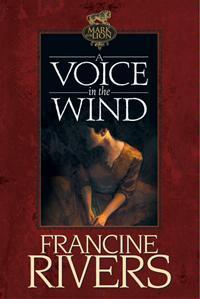
“The city was silently bloating in the hot sun, rotting like the thousands of bodies that lay where they had fallen in street battles.” With this opening sentence, A Voice in the Wind transports readers back to Jerusalem during the first Jewish-Roman War, some seventy years after the death of Christ. Following the prides and passions of a group of Jews, Romans and Barbarians living at the time of the siege, the narrative is centered on an ill-fated romance between a steadfast slave girl, Hadassah, and Marcus, the brother of her owner and a handsome aristocrat. After surviving the massacre of her family and the destruction of Jerusalem by the Romans, Hadassah is captured and sold to a well-to-do merchant’s family. Brought to Rome, she is pressed into service as a personal slave to hedonistic Julia Valerian. Hadassah struggles to walk in the footsteps of Jesus and to treat her masters in a manner in keeping with His teachings, but she is forced to keep her religious identity a secret in order to survive. Confused and alone, she has only her faith to cling to as she tries to subtly bring God into the lives of her captors. Reckless, impulsive, and villainous, Julia tries to undermine Hadassah at every turn. But Julia’s brother, Marcus, is a different sort altogether. Is it possible for a love between Hadassah and Marcus to flourish considering not only their differing stations in life, but also the gap between Hadassah’s unrelenting faith and Marcus’ lack of belief in anything? Simultaneously, Atretes, a captured soldier from Germania, is forced to become a gladiator. This is the time of Rome’s decline and the decadence of a civilization on the verge of self-destruction serves as a powerful backdrop to the Barbarian’s struggle for survival in the arena.
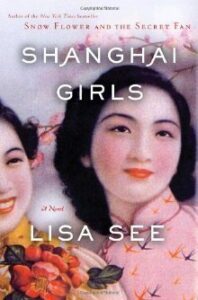
Pearl and May are sisters, living carefree lives in Shanghai, the Paris of Asia. But when Japanese bombs fall on their beloved city, they set out on the journey of a lifetime, one that will take them through the Chinese countryside, in and out of the clutch of brutal soldiers, and across the Pacific to the shores of America.
In 1937, Shanghai is the Paris of Asia, a city of great wealth and glamour, the home of millionaires and beggars, gangsters and gamblers, patriots and revolutionaries, artists and warlords. Thanks to the financial security and material comforts provided by their father’s prosperous rickshaw business, twenty-one-year-old Pearl Chin and her younger sister, May, are having the time of their lives. Though both sisters wave off authority and tradition, they couldn’t be more different: Pearl is a Dragon sign, strong and stubborn, while May is a true Sheep, adorable and placid. Both are beautiful, modern, and carefree . . . until the day their father tells them that he has gambled away their wealth and that in order to repay his debts he must sell the girls as wives to suitors who have traveled from California to find Chinese brides.
As Japanese bombs fall on their beloved city, Pearl and May set out on the journey of a lifetime, one that will take them through the Chinese countryside, in and out of the clutch of brutal soldiers, and across the Pacific to the shores of America. In Los Angeles they begin a fresh chapter, trying to find love with the strangers they have married, brushing against the seduction of Hollywood, and striving to embrace American life even as they fight against discrimination, brave Communist witch hunts, and find themselves hemmed in by Chinatown’s old ways and rules.
Set in England and Hong Kong in the 1920s, The Painted Veil is the story of the beautiful, but love-starved Kitty Fane.
When her husband discovers her adulterous affair, he forces her to accompany him to the heart of a cholera epidemic. Stripped of the British society of her youth and the small but effective society she fought so hard to attain in Hong Kong, she is compelled by her awakening conscience to reassess her life and learn how to love.
The Painted Veil is a beautifully written affirmation of the human capacity to grow, to change, and to forgive.
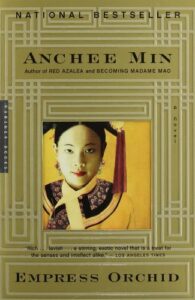
To rescue her family from poverty and avoid marrying her slope-shouldered cousin, seventeen-year-old Orchid competes to be one of the Emperor's wives. When she is chosen as a lower-ranking concubine she enters the erotically charged and ritualised Forbidden City. But beneath its immaculate façade lie whispers of murders and ghosts, and the thousands of concubines will stoop to any lengths to bear the Emperor's son.
Orchid trains herself in the art of pleasuring a man, bribes her way into the royal bed, and seduces the monarch, drawing the attention of dangerous foes. Little does she know that China will collapse around her, and that she will be its last Empress.
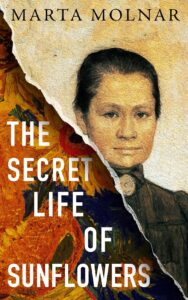
A gripping, inspiring novel based on the true story of Johanna Bonger, Vincent van Gogh's sister-in-law.
When Hollywood auctioneer Emsley Wilson finds her famous grandmother's diary while cleaning out her New York brownstone, the pages are full of surprises. The first surprise is, the diary isn't her grandmother's. It belongs to Johanna Bonger, Vincent van Gogh's sister-in-law.
Johanna inherited Vincent van Gogh's paintings. They were all she had, and they weren't worth anything. She was a 28 year old widow with a baby in the 1800s, without any means of supporting herself, living in Paris where she barely spoke the language. Yet she managed to introduce Vincent's legacy to the world.
The inspiration couldn't come at a better time for Emsley. With her business failing, an unexpected love turning up in her life, and family secrets unraveling, can she find answers in the past?
Set in the turbulent days of the founding of Hong Kong in the 1840s, Tai-Pan is the story of Dirk Struan, the ruler - the Tai-Pan - of the most powerful trading company in the Far East. He is also a pirate, an opium smuggler, and a master manipulator of men. This is the story of his fight to establish himself and his dynasty as the undisputed masters of the Orient.
The novel addresses the challenges faced by women in the 1960s, particularly in male-dominated fields like science, through the story of Elizabeth Zott, who confronts systemic sexism and discrimination that reflect broader societal issues of class and gender inequality. Education emerges as a crucial tool for empowerment, illustrating how knowledge can defy societal norms and enhance one's socio-economic status. The novel subtly critiques capitalist structures that restrict women's roles and opportunities, portraying Elizabeth's struggles against societal expectations as a challenge to the patriarchal norms of her time. Ultimately, the narrative explores personal and professional conflicts within a larger context of class struggles, highlighting the determination of women striving for equality.
Welcome Back!
Track your reading progress and sync your library.