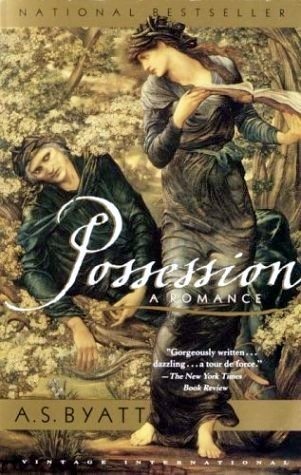
A pair of young scholars investigate the lives of two Victorian poets. Following a trail of letters, journals and poems they uncover a web of passion, deceit and tragedy, and their quest becomes a battle against time. Possession is an exhilarating novel of wit and romance, at once a literary detective novel and a triumphant love story.
Gripping, tragic, and densely atmospheric—a masterpiece of suspense San Piedro Island, north of Puget Sound, is a place so isolated that no one who lives there can afford to make enemies. But in 1954 a local fisherman is found suspiciously drowned, and a Japanese American named Kabuo Miyamoto is charged with his murder. In the course of the ensuing trial, it becomes clear that what is at stake is more than a man's guilt. For on San Pedro, memories of a charmed love affair between a white boy and the Japanese girl who grew up to become Kabuo's wife; memories of land desired, paid for, and lost. Above all, San Piedro is haunted by the memory of what happened to its Japanese residents during World War II, when an entire community was sent into exile while its neighbors watched.
The scene is the village of Lyme Regis on Dorset's Lyme Bay..."the largest bite from the underside of England's out-stretched southwestern leg." The major characters in the love-intrigue triangle are Charles Smithson, 32, a gentleman of independent means & vaguely scientific bent; his fiancée, Ernestina Freeman, a pretty heiress daughter of a wealthy & pompous dry goods merchant; & Sarah Woodruff, mysterious & fascinating...deserted after a brief affair with a French naval officer a short time before the story begins. Obsessed with an irresistible fascination for the enigmatic Sarah, Charles is hurtled by a moment of consummated lust to the brink of the existential void. Duty dictates that his engagement to Tina must be broken as he goes forth once again to seek the woman who has captured his Victorian soul & gentleman's heart.
Librarian's note: See alternate cover edition of ISBN 0571225381 here.
In the summer of 1956, Stevens, a long-serving butler at Darlington Hall, decides to take a motoring trip through the West Country. The six-day excursion becomes a journey into the past of Stevens and England, a past that takes in fascism, two world wars, and an unrealised love between the butler and his housekeeper.
Peter Matthiessen’s great American epic–Killing Mister Watson, Lost Man’s River, and Bone by Bone–was conceived as one vast mysterious novel, but because of its length it was originally broken up into three books. In this bold new rendering, Matthiessen has cut nearly a third of the overall text and collapsed the time frame while deepening the insights and motivations of his characters with brilliant rewriting throughout. In Shadow Country, he has marvelously distilled a monumental work, realizing his original vision.
Inspired by a near-mythic event of the wild Florida frontier at the turn of the twentieth century, Shadow Country reimagines the legend of the inspired Everglades sugar planter and notorious outlaw E. J. Watson, who drives himself relentlessly toward his own violent end at the hands of neighbors who mostly admired him, in a killing that obsessed his favorite son. Shadow Country traverses strange landscapes and frontier hinterlands inhabited by Americans of every provenance and color, including the black and Indian inheritors of the archaic racism that, as Watson’s wife observed, "still casts its shadow over the nation."
Logan Gonzago Mountstuart, writer, was born in 1906, and died of a heart attack on October 5, 1991, aged 85. William Boyd's novel Any Human Heart is his disjointed autobiography, a massive tome chronicling "my personal rollercoaster"--or rather, "not so much a rollercoaster", but a yo-yo, "a jerking spinning toy in the hands of a maladroit child." From his early childhood in Montevideo, son of an English corned beef executive and his Uraguayan secretary, through his years at a Norfolk public school and Oxford, Mountstuart traces his haphazard development as a writer. Early and easy success is succeeded by a long half-century of mediocrity, disappointments and setbacks, both personal and professional, leading him to multiple failed marriages, internment, alcoholism, and abject poverty.
Mountstuart's sorry tale is also the story of a British way of life in inexorable decline, as his journey takes in the Bloomsbury set, the General Strike, the Spanish Civil War, 1930s Americans in Paris, wartime espionage, New York avant garde art, even the Baader-Meinhof gang--all with a stellar supporting cast. The most sustained and best moment comes mid-book, as Mountstuart gets caught up in one of Britain's murkier wartime secrets, in the company of the here truly despicable Duke and Duchess of Windsor. Elsewhere Boyd occasionally misplaces his tongue too obviously in his cheek--the Wall Street Crash is trailed with truly crashing inelegance--but overall Any Human Heart is a witty, inventive and ultimately moving novel. Boyd succeeds in conjuring not only a compelling 20th century but also, in the hapless Logan Mountstuart, an anti-hero who achieves something approaching passive greatness. --Alan Stewart, Amazon.co.uk
Strong-willed, self-reliant Gertie Nevels's peaceful life in the Kentucky hills is devastated by the brutal winds of change. Uprooted from her backwoods home, she and her family are thrust into the confusion and chaos of wartime Detroit. And in a pitiless world of unendurable poverty, Gertie will battle fiercely and relentlessly to protect those things she holds most dear -- her children, her heritage . . . and her triumphant ability to create beauty in the suffocating shadow of ugliness and despair.
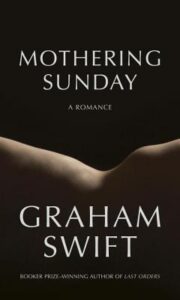
A luminous, intensely moving tale that begins with a secret lovers' assignation in the spring of 1924, then unfolds to reveal the whole of a remarkable life.
Twenty-two-year-old Jane Fairchild has worked as a maid at an English country house since she was sixteen. For almost all of those years she has been the clandestine lover to Paul Sheringham, young heir of a neighboring house. The two now meet on an unseasonably warm March day—Mothering Sunday—a day that will change Jane's life forever.
As the narrative moves back and forth from 1924 to the end of the century, what we know and understand about Jane—about the way she loves, thinks, feels, sees, remembers—expands with every vividly captured moment. Her story is one of profound self-discovery, and through her, Graham Swift has created an emotionally soaring, deeply affecting work of fiction.
Margaret Atwood takes the art of storytelling to new heights in a dazzling novel that unfolds layer by astonishing layer and concludes in a brilliant and wonderfully satisfying twist. Told in a style that magnificently captures the colloquialisms and clichés of the 1930s and 1940s, The Blind Assassin is a richly layered and uniquely rewarding experience.
It opens with these simple, resonant words: "Ten days after the war ended, my sister drove a car off the bridge." They are spoken by Iris, whose terse account of her sister Laura's death in 1945 is followed by an inquest report proclaiming the death accidental. But just as the reader expects to settle into Laura's story, Atwood introduces a novel-within-a-novel. Entitled The Blind Assassin, it is a science fiction story told by two unnamed lovers who meet in dingy backstreet rooms. When we return to Iris, it is through a 1947 newspaper article announcing the discovery of a sailboat carrying the dead body of her husband, a distinguished industrialist.
For the past twenty-five years, Margaret Atwood has written works of striking originality and imagination. In The Blind Assassin, she stretches the limits of her accomplishments as never before, creating a novel that is entertaining and profoundly serious. The Blind Assassin proves once again that Atwood is one of the most talented, daring, and exciting writers of our time. Like The Handmaid's Tale, it is destined to become a classic.
Welcome Back!
Track your reading progress and sync your library.