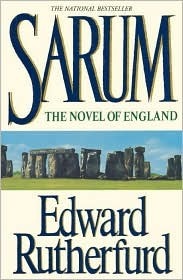
A masterpiece of breathtaking scope—a brilliantly conceived epic novel that traces the entire turbulent course of English history.
This rich tapestry weaves a compelling saga of five families—the Wilsons, the Masons, the family of Porteus, the Shockleys, and the Godfreys—who reflect the changing character of Britain.
As their fates and fortunes intertwine over the course of the centuries, their greater destinies offer a fascinating glimpse into the future.
An absorbing historical chronicle, Sarum is a keen tale of struggle and adventure, a profound human drama, and a magnificent work of sheer storytelling.
A big, powerful saga of men in combat, written over the course of thirty-five years by a highly decorated Vietnam veteran.
Intense, powerful, and compelling, Matterhorn is an epic war novel in the tradition of Norman Mailer's The Naked and the Dead and James Jones's The Thin Red Line. It is the timeless story of a young Marine lieutenant, Waino Mellas, and his comrades in Bravo Company, who are dropped into the mountain jungle of Vietnam as boys and forced to fight their way into manhood. Standing in their way are not merely the North Vietnamese but also monsoon rain and mud, leeches and tigers, disease and malnutrition. Almost as daunting, it turns out, are the obstacles they discover between each other: racial tension, competing ambitions, and duplicitous superior officers. But when the company finds itself surrounded and outnumbered by a massive enemy regiment, the Marines are thrust into the raw and all-consuming terror of combat. The experience will change them forever.
Written over the course of thirty years by a highly decorated Vietnam veteran, Matterhorn is a visceral and spellbinding novel about what it is like to be a young man at war. It is an unforgettable novel that transforms the tragedy of Vietnam into a powerful and universal story of courage, camaraderie, and sacrifice: a parable not only of the war in Vietnam but of all war, and a testament to the redemptive power of literature.
A graduate of Yale University and a Rhodes Scholar at Oxford University, Karl Marlantes served as a Marine in Vietnam, where he was awarded the Navy Cross, the Bronze Star, two Navy Commendation Medals for valor, two Purple Hearts, and ten air medals. This is his first novel. He lives in rural Washington State.
This is an epic of love, hatred, war and revolution. This is a huge novel that follows five families through the world-shaking dramas of the First World War, the Russian Revolution, and the struggle for votes for women.
It is 1911. The Coronation Day of King George V. The Williams, a Welsh coal-mining family is linked by romance and enmity to the Fitzherberts, aristocratic coal-mine owners. Lady Maud Fitzherbert falls in love with Walter von Ulrich, a spy at the German Embassy in London. Their destiny is entangled with that of an ambitious young aide to U.S. President Woodrow Wilson and to two orphaned Russian brothers, whose plans to emigrate to America fall foul of war, conscription and revolution. In a plot of unfolding drama and intriguing complexity, "Fall Of Giants" moves seamlessly from Washington to St Petersburg, from the dirt and danger of a coal mine to the glittering chandeliers of a palace, from the corridors of power to the bedrooms of the mighty.
An alternate cover edition for this ISBN can be found here.
Pulitzer Prize–winning author James A. Michener brings Hawaii’s epic history vividly to life in a classic saga that has captivated readers since its initial publication in 1959. As the volcanic Hawaiian Islands sprout from the ocean floor, the land remains untouched for centuries—until, little more than a thousand years ago, Polynesian seafarers make the perilous journey across the Pacific, flourishing in this tropical paradise according to their ancient traditions. Then, in the early nineteenth century, American missionaries arrive, bringing with them a new creed and a new way of life. Based on exhaustive research and told in Michener’s immersive prose, Hawaii is the story of disparate peoples struggling to keep their identity, live in harmony, and, ultimately, join together.
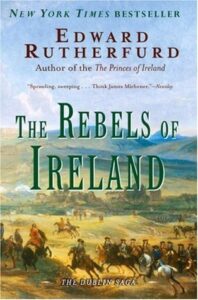
The reigning master of grand historical fiction returns with the stirring conclusion to his bestselling Dublin Saga.
The Princes of Ireland , the first volume of Edward Rutherfurd’s magisterial epic of Irish history, ended with the disastrous Irish revolt of 1534 and the disappearance of the sacred Staff of Saint Patrick. The Rebels of Ireland opens with an Ireland transformed; plantation, the final step in the centuries-long English conquest of Ireland, is the order of the day, and the subjugation of the native Irish Catholic population has begun in earnest.
Edward Rutherfurd brings history to life through the tales of families whose fates rise and fall in each generation: Brothers who must choose between fidelity to their ancient faith or the security of their families; a wife whose passion for a charismatic Irish chieftain threatens her comfortable marriage to a prosperous merchant; a young scholar whose secret rebel sympathies are put to the test; men who risk their lives and their children’s fortunes in the tragic pursuit of freedom, and those determined to root them out forever. Rutherfurd spins the saga of Ireland’s 400-year path to independence in all its drama, tragedy, and glory through the stories of people from all strata of society--Protestant and Catholic, rich and poor, conniving and heroic.
His richly detailed narrative brings to life watershed moments and events, from the time of plantation settlements to the “Flight of the Earls,” when the native aristocracy fled the island, to Cromwell’s suppression of the population and the imposition of the harsh anti-Catholic penal laws. He describes the hardships of ordinary people and the romantic, doomed attempt to overthrow the Protestant oppressors, which ended in defeat at the Battle of the Boyne in 1690, and the departure of the “Wild Geese.” In vivid tones Rutherfurd re-creates Grattan’s Parliament, Wolfe Tone's attempted French invasion of 1798, the tragic rising of Robert Emmet, the Catholic campaign of Daniel O’Connell, the catastrophic famine, the mass migration to America, and the glorious Irish Renaissance of Yeats and Joyce. And through the eyes of his characters, he captures the rise of Charles Stewart Parnell and the great Irish nationalists and the birth of an Ireland free of all ties to England.
A tale of fierce battles, hot-blooded romances, and family and political intrigues, The Rebels of Ireland brings the story begun in The Princes of Ireland to a stunning conclusion.
Librarian's note: An alternate cover edition can be found here
World Without End takes place in the same town of Kingsbridge, two centuries after the townspeople finished building the exquisite Gothic cathedral that was at the heart of The Pillars of the Earth. The cathedral and the priory are again at the center of a web of love and hate, greed and pride, ambition and revenge, but this sequel stands on its own. This time the men and women of an extraordinary cast of characters find themselves at a crossroads of new ideas—about medicine, commerce, architecture, and justice. In a world where proponents of the old ways fiercely battle those with progressive minds, the intrigue and tension quickly reach a boiling point against the devastating backdrop of the greatest natural disaster ever to strike the human race—the Black Death.
Agincourt is one of the epic battles of history. It was fought by two badly matched armies that met in atrocious conditions on St Crispin's Day 1415, and resulted in an extraordinary victory that was celebrated in England long before Shakespeare immortalised it in Henry V. It has always been held to be the triumph of the longbow against the armoured knight, and of the common man against the feudal aristocrat, but those are history's myths. Bernard Cornwell, who has long wanted to write this story, depicts the reality behind the myths.
Nicholas Hook is an English archer. He seems born to trouble and, when his lord orders him to London as part of a force sent to quell an expected Lollard uprising, Nick's headstrong behaviour leads to him being proscribed an outlaw. He finds refuge across the Channel, part of an English mercenary force protecting the town of Soissons against the French. What happened at the Siege of Soissons shocked all Europe, and propels Nick back to England where he is enrolled in the archer companyof the doughty Sir John Cornwaille, a leader of Henry V's army. The army was superb, but sickness and the unexpected French defiance at Harfleur, reduce it to near-shambolic condition. Henry stubbornly refuses to accept defeat and, in appalling weather, leads his shrunken force to what appears to be inevitable disaster.
Azincourt culminates in the battle. Seen from several points of view on the English side, but also from the French ranks, the scene is vivid, convincing and compelling. Bernard Cornwell has a great understanding of men at war and battlefields and this is his masterpiece. This is what it must have been like to fight at Agincourt.
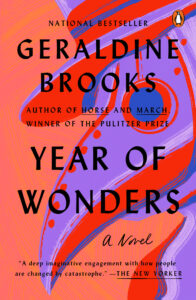
When an infected bolt of cloth carries plague from London to an isolated village, a housemaid named Anna Frith emerges as an unlikely heroine and healer.
Through Anna's eyes we follow the story of the fateful year of 1666, as she and her fellow villagers confront the spread of disease and superstition.
As death reaches into every household and villagers turn from prayers to murderous witch-hunting, Anna must find the strength to confront the disintegration of her community and the lure of illicit love.
As she struggles to survive and grow, a year of catastrophe becomes instead annus mirabilis, a "year of wonders."
Inspired by the true story of Eyam, a village in the rugged hill country of England, Year of Wonders is a richly detailed evocation of a singular moment in history.
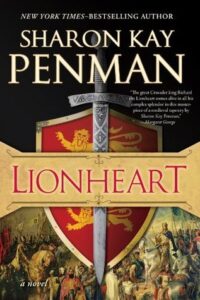
They were called "The Devil's Brood," though never to their faces. They were the four surviving sons of Henry Plantagenet and Eleanor of Aquitaine. With two such extraordinary parents, much was expected of them. But the eldest-charming yet mercurial-would turn on his father and, like his brother Geoffrey, meet an early death. When Henry died, Richard would take the throne and, almost immediately, set off for the Holy Land. This was the Third Crusade, and it would be characterized by internecine warfare among the Christians and extraordinary campaigns against the Saracens. And, back in England, by the conniving of Richard's youngest brother, John, to steal his crown.
Welcome Back!
Track your reading progress and sync your library.