Horacio Oliveira is an Argentinian writer who lives in Paris with his mistress, La Maga, surrounded by a loose-knit circle of bohemian friends who call themselves "the Club." A child's death and La Maga's disappearance put an end to his life of empty pleasures and intellectual acrobatics, and prompt Oliveira to return to Buenos Aires, where he works by turns as a salesman, a keeper of a circus cat which can truly count, and an attendant in an insane asylum. Hopscotch is the dazzling, freewheeling account of Oliveira's astonishing adventures.
The book is highly influenced by Henry Miller’s reckless and relentless search for truth in post-decadent Paris and Daisetz Teitaro Suzuki’s modal teachings on Zen Buddhism.
Cortázar's employment of interior monologue, punning, slang, and his use of different languages is reminiscent of Modernist writers like Joyce, although his main influences were Surrealism and the French New Novel, as well as the "riffing" aesthetic of jazz and New Wave Cinema.
In 1966, Gregory Rabassa won the first National Book Award to recognize the work of a translator, for his English-language edition of Hopscotch. Julio Cortázar was so pleased with Rabassa's translation of Hopscotch that he recommended the translator to Gabriel García Márquez when García Márquez was looking for someone to translate his novel One Hundred Years of Solitude into English. "Rabassa's One Hundred Years of Solitude improved the original," according to García Márquez.
Breve e intensa novela publicada en 1948, este logrado fruto de la denominada "literatura existencial" le dio a su autor un reconocimiento que traspasó las fronteras nacionales. Para quien todavía no la leyó, El túnel es la mejor introducción al universo prodigioso de Ernesto Sábato; para quien la conoce, un clásico de las letras del continente, una historia sobre el drama del hombre arrojado en el sinsentido más doloroso: la conciencia de la nada. El narrador describe una historia de amor y muerte en la que muestra la soledad del individuo contemporáneo. No están ausentes de esta trama policial y de suspenso, la locura y la increíble reflexión del protagonista, el pintor Juan Pablo Castel, debatiéndose por comprender las causas que lo arrastraron a matar a la mujer que amaba, María Iribarne, y que era su única vía de salvación. En este alucinante drama de la vida interior, seres intrincados en la bestial búsqueda de comprensión ceden a la mentira, la hipocresía y los celos desmedidos hasta el crimen más inexplicable. Aventura amorosa, aventura onírica, aventura del ser que dan testimonio de un asesinato, de cierta memoria culpable y de una valiente introspección. Técnicamente perfecta y de lectura apasionante, El túnel excede el negativismo ácido de Sartre y la frenética huida hacia el vacío que plantea El extranjero de Camus, pero tiene de esos dos maestros literarios la impronta genial que hace de la escritura una radiografía del alma atormentada.
A classic of Mexican modern literature about a haunted village.
As one enters Juan Rulfo's legendary novel, one follows a dusty road to a town of death. Time shifts from one consciousness to another in a hypnotic flow of dreams, desires, and memories, a world of ghosts dominated by the figure of Pedro Páramo - lover, overlord, murderer.
Rulfo's extraordinary mix of sensory images, violent passions, and unfathomable mysteries has been a profound influence on a whole generation of Latin American writers, including Carlos Fuentes, Mario Vargas Llosa, and Gabriel García Márquez. To read Pedro Páramo today is as overwhelming an experience as when it was first published in Mexico back in 1955.
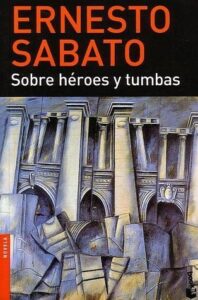
Esta es la segunda novela de Ernesto Sabato, que profundiza la senda iniciada por El túnel. Una obra, considerada uno de los mejores libros del siglo, que indaga en las zonas más oscuras del espíritu
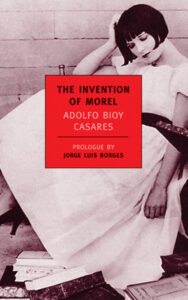
Jorge Luis Borges declared The Invention of Morel a masterpiece of plotting, comparable to The Turn of The Screw and Journey to the Center of the Earth. Set on a mysterious island, Bioy’s novella is a story of suspense and exploration, as well as a wonderfully unlikely romance, in which every detail is at once crystal clear and deeply mysterious.
Inspired by Bioy Casares’s fascination with the movie star Louise Brooks, The Invention of Morel has gone on to live a secret life of its own. Greatly admired by Julio Cortázar, Gabriel García Márquez, and Octavio Paz, the novella helped to usher in Latin American fiction’s now famous postwar boom. As the model for Alain Resnais and Alain Robbe-Grillet’s Last Year at Marienbad, it also changed the history of film.
New Year’s Eve, 1975: Arturo Belano and Ulises Lima, founders of the visceral realist movement in poetry, leave Mexico City in a borrowed white Impala. Their quest: to track down the obscure, vanished poet Cesárea Tinajero. A violent showdown in the Sonora desert turns search to flight; twenty years later Belano and Lima are still on the run.
The explosive first long work by “the most exciting writer to come from south of the Rio Grande in a long time” (Ilan Stavans, Los Angeles Times), The Savage Detectives follows Belano and Lima through the eyes of the people whose paths they cross in Central America, Europe, Israel, and West Africa. This chorus includes the muses of visceral realism, the beautiful Font sisters; their father, an architect interned in a Mexico City asylum; a sensitive young follower of Octavio Paz; a foul-mouthed American graduate student; a French girl with a taste for the Marquis de Sade; the great-granddaughter of Leon Trotsky; a Chilean stowaway with a mystical gift for numbers; the anorexic heiress to a Mexican underwear empire; an Argentinian photojournalist in Angola; and assorted hangers-on, detractors, critics, lovers, employers, vagabonds, real-life literary figures, and random acquaintances.
A polymathic descendant of Borges and Pynchon, Roberto Bolaño traces the hidden connection between literature and violence in a world where national boundaries are fluid and death lurks in the shadow of the avant-garde. The Savage Detectives is a dazzling original, the first great Latin American novel of the twenty-first century.
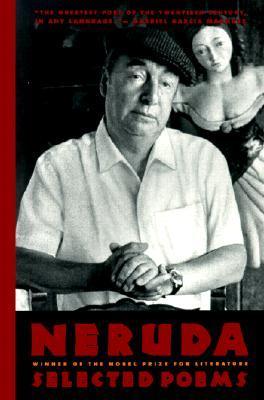
When it appeared in 1924, this work launched into the international spotlight a young and unknown poet whose writings would ignite a generation. W. S. Merwin's incomparable translation faces the original Spanish text. Now in a black-spine Classics edition with an introduction by Cristina Garcia, this book stands as an essential collection that continues to inspire lovers and poets around the world. The most popular work by Chile's Nobel Prize-winning poet, and the subject of Pablo Larraín's acclaimed feature film Neruda starring Gael García Bernal.
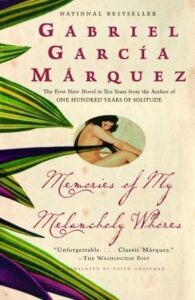
On the eve of his ninetieth birthday a bachelor decides to give himself a wild night of love with a virgin. As is his habit–he has purchased hundreds of women–he asks a madam for her assistance. The fourteen-year-old girl who is procured for him is enchanting, but exhausted as she is from caring for siblings and her job sewing buttons, she can do little but sleep. Yet with this sleeping beauty at his side, it is he who awakens to a romance he has never known.
Tender, knowing, and slyly comic, Memories of My Melancholy Whores is an exquisite addition to the master’s work. --back cover
Welcome Back!
Track your reading progress and sync your library.