
Silas Marner: The Weaver of Raveloe is the third novel by George Eliot, published in 1861. An outwardly simple tale of a linen weaver, it is notable for its strong realism and its sophisticated treatment of a variety of issues ranging from religion to industrialisation to community.
Librarian note: The same ISBN is now being used here with a new cover.
In a fit of drunken anger, Michael Henchard sells his wife and baby daughter for five guineas at a country fair. Over the course of the following years, he manages to establish himself as a respected and prosperous pillar of the community of Casterbridge, but behind his success there always lurk the shameful secret of his past and a personality prone to self-destructive pride and temper. Subtitled ‘A Story of a Man of Character’, Hardy’s powerful and sympathetic study of the heroic but deeply flawed Henchard is also an intensely dramatic work, tragically played out against the vivid backdrop of a close-knit Dorsetshire town.
The complex story of a notorious law-suit in which love and inheritance are set against the classic urban background of 19th-century London, where fog on the river, seeping into the very bones of the characters, symbolizes the corruption of the legal system and the society which supports it.
“Jarndyce and Jarndyce” is an infamous lawsuit that has been in process for generations. Nobody can remember exactly how the case started but many different individuals have found their fortunes caught up in it. Esther Summerson watches as her friends and neighbours are consumed by their hopes and disappointments with the proceedings. But while the intricate puzzles of the lawsuit are being debated by lawyers, other more dramatic mysteries are unfolding that involve heartbreak, lost children, blackmail and murder.
The fog and cold that permeate Bleak House mirror a Victorian England mired in spiritual insolvency. Dickens brought all his passion, brilliance, and narrative verve to this huge novel of lives entangled in a multi-generational lawsuit—and through it, he achieved, at age 41, a stature almost Shakespearean.
This is an alternate cover edition for ISBN 9780141439655
Independent and spirited Bathsheba Everdene has come to Weatherbury to take up her position as a farmer on the largest estate in the area. Her bold presence draws three very different suitors: the gentleman-farmer Boldwood, soldier-seducer Sergeant Troy and the devoted shepherd Gabriel Oak. Each, in contrasting ways, unsettles her decisions and complicates her life, and tragedy ensues, threatening the stability of the whole community. The first of his works set in the fictional county of Wessex, Hardy's novel of swift passion and slow courtship is imbued with his evocative descriptions of rural life and landscapes, and with unflinching honesty about sexual relationships.
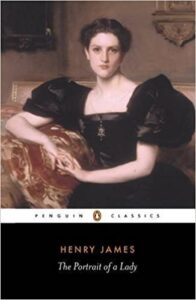
When Isabel Archer, a beautiful, spirited American, is brought to Europe by her wealthy Aunt Touchett, it is expected that she will soon marry. But Isabel, resolved to determine her own fate, does not hesitate to turn down two eligible suitors. She then finds herself irresistibly drawn to Gilbert Osmond, who, beneath his veneer of charm and cultivation, is cruelty itself. A story of intense poignancy, Isabel's tale of love and betrayal still resonates with modern audiences.
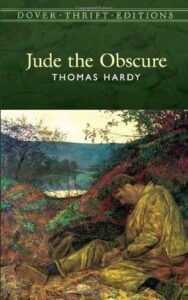
Jude Fawley's hopes of a university education are lost when he is trapped into marrying the earthy Arabella, who later abandons him. Moving to the town of Christminster where he finds work as a stonemason, Jude meets and falls in love with his cousin Sue Bridehead, a sensitive, freethinking 'New Woman'.
William Stoner is born at the end of the nineteenth century into a dirt-poor Missouri farming family. Sent to the state university to study agronomy, he instead falls in love with English literature and embraces a scholar’s life, so different from the hardscrabble existence he has known. And yet as the years pass, Stoner encounters a succession of disappointments: marriage into a “proper” family estranges him from his parents; his career is stymied; his wife and daughter turn coldly away from him; a transforming experience of new love ends under threat of scandal. Driven ever deeper within himself, Stoner rediscovers the stoic silence of his forebears and confronts an essential solitude.
John Williams’s luminous and deeply moving novel is a work of quiet perfection. William Stoner emerges from it not only as an archetypal American, but as an unlikely existential hero, standing, like a figure in a painting by Edward Hopper, in stark relief against an unforgiving world.
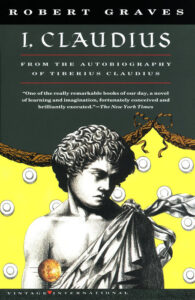
A modern classic of historical fiction written in the form of Claudius's autobiography.
Tiberius Claudius Drusus Nero Germanicus lived from 10 B.C. to 54 A.D. Despised as a weakling and dismissed as an idiot because of his physical infirmities, Claudius survived the intrigues and poisonings that marked the reigns of Augustus, Tiberius, and the mad Caligula to become emperor of Rome in 41 A.D. The first part of Robert Graves’s two-part account of the life of Tiberius Claudius, I, Claudius stands as a landmark historical novel of the 20th century from one of its great writers.
Bazarov—a gifted, impatient, and caustic young man—has journeyed from school to the home of his friend Arkady Kirsanov. But soon Bazarov’s outspoken rejection of authority and social conventions touches off quarrels, misunderstandings, and romantic entanglements that will utterly transform the Kirsanov household and reflect the changes taking place across all of nineteenth-century Russia.
Fathers and Sons enraged the old and the young, reactionaries, romantics, and radicals alike when it was first published. At the same time, Turgenev won the acclaim of Flaubert, Maupassant, and Henry James for his craftsmanship as a writer and his psychological insight. Fathers and Sons is now considered one of the greatest novels of the nineteenth century.
A timeless depiction of generational conflict during social upheaval, it vividly portrays the clash between the older Russian aristocracy and the youthful radicalism that foreshadowed the revolution to come—and offers modern-day readers much to reflect upon as they look around at their own tumultuous, ever changing world.
Introduction by Jane Costlow
Welcome Back!
Track your reading progress and sync your library.