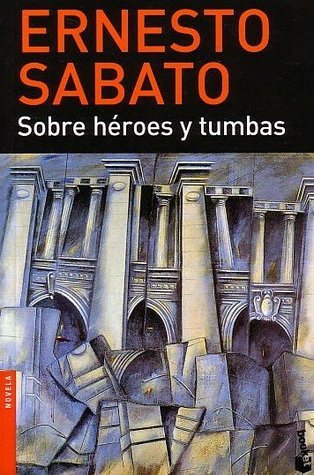
Sobre héroes y tumbas
Esta es la segunda novela de Ernesto Sabato, que profundiza la senda iniciada por El túnel. Una obra, considerada uno de los mejores libros del siglo, que indaga en las zonas más oscuras del espíritu
Breve e intensa novela publicada en 1948, este logrado fruto de la denominada "literatura existencial" le dio a su autor un reconocimiento que traspasó las fronteras nacionales. Para quien todavía no la leyó, El túnel es la mejor introducción al universo prodigioso de Ernesto Sábato; para quien la conoce, un clásico de las letras del continente, una historia sobre el drama del hombre arrojado en el sinsentido más doloroso: la conciencia de la nada.
El narrador describe una historia de amor y muerte en la que muestra la soledad del individuo contemporáneo. No están ausentes de esta trama policial y de suspenso, la locura y la increíble reflexión del protagonista, el pintor Juan Pablo Castel, debatiéndose por comprender las causas que lo arrastraron a matar a la mujer que amaba, María Iribarne, y que era su única vía de salvación. En este alucinante drama de la vida interior, seres intrincados en la bestial búsqueda de comprensión ceden a la mentira, la hipocresía y los celos desmedidos hasta el crimen más inexplicable. Aventura amorosa, aventura onírica, aventura del ser que dan testimonio de un asesinato, de cierta memoria culpable y de una valiente introspección.
Técnicamente perfecta y de lectura apasionante, El túnel excede el negativismo ácido de Sartre y la frenética huida hacia el vacío que plantea El extranjero de Camus, pero tiene de esos dos maestros literarios la impronta genial que hace de la escritura una radiografía del alma atormentada.
Horacio Oliveira is an Argentinian writer who lives in Paris with his mistress, La Maga, surrounded by a loose-knit circle of bohemian friends who call themselves "the Club." A child's death and La Maga's disappearance put an end to his life of empty pleasures and intellectual acrobatics, and prompt Oliveira to return to Buenos Aires, where he works by turns as a salesman, a keeper of a circus cat which can truly count, and an attendant in an insane asylum. Hopscotch is the dazzling, freewheeling account of Oliveira's astonishing adventures.
The book is highly influenced by Henry Miller’s reckless and relentless search for truth in post-decadent Paris and Daisetz Teitaro Suzuki’s modal teachings on Zen Buddhism.
Cortázar's employment of interior monologue, punning, slang, and his use of different languages is reminiscent of Modernist writers like Joyce, although his main influences were Surrealism and the French New Novel, as well as the "riffing" aesthetic of jazz and New Wave Cinema.
In 1966, Gregory Rabassa won the first National Book Award to recognize the work of a translator, for his English-language edition of Hopscotch. Julio Cortázar was so pleased with Rabassa's translation of Hopscotch that he recommended the translator to Gabriel García Márquez when García Márquez was looking for someone to translate his novel One Hundred Years of Solitude into English. "Rabassa's One Hundred Years of Solitude improved the original," according to García Márquez.
A classic of Mexican modern literature about a haunted village.
As one enters Juan Rulfo's legendary novel, one follows a dusty road to a town of death. Time shifts from one consciousness to another in a hypnotic flow of dreams, desires, and memories, a world of ghosts dominated by the figure of Pedro Páramo - lover, overlord, murderer.
Rulfo's extraordinary mix of sensory images, violent passions, and unfathomable mysteries has been a profound influence on a whole generation of Latin American writers, including Carlos Fuentes, Mario Vargas Llosa, and Gabriel García Márquez. To read Pedro Páramo today is as overwhelming an experience as when it was first published in Mexico back in 1955.
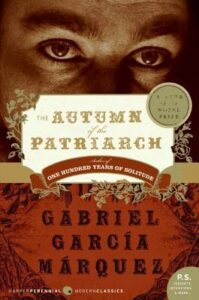
One of Gabriel Garcia Marquez's most intricate and ambitious works, The Autumn of the Patriarch is a brilliant tale of a Caribbean tyrant and the corruption of power.
From charity to deceit, benevolence to violence, fear of God to extreme cruelty, the dictator of The Autumn of the Patriarch embodies the best but also the worst of human nature. Gabriel Garcia Marquez, the renowned master of magical realism, vividly portrays the dying tyrant caught in the prison of his own dictatorship. Employing an innovative, dreamlike style, and overflowing with symbolic descriptions, the novel transports the reader to a world that is at once fanciful and vividly real.
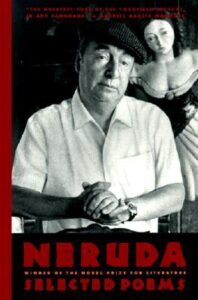
The most comprehensive bilingual collection of the Nobel Prize-winner Neruda, "the greatest poet of the twentieth century in any language"
Haunted all her life by feelings of terror and emptiness, forty-nine-year-old Urania Cabral returns to her native Dominican Republic - and finds herself reliving the events of 1961, when the capital was still called Trujillo City and one old man terrorized a nation of three million people. Rafael Trujillo, the depraved ailing dictator whom Dominicans call the Goat, controls his inner circle with a combination of violence and blackmail. In Trujillo's gaudy palace, treachery and cowardice have become the way of life. But Trujillo's grasp is slipping away. There is a conspiracy against him, and a Machiavellian revolution already underway that will have bloody consequences of its own. In this 'masterpiece of Latin American and world literature, and one of the finest political novels ever written' ("Bookforum"), Mario Vargas Llosa recounts the end of a regime and the birth of a terrible democracy, giving voice to the historical Trujillo and the victims, both innocent and complicit, drawn into his deadly orbit.
New Year’s Eve, 1975: Arturo Belano and Ulises Lima, founders of the visceral realist movement in poetry, leave Mexico City in a borrowed white Impala. Their quest: to track down the obscure, vanished poet Cesárea Tinajero. A violent showdown in the Sonora desert turns search to flight; twenty years later Belano and Lima are still on the run.
The explosive first long work by “the most exciting writer to come from south of the Rio Grande in a long time” (Ilan Stavans, Los Angeles Times), The Savage Detectives follows Belano and Lima through the eyes of the people whose paths they cross in Central America, Europe, Israel, and West Africa. This chorus includes the muses of visceral realism, the beautiful Font sisters; their father, an architect interned in a Mexico City asylum; a sensitive young follower of Octavio Paz; a foul-mouthed American graduate student; a French girl with a taste for the Marquis de Sade; the great-granddaughter of Leon Trotsky; a Chilean stowaway with a mystical gift for numbers; the anorexic heiress to a Mexican underwear empire; an Argentinian photojournalist in Angola; and assorted hangers-on, detractors, critics, lovers, employers, vagabonds, real-life literary figures, and random acquaintances.
A polymathic descendant of Borges and Pynchon, Roberto Bolaño traces the hidden connection between literature and violence in a world where national boundaries are fluid and death lurks in the shadow of the avant-garde. The Savage Detectives is a dazzling original, the first great Latin American novel of the twenty-first century.
A cuatro profesores de literatura, Pelletier, Morini, Espinoza y Norton, los une su fascinación por la obra de Beno von Archimboldi, un enigmático escritor alemán cuyo prestigio crece en todo el mundo. La complicidad se vuelve vodevil intelectual y desemboca en un peregrinaje a Santa Teresa (trasunto de Ciudad Juárez), donde hay quien dice que Archimboldi ha sido visto. Ya allí, Pelletier y Espinoza se enteran de que la ciudad es desde años atrás escenario de una larga cadena de crímenes: en los vertederos aparecen cadáveres de mujeres con señales de haber sido violadas y torturadas. Es el primer asomo de la novela a sus procelosos caudales, repletos de personajes memorables cuyas historias, a caballo entre la risa y el horror, abarcan dos continentes e incluyen un vertiginoso travelling por la historia europea del siglo XX. 2666 confirma el veredicto de Susan Sontag: "el más influyente y admirado novelista en lengua española de su generación. Su muerte, a los cincuenta años, es una gran pérdida para la literatura".