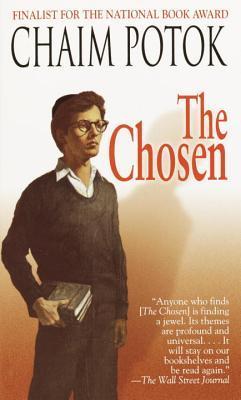
It is the now-classic story of two fathers and two sons and the pressures on all of them to pursue the religion they share in the way that is best suited to each. And as the boys grow into young men, they discover in the other a lost spiritual brother, and a link to an unexplored world that neither had ever considered before. In effect, they exchange places, and find the peace that neither will ever retreat from again.
Set in the Jewish homeland of … Alaska, this is a brilliantly original novel from Michael Chabon, author of THE ADVENTURES OF KAVALIER & CLAY and WONDER BOYS.
What if, as Franklin Roosevelt once proposed, Alaska – and not Israel – had become the homeland for the Jews after the Second World War? In Michael Chabon’s Yiddish-speaking ‘Alyeska’, Orthodox gangs in side-curls and knee breeches roam the streets of Sitka, where Detective Meyer Landsman discovers the corpse of a heroin-addled chess prodigy in the flophouse Meyer calls home. Marionette strings stretch back to the hands of charismatic Rebbe Gold, leader of a sect that seems to have drawn its mission statement from the Cosa Nostra. Meyer is determined to unsnarl the meaning behind the murder. Even if that means surrendering his badge and his dignity to the chief of Sitka’s homicide unit – his fearsome ex-wife Bina.
A novel of colossal ambition and heart, THE YIDDISH POLICEMEN’S UNION interweaves a homage to the stylish menace of 1940s film noir with a bittersweet fable of identity, home and faith.
“A superb mirror of a place, a time, and a group of people who capture our immediate interest and hold it tightly.” — The Philadelphia Inquirer
Young Reuven Malter is unsure of himself and his place in life. An unconventional scholar, he struggles for recognition from his teachers. With his old friend Danny Saunders—who himself had abandoned the legacy as the chosen heir to his father's rabbinical dynasty for the uncertain life of a healer — Reuven battles to save a sensitive boy imprisoned by his genius and rage. Painfully, triumphantly, Reuven's understanding of himself, though the boy change, as he starts to approach the peace he has long sought…
Through six turbulent months of 1934, 17-year-old Cassandra Mortmain keeps a journal, filling three notebooks with sharply funny yet poignant entries about her home, a ruined Suffolk castle, and her eccentric and penniless family. By the time the last diary shuts, there have been great changes in the Mortmain household, not the least of which is that Cassandra is deeply, hopelessly, in love.
Cannery Row is a book without much of a plot. Rather, it is an attempt to capture the feeling and people of a place, the cannery district of Monterey, California, which is populated by a mix of those down on their luck and those who choose for other reasons not to live "up the hill" in the more respectable area of town. The flow of the main plot is frequently interrupted by short vignettes that introduce us to various denizens of the Row, most of whom are not directly connected with the central story. These vignettes are often characterized by direct or indirect reference to extreme violence: suicides, corpses, and the cruelty of the natural world.
The "story" of Cannery Row follows the adventures of Mack and the boys, a group of unemployed yet resourceful men who inhabit a converted fish-meal shack on the edge of a vacant lot down on the Row.
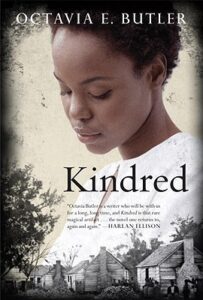
The visionary author’s masterpiece pulls us—along with her Black female hero—through time to face the horrors of slavery and explore the impacts of racism, sexism, and white supremacy then and now.
Dana, a modern Black woman, is celebrating her 26th birthday with her new husband when she is snatched abruptly from her home in California and transported to the antebellum South. Rufus, the white son of a plantation owner, is drowning, and Dana has been summoned to save him. Dana is drawn back repeatedly through time to the slave quarters, and each time the stay grows longer, more arduous, and more dangerous until it is uncertain whether or not Dana’s life will end, long before it has a chance to begin.
The Bluest Eye is Toni Morrison's first novel, a book heralded for its richness of language and boldness of vision. Set in the author's girlhood hometown of Lorain, Ohio, it tells the story of black, eleven-year-old Pecola Breedlove. Pecola prays for her eyes to turn blue so that she will be as beautiful and beloved as all the blond, blue-eyed children in America. In the autumn of 1941, the year the marigolds in the Breedloves' garden do not bloom. Pecola's life does change—in painful, devastating ways.
With its vivid evocation of the fear and loneliness at the heart of a child's yearning, and the tragedy of its fulfillment. The Bluest Eye remains one of Toni Morrison's most powerful, unforgettable novels- and a significant work of American fiction.
It's 1843, and Grace Marks has been convicted for her involvement in the vicious murders of her employer and his housekeeper and mistress. Some believe Grace is innocent; others think her evil or insane. Now serving a life sentence, Grace claims to have no memory of the murders.
An up-and-coming expert in the burgeoning field of mental illness is engaged by a group of reformers and spiritualists who seek a pardon for Grace. He listens to her story while bringing her closer and closer to the day she cannot remember. What will he find in attempting to unlock her memories?
Captivating and disturbing, Alias Grace showcases best-selling, Booker Prize-winning author Margaret Atwood at the peak of her powers.
Librarian's note: An alternate cover edition can be found here
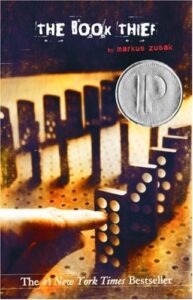
It is 1939. Nazi Germany. The country is holding its breath. Death has never been busier, and will be busier still.
By her brother's graveside, Liesel's life is changed when she picks up a single object, partially hidden in the snow. It is The Gravedigger's Handbook, left behind there by accident, and it is her first act of book thievery. So begins a love affair with books and words, as Liesel, with the help of her accordian-playing foster father, learns to read. Soon she is stealing books from Nazi book-burnings, the mayor's wife's library, wherever there are books to be found.
But these are dangerous times. When Liesel's foster family hides a Jew in their basement, Liesel's world is both opened up, and closed down.
In superbly crafted writing that burns with intensity, award-winning author Markus Zusak has given us one of the most enduring stories of our time.
(Note: this title was not published as YA fiction)
Welcome Back!
Track your reading progress and sync your library.